


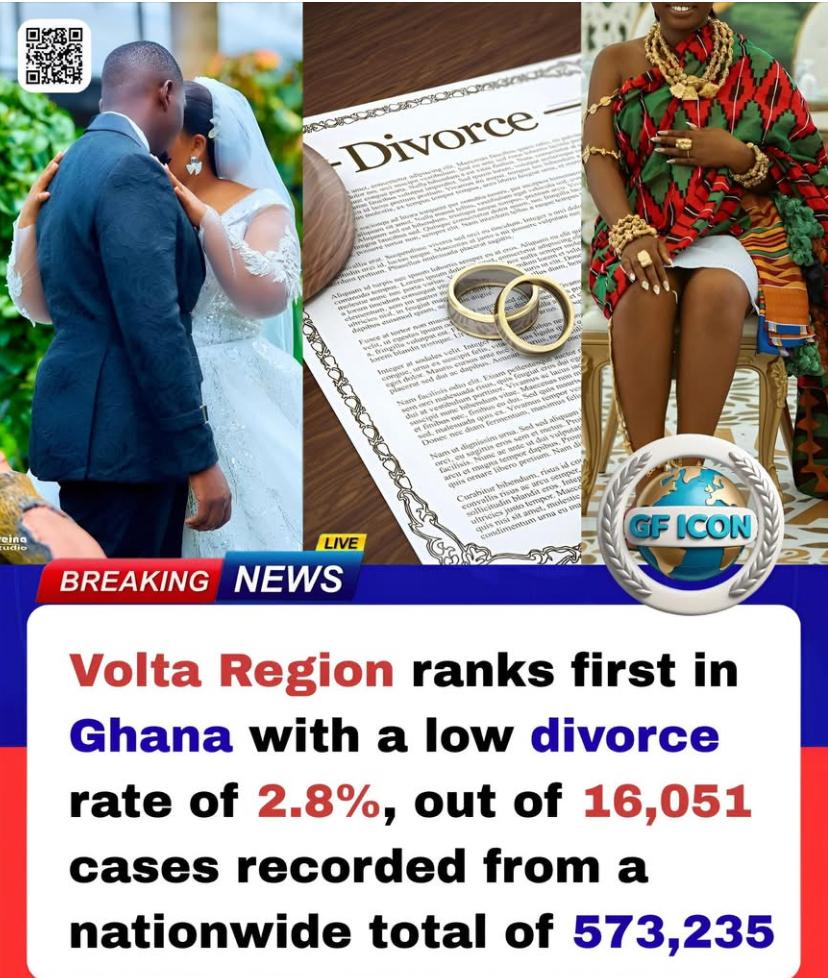
Volta Region Records Ghana’s Lowest Divorce Rate at 2.8% — What the Data Reveals
The Volta Region has recorded the lowest divorce rate in Ghana at 2.8%, according to recent national marital statistics. Out of 16,051 divorce cases recorded in the region, the figure represents a small proportion when compared with the national total of 573,235 divorce cases across the country.
The data has sparked conversations among social researchers, religious leaders, and policy analysts, as many seek to understand the cultural, economic, and social factors contributing to the comparatively low rate in the region.
While marriage and divorce statistics vary over time and may reflect reporting systems, demographic shifts, and legal processes, the figures highlight notable regional differences in family stability and marital outcomes across Ghana.
Marriage and Divorce Trends in Ghana



Marriage remains a central institution in Ghanaian society, deeply influenced by tradition, religion, and extended family structures. Both customary and ordinance marriages are legally recognized, and divorce proceedings may be handled through traditional authorities or formal courts, depending on the type of marriage.
National statistics indicate that divorce rates differ significantly by region, reflecting variations in urbanization, economic conditions, educational attainment, and cultural practices.
The Volta Region’s 2.8% rate places it at the lowest end of the national scale, prompting observers to examine the region’s social fabric more closely.
Understanding the Numbers
According to the reported data:
-
Volta Region divorce rate: 2.8%
-
Divorce cases in Volta Region: 16,051
-
National divorce cases: 573,235
While percentages offer a helpful overview, analysts caution that divorce rates can be influenced by multiple factors, including:
-
Population size and growth
-
Marriage registration rates
-
Access to courts and legal processes
-
Cultural perceptions of divorce
-
Urban vs. rural demographics
For example, regions with higher urbanization often report higher divorce rates due to increased economic independence, changing gender roles, and different social dynamics.
Cultural and Social Influences in Volta Region


The Volta Region, predominantly inhabited by the Ewe ethnic group, maintains strong traditional family systems and community structures. Marriage is often viewed not just as a union between two individuals but as a bond between families.
Community elders and extended relatives frequently play active roles in conflict resolution. In many cases, marital disputes are mediated informally before reaching the courts.
Religious institutions also exert influence. The region has a strong Christian presence, alongside traditional beliefs, both of which emphasize the importance of marital commitment.
Sociologists suggest that these cultural mechanisms may contribute to lower formal divorce filings, as couples may prefer reconciliation processes over legal dissolution.
Economic Considerations

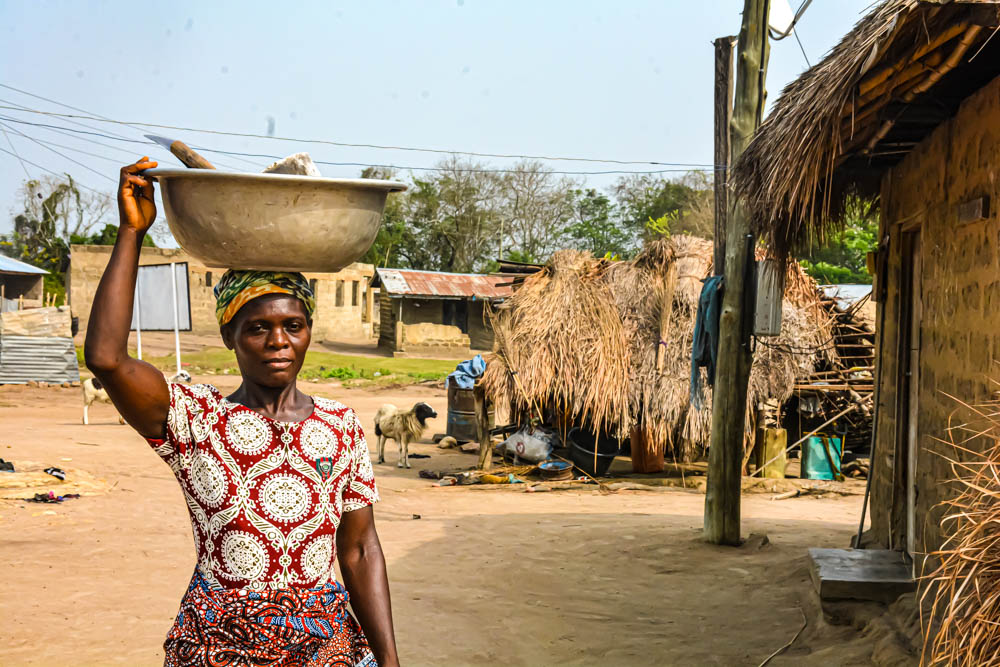

Economic factors can significantly shape marital stability. In rural or semi-urban areas where family economies are closely tied, separation can have broader social and financial consequences.
The Volta Region’s economy includes agriculture, fishing, petty trading, and small-scale enterprises. In many communities, economic survival may depend on family cooperation.
However, experts emphasize that lower divorce rates do not automatically equate to higher marital satisfaction. Economic dependence, social expectations, and stigma can also discourage legal separation even in difficult circumstances.
Legal and Reporting Structures
Ghana recognizes three primary forms of marriage:
-
Customary marriage
-
Ordinance marriage
-
Islamic marriage
Divorce procedures differ depending on the type of marriage. Customary divorces may occur through traditional processes without always being formally registered in courts. As a result, some separations may not appear in official statistics.
Legal experts note that disparities in court accessibility and documentation practices can influence regional data.
Therefore, while Volta Region’s 2.8% rate reflects recorded divorces, it may not capture every marital separation occurring informally.
Comparing Regional Patterns
Although Volta leads with the lowest recorded rate, other regions show higher figures, particularly highly urbanized areas such as Greater Accra and Ashanti.
Urban centers often experience:
-
Greater financial independence
-
Higher employment mobility
-
Increased exposure to global social norms
-
Greater access to legal services
These factors can contribute to higher formal divorce filings.
Conversely, regions with tighter-knit communities may prioritize mediation and reconciliation.
Perspectives from Social Analysts
Family and marriage experts stress the importance of viewing divorce statistics in context.
A low divorce rate may indicate:
-
Strong social support systems
-
Cultural emphasis on marital endurance
-
Effective informal conflict resolution
However, it could also reflect:
-
Social stigma surrounding divorce
-
Limited legal access
-
Economic barriers to separation
Experts recommend complementary data on marital satisfaction, domestic wellbeing, and gender equity to better understand the full picture.
Public Reaction and Online Discussion
The statistics have generated significant discussion on social media platforms, with many users praising the Volta Region for strong family values.
Others caution against oversimplification, noting that marriage quality cannot be measured by divorce rates alone.
Online debates highlight evolving perspectives among younger generations, who increasingly prioritize personal fulfillment and mental health in relationships.
Marriage Stability and National Development
Family stability often intersects with broader development indicators, including:
-
Child welfare
-
Education outcomes
-
Household income stability
-
Community cohesion
Government agencies and civil society organizations frequently promote family counseling, pre-marital education, and conflict resolution programs aimed at strengthening marriages nationwide.
However, policymakers also recognize the importance of ensuring legal protections and support systems for individuals experiencing marital breakdowns.
The Broader Context: Data Interpretation
Demographers emphasize that percentages must be interpreted carefully.
For instance:
-
A lower rate in a smaller population does not necessarily indicate stronger marriages.
-
Migration patterns can influence regional statistics.
-
Younger populations may naturally show lower divorce rates if many marriages are recent.
Accurate interpretation requires cross-referencing census data, court records, and social surveys.
Conclusion: What the 2.8% Figure Means
The Volta Region’s recorded 2.8% divorce rate positions it as the region with the lowest documented rate in Ghana based on available statistics. The figure reflects 16,051 recorded cases out of a national total of 573,235.
While the number has drawn praise and curiosity, experts urge a balanced understanding. Divorce statistics alone cannot fully define marital health, satisfaction, or stability.
As Ghana continues to evolve socially and economically, regional variations in marriage and divorce trends will likely remain shaped by culture, religion, economic realities, and legal frameworks.
The conversation sparked by the Volta Region’s ranking offers an opportunity for deeper reflection on family systems, social support structures, and the future of marriage in Ghana.

