


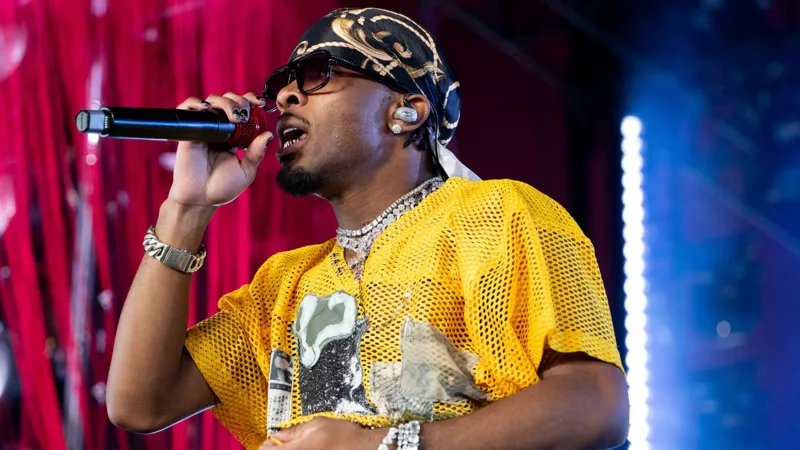
Shocking news , most influential musicians from word entertainment company .A 21-year-old American music artist known professionally as d4vd has reportedly been taken into custody in connection with the alleged murder of a teenage girl who had been missing for over a year. According to this narrative, the case has unfolded in Los Angeles, where authorities say the artist, whose legal name is David Anthony Burke, became the focus of a grand jury investigation examining the disappearance and presumed death of Celeste Rivas Hernandez. The situation has drawn widespread scrutiny not only because of the severity of the allegations but also due to the suspect’s public profile and rising prominence in the music industry. Law enforcement officials in this account state that the arrest was carried out by officers of the Los Angeles Police Department, who indicated that the suspect is currently being held without bail while the case is prepared for review by the district attorney’s office.
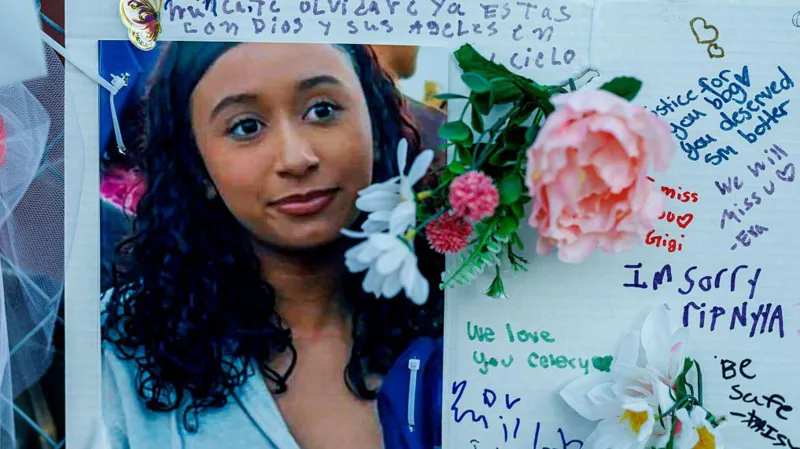
The case, as described in this fictional report, traces back to the disappearance of Celeste Rivas Hernandez, a teenage girl whose sudden absence sparked concern among her family and community. She was reportedly last seen the previous year, and her disappearance prompted a missing person investigation that initially yielded few concrete leads. As is often the case in such investigations, authorities relied on a combination of witness statements, digital evidence, and routine police work to piece together a timeline of events. Despite these efforts, the case remained unresolved for an extended period, gradually fading from public attention even as investigators continued their work behind the scenes. It was not until months later, according to this narrative, that a significant development brought renewed focus to the case.
In September, law enforcement officials allegedly discovered human remains inside a Tesla vehicle linked to the suspect, a finding that dramatically shifted the direction of the investigation. The discovery prompted an immediate forensic response, with specialists tasked with examining the scene and determining the identity of the remains. In this fictional account, authorities later confirmed that the remains belonged to Celeste Rivas Hernandez, transforming the case from a missing person inquiry into a homicide investigation. The vehicle itself became a central piece of evidence, with investigators reportedly conducting detailed analyses to establish how and when the remains were placed there, as well as any potential connection to the suspect.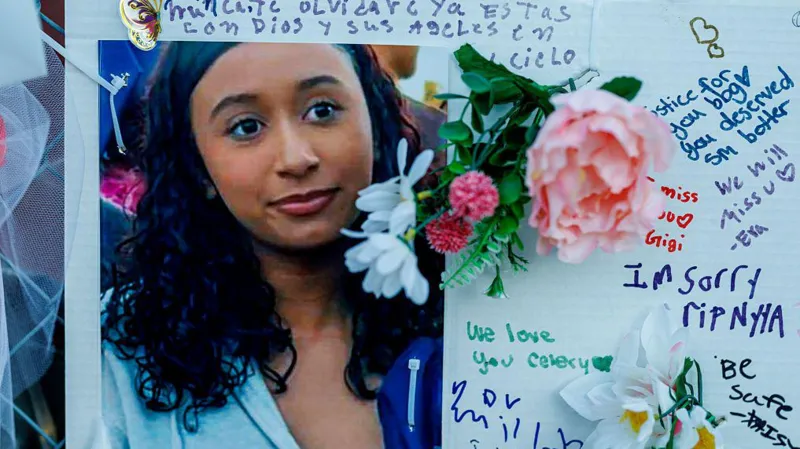
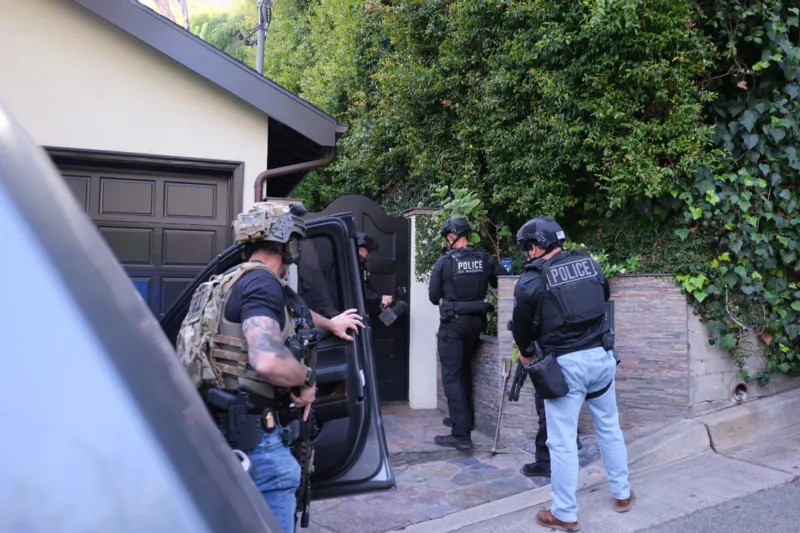
Following this development, prosecutors are said to have convened a grand jury to review the evidence and assess whether there were sufficient grounds to pursue criminal charges. Grand jury proceedings, which are typically conducted in secrecy, allow prosecutors to present evidence and call witnesses without the immediate pressures of a public trial. In this narrative, the investigation focused on multiple aspects, including the suspect’s movements, communications, and any forensic links connecting him to the alleged crime. While the details of the proceedings remain undisclosed, authorities indicated that the outcome led to the decision to detain the suspect for further legal consideration.
The arrest itself was described as orderly, with no reported resistance. Officials from the Los Angeles Police Department stated that the suspect is being held without bail, a measure typically reserved for cases involving serious allegations and potential risks such as flight or interference with the investigation. The case is expected to be presented to the district attorney’s office, where prosecutors will evaluate the evidence and determine whether to file formal charges. This stage is critical in the legal process, as it will shape the direction of any subsequent proceedings, including arraignment, pretrial hearings, and potentially a trial.
In response to the allegations, the suspect’s legal representatives issued a statement strongly denying any involvement in the alleged crime. They emphasized that no indictment has been returned by a grand jury and that no formal criminal complaint has been filed, underscoring that their client is being held only on suspicion. The defense team further asserted that the evidence, when fully examined, would demonstrate that David Burke did not murder Celeste Rivas Hernandez and was not responsible for her death. Such statements are a common feature of high-profile cases, where legal teams seek to counter public narratives and reinforce the presumption of innocence.
The case has sparked widespread discussion, particularly on social media, where public reactions have ranged from shock and disbelief to calls for due process and restraint in judgment. The involvement of a public figure has amplified the level of attention, with many observers noting the potential impact on the suspect’s career and reputation. At the same time, others have stressed the importance of focusing on the victim and ensuring that justice is served through a fair and transparent legal process.
Legal experts often highlight the challenges associated with cases that rely heavily on forensic evidence, particularly when the timeline of events is unclear. In such situations, establishing a direct link between the suspect and the alleged crime can be complex, requiring careful analysis and interpretation of physical evidence, digital records, and circumstantial factors. Defense attorneys may challenge the reliability of forensic methods or the handling of evidence, while prosecutors must demonstrate that their case meets the standard of proof required for conviction.
The broader implications of this fictional case extend beyond the individuals directly involved. It raises questions about the intersection of celebrity and the criminal justice system, as well as the role of media in shaping public perception. High-profile cases often attract intense coverage, which can influence opinions even before all the facts are known. This underscores the importance of responsible reporting and the need for audiences to approach such stories with caution and critical thinking.
As the case progresses in this narrative, the next steps will likely involve a detailed review of the evidence by prosecutors, followed by decisions regarding formal charges. If charges are filed, the suspect would be required to appear in court to enter a plea, after which the case would proceed through the legal system. Throughout this process, both the prosecution and defense will have the opportunity to present their arguments, call witnesses, and challenge each other’s evidence.
Ultimately, this fictional account serves as a reminder of the fundamental principles that underpin the justice system, including the presumption of innocence and the requirement for evidence-based conclusions. While the allegations described are serious and unsettling, the determination of guilt or innocence rests with the courts, which are tasked with evaluating the facts in a fair and impartial manner.
Related posts:
- How Coventry Country Promoted To Premier League
- Beauty pageants aren’t outdated —Inna Patty
- In June 2026, Ghana experienced its most significant rainfall ever recorded. Muntaka informed Parliament that President Mahama has approved the release of 350 million from the emergency fund.
- Celebration of the University of Education, Winneba (UEW) Department of Ewe Week

