


The celebration of the University of Education, Winneba (UEW) Department of Akan–Nzema Week is one of the most important annual events organized by the Department of Akan–Nzema under the Faculty of Ghanaian Languages Education. The week-long celebration is designed to promote the Akan and Nzema languages, preserve Ghana’s rich cultural heritage, and encourage students to appreciate the values, traditions, customs, and identity of the Akan and Nzema people. It also serves as a platform for academic discussions, cultural exhibitions, entertainment, and social interaction among students, lecturers, alumni, and invited guests.
The Akan–Nzema Week celebration reflects the department’s commitment to preserving indigenous languages while promoting national unity through cultural diversity. Each year, a planning committee is formed to organize activities that educate, entertain, and inspire participants. The event attracts students from different departments, university officials, traditional leaders, and members of the surrounding communities.
Planning and Preparation
Preparations for the Akan–Nzema Week begin several weeks before the official opening. The departmental executives, lecturers, and student representatives meet to select a suitable theme that addresses current issues relating to language, education, and cultural preservation. Various committees are established to handle publicity, finance, protocol, decoration, entertainment, welfare, and security.
Students contribute financially through dues and fundraising activities to support the organization of the event. Posters, banners, social media announcements, and class visits are used to publicize the programme across the university campus. Traditional cloth, departmental colours, and cultural symbols are also prepared to create an atmosphere that reflects the identity of the Akan and Nzema people.
Opening Ceremony
The celebration officially begins with an opening ceremony attended by lecturers, students, invited guests, and university authorities. The programme starts with an opening prayer, followed by the national anthem and the university anthem. The Head of the Department welcomes participants and explains the importance of preserving Ghanaian languages and cultures.
A keynote speaker, often a respected academic, traditional ruler, or language expert, delivers a lecture on the selected theme. The speaker highlights the role of indigenous languages in education, national development, cultural identity, and communication. Participants are encouraged to value their mother tongues and contribute to the promotion of Ghanaian languages.
The opening ceremony also features cultural performances such as traditional drumming, dancing, poetry recitals, storytelling, and choral music performed in Akan and Nzema. These performances create excitement and demonstrate the richness of Ghanaian cultural traditions.
Cultural Procession and Traditional Wear
One of the most colourful aspects of the Akan–Nzema Week celebration is the cultural procession. Students proudly dress in beautiful traditional attire representing various Akan and Nzema communities. Some wear Kente cloth, while others appear in colourful local fabrics, beads, sandals, and traditional accessories.
The procession moves through different parts of the university campus with traditional drumming and dancing. Students sing cultural songs and display symbols that represent the customs and beliefs of their ethnic groups. The event attracts attention from other students and visitors, promoting awareness of Ghana’s cultural diversity.
The traditional wear competition is another exciting activity where participants showcase different styles of indigenous clothing. Judges assess contestants based on creativity, authenticity, confidence, and cultural significance. Winners receive prizes and certificates for their outstanding presentations.
WATCH VIDEO NOW
Educational Seminars and Public Lectures
Academic activities form an important part of the Akan–Nzema Week celebration. The department organizes seminars, workshops, and public lectures that focus on language development, literature, translation, education, and cultural preservation.
Resource persons from universities, research institutions, and traditional councils share knowledge on topics such as language policy, indigenous knowledge systems, oral literature, folklore, and the importance of mother-tongue education. Students are given opportunities to ask questions and engage in meaningful discussions.
These seminars help students deepen their understanding of their academic programme while preparing them for future careers as teachers, researchers, writers, translators, and cultural ambassadors.
Cultural Competitions
Several competitions are organized to promote active participation among students. These competitions include spelling bees in Akan and Nzema, poetry recitation, storytelling, debate, quiz competitions, drama performances, and proverb interpretation.
The debate competition allows students to discuss important social and educational issues using Akan or Nzema as the medium of communication. The storytelling competition showcases traditional folktales that teach moral lessons and preserve oral traditions. Drama performances often portray historical events, cultural practices, and contemporary social challenges affecting Ghanaian society.
The quiz competition tests participants’ knowledge of Ghanaian languages, literature, history, customs, and traditional leadership. These activities make learning enjoyable while strengthening students’ communication skills and confidence.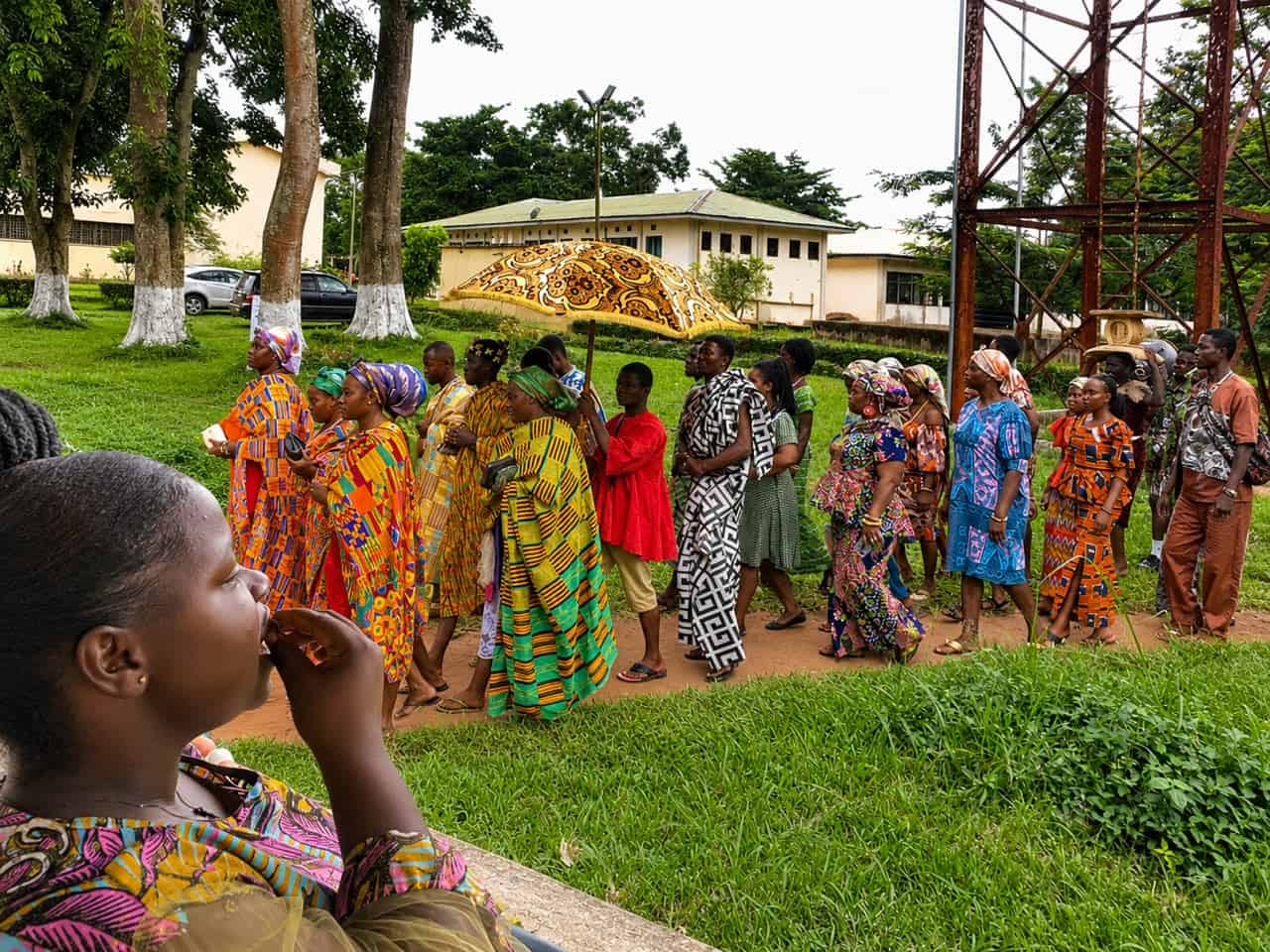
Food Bazaar and Cultural Exhibition
Food plays an important role during the celebration. A food bazaar is organized where students prepare and sell a variety of traditional Akan and Nzema dishes. Popular foods include fufu with light soup, ampesi, eto, mpotompoto, aprapransa, banku with okro stew, akple, and different local soups and stews. Traditional drinks such as palm wine, asaana, sobolo, and millet beverages are also displayed.
Alongside the food bazaar, students organize cultural exhibitions featuring traditional artifacts such as stools, drums, baskets, pottery, beads, musical instruments, farming tools, and local textiles. Explanations are provided on the historical and cultural significance of these items. Visitors learn about the lifestyles, occupations, festivals, and customs of various Akan and Nzema communities.
Games and Recreational Activities
Sports and recreational activities add excitement to the week’s celebration. Friendly football matches, volleyball, table tennis, tug-of-war, sack races, and other traditional games are organized between different year groups or departments.
These activities promote teamwork, physical fitness, and unity among students. Winners receive medals, trophies, certificates, or other prizes during the closing ceremony. Recreational events also provide opportunities for students to relax and build stronger friendships outside the classroom.
Health Screening and Community Service
In some years, the department incorporates community service activities into the celebration. Students participate in health screening exercises, blood donation campaigns, environmental sanitation, tree planting, or educational outreach programmes in nearby communities.
Health professionals conduct free medical examinations, including blood pressure checks, blood sugar testing, eye screening, and health education. These outreach activities demonstrate the department’s commitment to serving society while promoting healthy living and environmental responsibility.
Cultural Night
The cultural night is often the highlight of the Akan–Nzema Week celebration. Students gather in large numbers to enjoy an evening filled with traditional music, dance, drama, comedy, poetry, and fashion displays.
Different cultural groups perform dances such as Adowa, Kete, Fontomfrom, and other traditional performances associated with Akan and Nzema communities. Students also perform contemporary cultural music that blends traditional rhythms with modern styles.
The event provides an opportunity for students to display their talents while celebrating Ghana’s cultural richness in a relaxed and entertaining atmosphere.
Awards and Closing Ceremony
The celebration concludes with a grand closing ceremony. During this event, prizes and certificates are presented to winners of the various competitions. Awards are also given to hardworking students, supportive lecturers, sponsors, and committee members who contributed to the success of the programme.
The Departmental President delivers a speech expressing appreciation to the university management, lecturers, students, sponsors, invited guests, and organizing committees. The Head of Department encourages students to continue promoting Akan and Nzema languages even after the celebration.
The ceremony ends with cultural performances, group photographs, networking, and expressions of gratitude from participants.
Importance of the Akan–Nzema Week Celebration
The celebration offers numerous benefits to students, the university, and society as a whole. It promotes the preservation and development of indigenous languages, strengthens students’ cultural identity, and encourages respect for Ghana’s diverse traditions. It also provides opportunities for leadership development, teamwork, creativity, public speaking, and community engagement.
Furthermore, the celebration creates awareness about the importance of teaching Ghanaian languages in schools and preserving oral traditions for future generations. Students gain practical experience in event planning, communication, research, and cultural presentation, which complements their academic studies.
Conclusion
The University of Education, Winneba Department of Akan–Nzema Week is a significant cultural and academic event that celebrates the richness of Ghanaian languages and traditions. Through seminars, cultural displays, traditional performances, competitions, food exhibitions, community service, and social activities, students gain a deeper appreciation of their cultural heritage while developing valuable academic and leadership skills. The celebration strengthens unity among students, promotes indigenous language education, and contributes to the preservation of Ghana’s cultural identity. As a result, the Akan–Nzema Week remains an important annual tradition that continues to inspire students and uphold the values of language, culture, education, and national development.

