
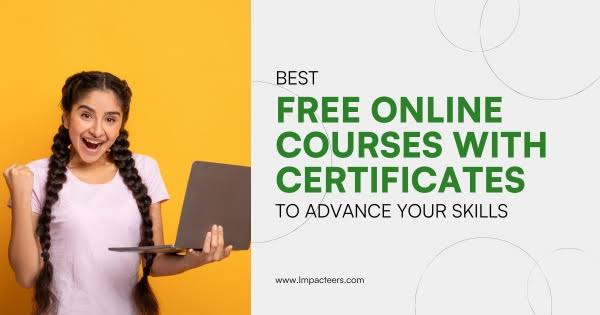
The internet has made it possible to learn valuable professional skills without paying university-level tuition. In 2026, students, job seekers, entrepreneurs, freelancers, and working professionals can access thousands of online courses covering technology, business, digital marketing, data analytics, artificial intelligence, cybersecurity, project management, and many other fields.
The challenge is no longer finding something to learn. The challenge is finding high-quality courses that are genuinely free and provide a useful certificate, badge, or other proof of completion.
It is also important to understand the difference between a free course and a free certificate. Some platforms allow you to study course material at no cost but charge for a verified certificate. Others provide both the learning material and the credential for free.
For example, OpenLearn from The Open University provides free Statements of Participation for eligible completed courses, while IBM SkillsBuild offers free learning and digital credentials in areas including artificial intelligence, cybersecurity, and data.
This guide explores some of the best options available in 2026 and explains how to choose courses that can actually improve your career prospects.
1. IBM SkillsBuild
IBM SkillsBuild is one of the strongest choices for learners who want free technology and career-focused education.
The platform provides free courses and learning resources covering areas such as:
- Artificial intelligence
- Cybersecurity
- Data
- Cloud computing
- Digital skills
- Workplace skills
- Professional development
IBM states that its SkillsBuild learning is 100% free and available in more than 20 languages. Learners can also earn digital credentials that demonstrate completed learning.
This makes the platform particularly useful for students and professionals who want to build a technology-oriented CV without immediately paying for expensive training.
Who should use IBM SkillsBuild?
It is suitable for:
- Beginners entering technology
- University students
- Job seekers
- Career changers
- Professionals learning AI
- Entrepreneurs who want digital skills
A major advantage is that the platform combines learning with digital credentials, allowing learners to demonstrate what they have studied.
2. OpenLearn by The Open University
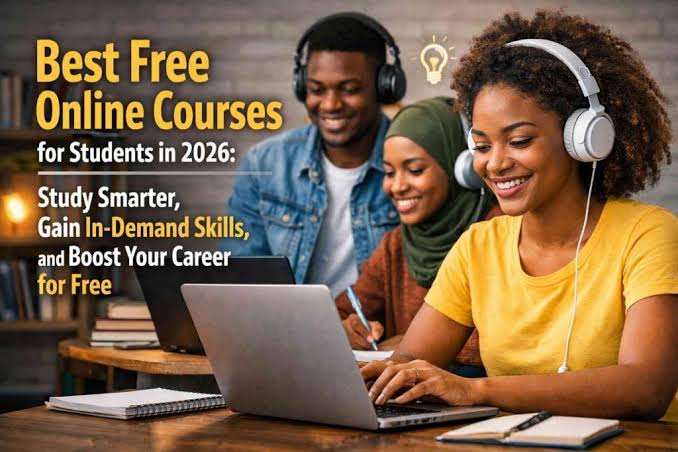
OpenLearn is the free learning platform of The Open University in the United Kingdom.
It offers courses covering subjects such as:
- Business
- Technology
- Education
- Psychology
- Health
- Science
- History
- Personal development
- Career development
One of its biggest advantages is that eligible courses provide a free Statement of Participation after completion.
According to OpenLearn, learners can create an account, enrol in a course, complete the required material and quizzes, and then download a free Statement of Participation as a PDF. Some courses also offer free digital badges.
These statements do not represent formal academic credit, so they should not be presented as equivalent to a university degree or professional license. Nevertheless, they can provide evidence that you completed structured learning.
3. Coursera
Coursera is one of the world’s best-known online learning platforms and hosts courses from universities and companies.
You can find learning opportunities in:
- Data analytics
- Programming
- Business
- Marketing
- Artificial intelligence
- Project management
- IT
- Cybersecurity
- Psychology
- Finance
However, learners should pay close attention to the difference between free access and a free certificate.
Many Coursera courses allow learners to access some or all educational material through free options, while the verified certificate may require payment. In some cases, financial aid or other platform-specific options may be available.
Therefore, do not assume that every course advertised as “free” automatically includes a free certificate.
Coursera is particularly valuable if your objective is to learn from established universities or companies and build a structured professional learning path.
Research also suggests that online credentials can have career-signaling value. A large-scale study involving Coursera learners found that encouraging credential sharing was associated with higher rates of reported new employment, particularly for jobs related to the certificates.
4. edX

edX provides access to courses from universities and institutions around the world.
You can find courses in areas including:
- Computer science
- Business
- Data science
- Engineering
- Artificial intelligence
- Mathematics
- Medicine
- Humanities
The platform is especially attractive to learners who want university-level educational content.
However, as with Coursera, you need to distinguish between free course access and free verified certification. Many edX courses can be audited at no cost, while a verified certificate may require payment.
This does not make the free learning option useless. If your primary goal is acquiring knowledge rather than collecting certificates, free auditing can be an excellent way to learn from reputable institutions.
5. Google Career and Digital Skills Courses
Google Career Certificates and Learning
Google provides a broad range of online learning resources designed to develop digital and professional skills.
Depending on the program, learners can study areas such as:
- Digital marketing
- Data analytics
- IT support
- Cybersecurity
- Project management
- UX design
- Artificial intelligence
The important point is that not every Google learning resource has the same pricing or certificate structure.
Some learning resources are free, while certain professional certificate programs require payment or are offered through subscription-based platforms.
Therefore, always check the specific course’s current requirements before enrolling.
Google’s learning ecosystem can nevertheless be valuable for people who want practical skills aligned with modern digital careers.
6. Microsoft Learn
Microsoft Learn is particularly useful for people interested in technology, cloud computing, software development, data, and artificial intelligence.
Learning paths cover subjects such as:
- Azure
- Artificial intelligence
- Microsoft 365
- Power Platform
- Data
- Software development
- Cybersecurity
Much of the learning content is available for free.
One important distinction is that completing Microsoft Learn modules is not necessarily the same thing as earning a Microsoft professional certification. Microsoft certifications can involve formal exams and fees.
Nevertheless, Microsoft Learn is an excellent starting point for someone who wants to develop practical technology knowledge before deciding whether to pursue a professional certification.
7. Cisco Networking Academy
Cisco Networking Academy is worth considering if you are interested in networking, cybersecurity, IT, or digital skills.
Courses can introduce learners to areas such as:
- Networking fundamentals
- Cybersecurity
- Programming
- Internet of Things
- Digital skills
- Operating systems
Cisco’s ecosystem is particularly relevant for people considering technical careers.
For someone starting from zero, introductory networking or cybersecurity courses can provide a foundation before progressing to more advanced training.
Always check the individual course page for its current certificate or badge requirements because credentials vary by program.
8. Alison

Alison is another popular platform offering a large selection of free online courses.
Its subjects include:
- Business
- Management
- Health
- IT
- Personal development
- Marketing
- Languages
- Construction
- Finance
The platform is attractive to learners who want a broad selection of introductory courses.
However, it is important to distinguish between free learning and the cost of obtaining a physical or certain downloadable certificate or diploma. Check the individual course’s current certificate options before enrolling if the credential is important to you.
Alison can be particularly useful for exploring a subject before committing to more advanced education.
9. HubSpot Academy
HubSpot Academy is an excellent option for people interested in marketing and business.
Courses and certifications cover areas such as:
- Digital marketing
- Content marketing
- Social-media marketing
- Email marketing
- Sales
- Customer service
- CRM
- Inbound marketing
For freelancers and entrepreneurs, these skills can be especially useful.
For example, someone starting a social-media management business could learn content strategy, inbound marketing, customer relationship management, and digital advertising concepts.
The platform’s certificates can also be useful additions to a LinkedIn profile and CV when combined with actual work experience.
10. Free AI Courses
Artificial intelligence is one of the most important areas to study in 2026.
You do not necessarily need to become an AI engineer. AI literacy can benefit professionals in marketing, finance, administration, education, software development, business, research, and many other fields.
Free AI learning opportunities can introduce you to:
- Generative AI
- Prompt engineering
- Machine learning
- AI ethics
- AI productivity
- Data fundamentals
- AI-assisted programming
IBM SkillsBuild is one strong starting point because it currently offers free AI and technology learning as well as digital credentials.
When choosing an AI course, prioritize programs that teach concepts and practical application rather than courses promising that you can become wealthy simply by using AI.
Why Certificates Matter—but Skills Matter More
A certificate can help demonstrate that you completed a course, but it does not automatically qualify you for a job.
Imagine two candidates applying for a digital-marketing position.
Candidate A has completed ten online certificates but has never managed a real campaign.
Candidate B has completed two relevant courses and has created three marketing campaigns for small businesses.
Candidate B may have a stronger practical portfolio.
This is why you should combine certificates + projects + experience.
After completing a course, create something that demonstrates what you learned.
For example:
- Complete a data-analysis course → analyze a public dataset.
- Complete a digital-marketing course → create a sample marketing campaign.
- Complete a web-development course → build a website.
- Complete a graphic-design course → create a portfolio.
- Complete a cybersecurity course → build a legal home lab and document your learning.
- Complete a business course → create a business plan.
The certificate shows that you studied.
The project shows that you can apply the knowledge.
How to Choose the Best Free Online Course
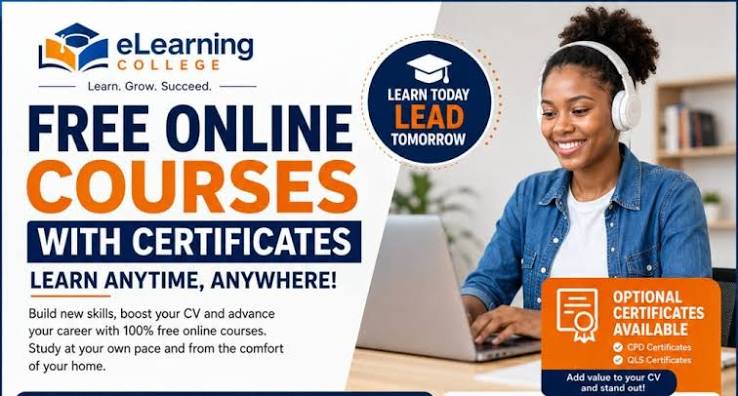
Before enrolling, ask five questions.
1. Is the course genuinely free?
Check whether you can access the lessons without paying.
2. Is the certificate actually free?
This is particularly important. A course can be free while the certificate costs money.
3. Who provides the course?
Courses from recognized universities, technology companies, professional organizations, and established educational platforms may carry more credibility than an unknown website.
4. Is the skill useful?
Choose courses connected to your career goals.
5. Can you demonstrate the skill?
The best courses give you knowledge that you can turn into a project, portfolio, service, or professional capability.
Best Free Courses for Different Career Goals
If your goal is technology, consider IBM SkillsBuild, Microsoft Learn, Cisco Networking Academy, and relevant university courses on Coursera or edX.
If your goal is digital marketing, HubSpot Academy and relevant Google learning resources are strong places to start.
If your goal is AI, look for beginner-friendly programs from IBM, Microsoft, Google, and established AI-education providers.
If your goal is business, explore OpenLearn, Coursera, edX, HubSpot Academy, and other reputable business-learning platforms.
If your goal is personal development, OpenLearn and other established educational platforms offer numerous introductory courses.
How to Use Free Certificates to Get a Job
Do not simply collect certificates and leave them in your email inbox.
Add relevant credentials to your CV.
You can also add them to your LinkedIn profile, portfolio website, or professional résumé.
More importantly, explain what you learned.
Instead of writing:
“Completed an online course in data analytics.”
You could write:
“Completed data analytics training and applied spreadsheet and visualization techniques to analyze a public dataset.”
The second statement communicates both education and practical application.
You should also avoid filling your CV with dozens of unrelated certificates. Five relevant credentials can be more useful than 30 courses that have nothing to do with the job you want.
A Simple 90-Day Online Learning Plan
If you are starting from scratch, do not attempt to complete ten courses simultaneously.
Month One: Choose a Career Direction
Select one area such as:
- Data analytics
- Digital marketing
- Cybersecurity
- Web development
- AI
- Project management
- Business
Take one introductory course and complete it.
Month Two: Build Practical Skills
Take a second course that develops your ability to apply the first skill.
Start a small project.
For example, a beginner in data analytics could analyze a publicly available dataset and create charts.
Month Three: Build Your Portfolio
Complete one meaningful project and publish your work where appropriate.
Update your CV and LinkedIn profile with your new credentials.
Then begin applying for internships, jobs, freelance projects, volunteer opportunities, or entry-level work.
This approach is more valuable than spending three months collecting certificates without producing anything.
Final Thoughts
Free online courses can dramatically reduce the cost of learning new skills in 2026. Platforms such as IBM SkillsBuild and OpenLearn provide particularly attractive options for learners who want free education accompanied by digital credentials or Statements of Participation.
However, the certificate should not be the final objective.
Your real goal should be to become capable of doing something valuable.
Choose a course that matches your career direction, complete it, earn the available credential, and then use your new knowledge to create a practical project.
For students and job seekers, that combination can be powerful:
Learn → Earn a credential → Build a project → Create a portfolio → Apply for opportunities.
The internet has made high-quality education more accessible than ever. The people who benefit most will not necessarily be those who collect the most certificates. They will be those who turn what they learn into practical skills, useful work, and measurable results.

