


The Manhyia Palace witnessed a memorable and symbolic moment on Wednesday as the Asantehene, Otumfuo Osei Tutu II, warmly received the Yagbonwura, Bii-Kunuto Jewu Soale I, in an encounter that has attracted admiration across Ghana and beyond.
The meeting, marked by mutual respect and a heartfelt embrace between two of Ghana’s most respected traditional leaders, represented far more than a ceremonial gathering. It reflected the values of unity, cultural preservation, peaceful coexistence, and the continued importance of traditional institutions in national development.
As traditional rulers continue to play influential roles in shaping social progress and preserving cultural identity, the meeting at Manhyia Palace stood as a reminder of the strength that exists when kingdoms and traditional authorities come together with a common purpose.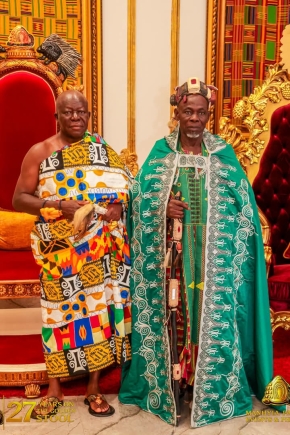
Observers described the event as historic and emotionally significant, noting that the atmosphere at the palace reflected warmth, dignity, and mutual admiration.
From the moment the Yagbonwura arrived at Manhyia Palace, the occasion carried a sense of importance. Traditional protocols were observed while cultural symbols and expressions of honour highlighted the significance of the visit.
The welcome demonstrated not only hospitality but also recognition of the longstanding relationship between the people of Asanteman and Gonjaland.
One of the defining moments of the occasion occurred when Otumfuo Osei Tutu II and Yagbonwura Bii-Kunuto Jewu Soale I greeted each other with a friendly embrace.
That simple but powerful gesture immediately captured public attention.
The embrace became more than a greeting—it evolved into a visible representation of unity among traditional authorities and a message of peace for communities across Ghana.
Many observers interpreted the moment as evidence that cultural leadership continues to serve as a bridge across ethnic and regional identities.
Traditional institutions in Ghana have historically provided stability, mediation, identity, and continuity. The encounter at Manhyia Palace reflected those enduring values and reinforced the role chiefs and kings continue to play in promoting social harmony.
Throughout Ghana’s history, relationships among traditional states have contributed significantly to national cohesion.
Although each traditional area maintains its unique customs and governance structures, occasions such as this demonstrate that shared respect remains central to preserving national identity.
The meeting also carried strong cultural symbolism.
Asanteman and Gonjaland are among Ghana’s historically respected traditional areas with rich cultural traditions and deep historical roots.
Their leadership structures continue to influence education, conflict resolution, cultural preservation, and development initiatives within their communities.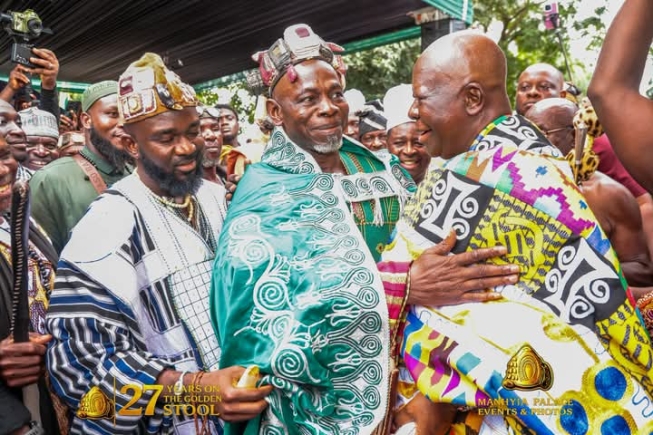
By coming together publicly and demonstrating friendship, both rulers sent an important message about cooperation and dialogue.
Participants and guests at the palace noted the atmosphere of openness and goodwill that characterized the engagement.
Traditional ceremonies often communicate values without extensive speeches, and the interaction between the two leaders achieved exactly that.
Respect was shown not merely through protocol but through personal connection.
Another major highlight of the meeting emerged when Otumfuo Osei Tutu II announced his intention to return the gesture through a future visit to Gonjaland.
The announcement was received positively and viewed as a meaningful continuation of the relationship established during the gathering.
Reciprocal visits among traditional leaders are often considered important acts of diplomacy and cultural respect.
Such visits strengthen bonds, encourage exchange of ideas, and deepen understanding among communities.
Otumfuo’s planned visit therefore carries significance beyond symbolism.
It represents commitment to sustaining relationships and ensuring that traditional cooperation extends beyond ceremonial moments.
For many observers, this development reflects leadership grounded in respect and reciprocity.
The expected future engagement between Asanteman and Gonjaland is anticipated to create opportunities for further cultural exchange and dialogue.
Across the country, many citizens continue to value traditional leadership as an institution that complements national governance and contributes to social progress.
Traditional authorities frequently support educational initiatives, health campaigns, peacebuilding efforts, youth development, and cultural promotion.
Events such as the Manhyia gathering therefore attract attention because they highlight how traditional leadership remains relevant in modern society.
The meeting also comes at a time when conversations around national unity and social cohesion remain important.
Ghana’s diversity is one of its greatest strengths.
Different ethnic groups, languages, customs, and traditions collectively shape the nation’s identity.
Moments where traditional leaders openly demonstrate solidarity contribute to strengthening that shared national spirit.
For younger generations, the gathering served as an educational moment.
It offered an opportunity to witness how traditional institutions continue to evolve while preserving values of dignity, mutual respect, and community leadership.
Many young people increasingly engage with culture through public events and media platforms, making such symbolic moments especially meaningful.
The event also highlighted the importance of dialogue among traditional institutions.
Across generations, peaceful engagement has remained a cornerstone of successful leadership.
When influential leaders model respect and cooperation, they encourage communities to adopt similar values.
This influence extends beyond palace walls and reaches homes, schools, workplaces, and public life.
The image of the two leaders embracing has been widely interpreted as a reminder that relationships built on respect can overcome differences and strengthen collective identity.
Traditional leadership in Ghana has long emphasized consensus-building and peaceful engagement.
These principles remain relevant in addressing contemporary challenges and creating inclusive communities.
Observers further noted that the encounter demonstrated confidence in cultural heritage.
At a time when global modernization continues to influence societies, events that celebrate indigenous institutions help preserve historical identity while encouraging adaptation to changing realities.
Traditional authorities remain custodians of history, values, and communal memory.
Their engagements therefore carry educational and symbolic importance.
The gathering at Manhyia Palace also illustrated the dignity associated with royal diplomacy.
Unlike formal political negotiations, traditional diplomacy often relies on symbolism, ceremonial exchange, and gestures that communicate shared values.
In this context, the embrace between the Asantehene and the Yagbonwura became one of the strongest messages of the day.
It reflected friendship, recognition, and common purpose.
The significance of the event extends beyond the individuals involved.
Communities connected to both kingdoms viewed the meeting as a positive affirmation of unity and mutual regard.
Many expressed appreciation for seeing leaders reinforce relationships through visible acts of respect.
Such moments help preserve confidence in traditional institutions and strengthen public appreciation of Ghana’s cultural diversity.
As anticipation builds for Otumfuo’s future visit to Gonjaland, many expect the engagement to deepen cooperation and create another opportunity to celebrate Ghana’s heritage.
Future interactions may encourage discussions around cultural exchange, community development, youth empowerment, and preservation of traditional values.
Ultimately, the meeting at Manhyia Palace will likely be remembered not only for its ceremonial importance but also for the message it delivered.
It reminded Ghanaians that leadership can unite communities, traditions can remain relevant, and gestures of respect can carry national meaning.
The embrace between Otumfuo Osei Tutu II and Yagbonwura Bii-Kunuto Jewu Soale I represented more than a greeting.
It became a statement of friendship.
It became a symbol of mutual honour.
And above all, it became a powerful reflection of Ghana’s enduring royal heritage and the belief that unity remains one of the nation’s greatest strengths.
As traditional institutions continue to shape conversations about identity, progress, and coexistence, moments such as these reaffirm that cultural leadership remains a valuable pillar in building stronger communities and preserving national heritage for future generations.
Wednesday’s historic encounter at Manhyia Palace therefore stands not only as an important royal visit but as a lasting reminder that respect, dialogue, and unity continue to define the spirit of Ghana.
If you want, I can also turn this into a front-page newspaper format, radio news script, or formal press release style.
powerful representation of unity and respect, demonstrating the strong connection between Asanteman and Gonjaland.
In a noteworthy development, Otumfuo expressed his plan to reciprocate the gesture by visiting Gonjaland, underscoring the event as a meaningful confirmation of cultural unity and Ghana’s royal legacy.

