




In an era where startup success is often measured by millions of users, viral downloads, and aggressive expansion strategies, Nigerian tech entrepreneur Mark Essien has taken a markedly different path. His new venture, TripDesk, achieved an impressive $2.3 million in revenue within just four months of launch — with fewer than 30 customers.
The story is not one of consumer scale or mass-market adoption. Instead, it is a case study in strategic positioning, enterprise focus, disciplined execution, and deep market understanding. TripDesk’s early performance demonstrates that in today’s startup ecosystem, customer quality can outweigh customer quantity.
A Different Kind of Startup Playbook
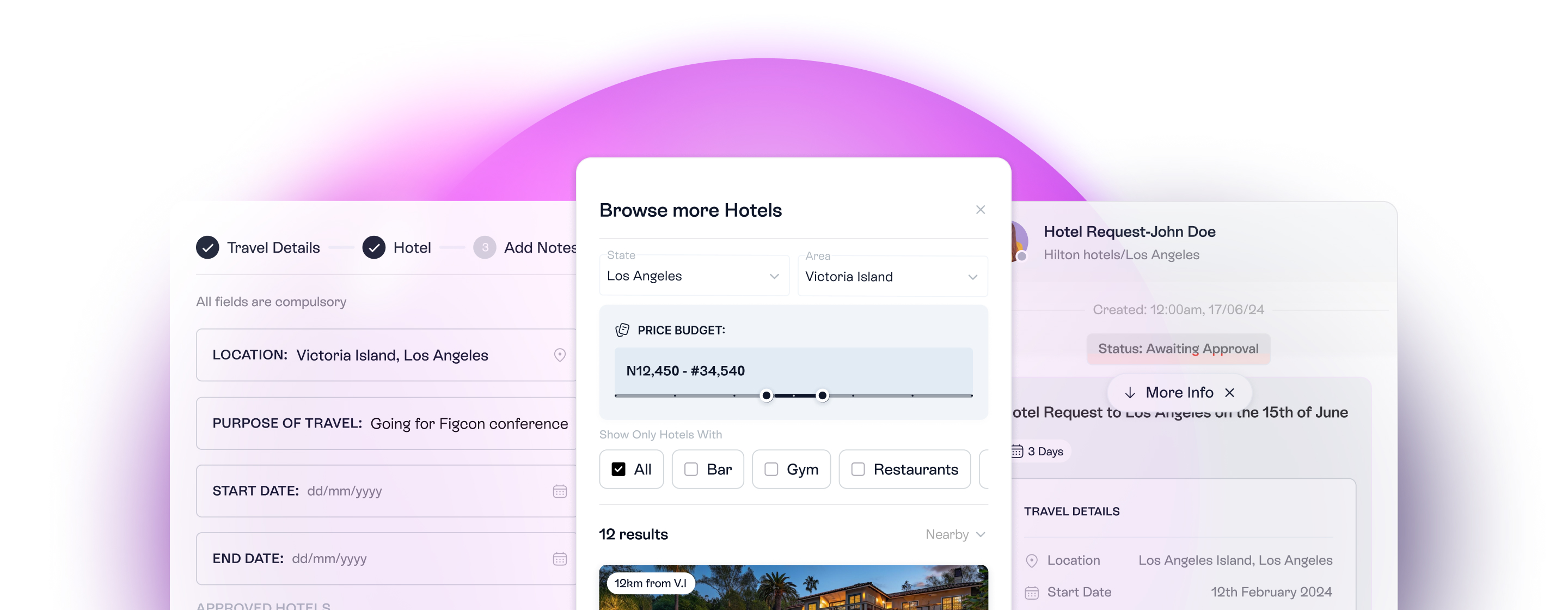
TripDesk is an AI-powered corporate travel management platform designed to streamline how companies book, manage, approve, and reconcile employee travel. Unlike consumer travel apps competing for millions of individual users, TripDesk targets large organisations with significant travel budgets.
For many companies — particularly those operating across African markets — corporate travel management is complex and fragmented. Flights are booked through various agents, hotels are arranged through emails or calls, approvals are handled via WhatsApp messages, and expense reconciliation is managed manually in spreadsheets. The result is inefficiency, financial leakage, and compliance challenges.
TripDesk was built to centralise this entire workflow into a single dashboard. From travel requests and policy enforcement to invoicing and reporting, the platform simplifies what has historically been a chaotic process.
By focusing exclusively on enterprises rather than individuals, Essien avoided the high marketing costs associated with consumer tech. Instead of acquiring thousands of low-revenue users, TripDesk onboarded a small number of high-value corporate clients, each contributing substantial monthly revenue.
The Enterprise Advantage
The numbers tell the story.
With fewer than 30 customers generating $2.3 million in four months, the average revenue per customer is extraordinarily high. This indicates that TripDesk’s clients are not small businesses booking occasional flights, but rather large organisations with frequent travel demands.
Enterprise travel budgets often run into millions of dollars annually. By charging subscription fees and earning service margins on bookings, TripDesk taps directly into this large spend.
This approach offers several advantages:
-
Predictable recurring revenue through subscriptions.
-
High lifetime value per client, reducing the need for constant acquisition.
-
Lower churn rates, as enterprise software is deeply integrated into company operations.
-
Stronger pricing power, especially when the product solves a painful operational problem.
In other words, TripDesk’s growth strategy is rooted in depth rather than breadth.
Solving a Pain Point Others Ignored
One of the reasons for TripDesk’s rapid revenue growth is the severity of the problem it addresses.
Corporate travel in many African markets has historically lacked digitisation. Travel agencies often operate manually, corporate approvals are informal, and financial tracking systems are fragmented. This creates inefficiencies that cost companies time and money.
TripDesk’s solution brings structure and automation:
-
Centralised booking for flights and hotels
-
Automated approval workflows
-
Real-time policy enforcement
-
Consolidated invoicing
-
Expense tracking and reconciliation
-
Data-driven reporting
For finance departments, this means improved oversight and reduced fraud risk. For HR teams, it means easier staff mobility management. For executives, it means visibility into travel spending.
When a product directly addresses operational inefficiencies that cost organisations millions annually, the return on investment becomes clear — and willingness to pay increases significantly.
Leveraging Experience From Hotels.ng
TripDesk did not emerge in isolation. Essien previously founded Hotels.ng, one of Nigeria’s leading hotel booking platforms. Through that venture, he gained firsthand insight into the complexities of travel bookings, vendor relationships, and enterprise customer expectations.
This prior experience provided several advantages:
-
Established relationships with travel suppliers
-
Deep understanding of travel operations
-
Existing credibility within the industry
-
Access to enterprise networks
Rather than starting from scratch, TripDesk was built on years of accumulated market knowledge. Essien understood the bottlenecks corporate clients faced because he had observed them closely while running Hotels.ng.
This background significantly reduced the trial-and-error phase common to early-stage startups.
A Network-Driven Growth Model
Another factor contributing to TripDesk’s early traction was Essien’s existing network within the business community. Enterprise sales typically require trust, long sales cycles, and strong referrals.
With an established reputation in Africa’s tech ecosystem, Essien was able to engage decision-makers directly. Early clients often came through referrals and existing relationships rather than expensive marketing campaigns.
This dramatically lowered customer acquisition costs.
Unlike consumer startups that spend heavily on digital ads and promotions, TripDesk’s growth was largely relationship-driven. In enterprise software, credibility often matters more than visibility.
Profitability by Month Two
Perhaps one of the most striking elements of TripDesk’s story is that it reportedly achieved profitability by its second month of operation.
This is rare in the startup world, where many companies operate at a loss for years in pursuit of scale. By maintaining a lean structure and focusing on high-value contracts, TripDesk generated positive cash flow almost immediately.
Profitability this early suggests:
-
Strong pricing strategy
-
Controlled operational costs
-
Healthy gross margins
-
Efficient product development
It also indicates disciplined management — a hallmark of Essien’s entrepreneurial approach.
The Role of Talent and Execution
Building enterprise software requires skilled engineering, product design, and operational coordination. Essien has long been associated with building and nurturing tech talent, notably through initiatives such as HNG (Hacker Network Group), which trains and connects developers.
Access to a talent pipeline allows faster iteration and lower development friction. Instead of outsourcing or struggling to recruit from scratch, TripDesk could draw from an existing ecosystem of trained professionals.
Execution speed matters significantly in early-stage startups. A four-month revenue milestone of $2.3 million implies not just demand, but strong implementation capabilities.
Enterprise clients expect reliability. Any failure in a corporate travel platform could disrupt entire company operations. Delivering enterprise-grade performance so early speaks to operational discipline.
Why Fewer Customers Can Be Better
TripDesk’s success challenges a common narrative in startup culture: that growth must always be measured by user numbers.
In reality, many highly successful software companies operate on enterprise models with relatively small client bases. What matters is revenue per client and contract size.
With fewer than 30 customers, TripDesk avoided several common growth pains:
-
Overwhelming support demands from mass users
-
Infrastructure strain from viral spikes
-
High churn rates
-
Heavy marketing spend
Instead, the company could focus on serving a manageable client base exceptionally well.
This “fewer but bigger” strategy is particularly powerful in B2B sectors where budgets are large and switching costs are high.
The African Enterprise Opportunity
TripDesk’s rise also highlights a broader trend: the growing digitisation of African enterprises.
As companies expand regionally and globally, operational complexity increases. Travel management, procurement, HR workflows, and financial controls all require modern software solutions.
Historically, many African companies relied on manual systems or foreign platforms not optimised for local realities. A locally built solution tailored to regional travel patterns, currencies, and regulatory environments offers competitive advantages.
TripDesk appears to be positioned precisely at this intersection — combining global-grade software practices with local market insight.
Strategic Patience Over Hype
Essien’s approach contrasts sharply with the “growth at all costs” mentality that dominated the tech industry in previous years. Instead of chasing venture capital headlines or aggressive international expansion, TripDesk focused on sustainable revenue generation.
The startup did not need millions of downloads or flashy marketing campaigns. It needed fewer than 30 organisations willing to pay substantial sums for a product that solved real problems.
This disciplined approach reduces dependency on external funding and provides operational stability.
What Comes Next?
While the $2.3 million milestone is impressive, the long-term test for TripDesk will be scalability. Can it maintain service quality as it grows? Will it expand beyond its initial markets? Can it compete with global travel management platforms?
Enterprise software success depends on continuous innovation, security, and reliability. As more companies digitise operations, competition in the corporate travel management space will intensify.
However, TripDesk’s early profitability and strong revenue base give it a foundation many startups lack.
A Blueprint for Focused Entrepreneurship
Ultimately, TripDesk’s rapid revenue growth offers a valuable lesson for founders across emerging markets:
-
Identify a high-value pain point.
-
Target customers with real purchasing power.
-
Build relationships before building hype.
-
Prioritise profitability alongside growth.
-
Execute with discipline.
Mark Essien’s journey underscores the importance of strategic focus. Instead of chasing millions of users, he built a solution for fewer than 30 organisations — and generated millions of dollars in revenue in the process.
In a startup landscape often dominated by vanity metrics, TripDesk’s performan

