


Fake Police Uniform Scandal: Nigerian Woman Arrested Over Viral Videos Sparks National Debate on Security and Impersonation
The Ghana Police Service has arrested a Nigerian national, identified as Esther Obasi, following the circulation of viral videos in which she appeared dressed in official police camouflage and the standard black police uniform.
The arrest, carried out by the Inspector-General of Police’s Special Cyber Vetting and Enforcement Team (CVET), has triggered widespread public concern, raising critical questions about national security, impersonation, and the control of official state uniforms.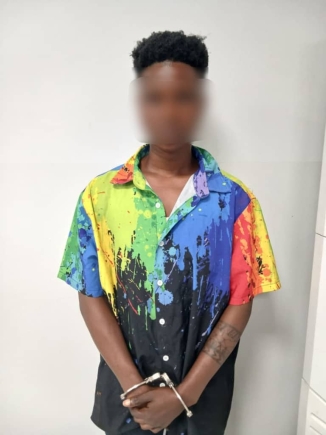
Authorities have confirmed that the suspect is currently in custody and assisting with investigations. She is expected to be arraigned before court in the coming days.
Viral Videos Spark Public Outrage
The case first came to public attention after videos surfaced on social media platforms showing the suspect confidently dressed in what appeared to be authentic Ghana Police uniforms.
In the videos:
- She was seen wearing full police camouflage attire
- In other clips, she appeared in the standard black police uniform
- Her demeanor suggested authority, raising suspicions about impersonation
The footage quickly went viral, attracting thousands of views, comments, and shares across multiple platforms.
Public reaction was swift and intense, with many expressing alarm over the apparent ease with which a civilian could access and wear official police gear.
“This is very dangerous,” one social media user commented. “If anyone can dress like a police officer, how do we know who is real?”
Police Move Swiftly to Arrest Suspect
In response to the public outcry, the Ghana Police Service launched an investigation through its specialized unit, the Cyber Vetting and Enforcement Team (CVET).
Using digital tracking tools and intelligence gathering, officers were able to identify and locate the suspect.
She was subsequently arrested and taken into custody for questioning.
A police statement confirmed:
“The suspect is currently assisting with investigations and will be put before court.”
The swift action by authorities has been widely praised as a demonstration of the police service’s commitment to maintaining law and order.
Who Is Esther Obasi?
While full details about the suspect’s background remain under investigation, police have identified her as a Nigerian national.
Authorities are working to determine:
- How she obtained the police uniforms
- Whether she acted alone or with accomplices
- The intent behind her actions
Investigators are also examining whether the suspect has any prior history of impersonation or related offenses.
Serious Concerns Over Police Impersonation
The incident has reignited concerns about impersonation of law enforcement officers, a crime that poses significant risks to public safety.
Impersonation can:
- Undermine public trust in security institutions
- Enable criminal activities such as fraud, extortion, or robbery
- Create confusion during emergencies
Security experts warn that even a single case can have far-reaching consequences.
“When people lose confidence in identifying real officers, it weakens the entire security system,” a security analyst noted.
How Did She Get the Uniforms?
One of the most pressing questions in the case is how the suspect obtained authentic-looking police uniforms.
Possible scenarios being investigated include:
- Purchase from unauthorized vendors
- Assistance from insiders
- Theft or illegal distribution
The Ghana Police Service has indicated that investigations will extend beyond the suspect to identify any individuals or networks involved in supplying the uniforms.
Legal Implications
Under Ghanaian law, impersonating a police officer is a serious offense that can attract severe penalties.
Potential charges may include:
- Impersonation of a public officer
- Unauthorized possession of police property
- Conduct likely to cause public alarm
Legal experts say the case could serve as a precedent for handling similar incidents in the future.
Role of the Cyber Vetting and Enforcement Team (CVET)
The Cyber Vetting and Enforcement Team (CVET) plays a crucial role in monitoring and responding to digital threats.
In this case, CVET:
- Tracked the origin of the viral videos
- Identified the suspect
- Coordinated the arrest
Their involvement highlights the growing importance of digital intelligence in modern policing.
Public Reaction and Debate
The arrest has sparked a nationwide conversation about security, accountability, and the role of social media.
Many Ghanaians have expressed:
- Shock at the incident
- Support for police action
- Concerns about systemic vulnerabilities
Others have called for stricter controls on the sale and distribution of police uniforms.
A concerned citizen remarked:
“This should not happen. There must be tighter regulations to prevent misuse.”
Impact on Public Trust
Trust in law enforcement is a cornerstone of effective policing.
Incidents like this can:
- Erode confidence in security agencies
- Make citizens hesitant to cooperate with officers
- Increase fear and uncertainty
The Ghana Police Service has reassured the public that measures are being taken to prevent such occurrences in the future.
Security Experts Weigh In
Security analysts have emphasized the need for a comprehensive approach to address the issue.
Recommendations include:
- Enhanced tracking of uniform distribution
- Public education on identifying genuine officers
- Stronger penalties for impersonation
Experts also stress the importance of internal accountability within security agencies.
The Role of Social Media
Social media played a pivotal role in exposing the incident.
The rapid spread of the videos:
- Brought the issue to national attention
- Prompted swift police action
- Enabled public engagement
However, it also highlights the double-edged nature of digital platforms, which can both expose wrongdoing and facilitate it.
Cross-Border Implications
The involvement of a foreign national adds another layer of complexity to the case.
Authorities may explore:
- Immigration status
- Possible cross-border networks
- Collaboration with international agencies
The case underscores the need for regional cooperation in tackling crime.
Police Assurance to the Public
The Ghana Police Service has assured citizens that it remains committed to upholding the integrity of the service.
In its statement, the police emphasized:
- Zero tolerance for impersonation
- Ongoing investigations
- Commitment to justice
Broader Lessons for Society
The incident serves as a reminder of the evolving nature of security challenges.
Key takeaways include:
- The importance of vigilance
- The role of technology in crime detection
- The need for institutional safeguards
Next Steps in the Case
As investigations continue, the focus will be on:
- Gathering evidence
- Identifying accomplices
- Preparing for prosecution
The suspect is expected to appear in court soon, where formal charges will be presented.
Conclusion
The arrest of Esther Obasi marks a significant development in the fight against impersonation and misuse of official authority.
While the swift response by the Ghana Police Service has been commendable, the incident highlights deeper issues that must be addressed to prevent future occurrences.
As the case progresses, it will not only determine the fate of the suspect but also shape public discourse on security, accountability, and trust in law enforcement.
For now, one thing is clear: the misuse of police identity is a serious threat—and authorities are taking it seriously.

