


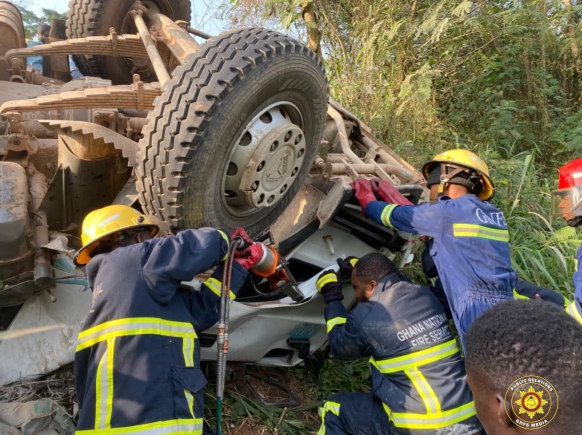
Ghana’s road safety record took a deeply troubling turn in 2025, when the country recorded 2,949 reported road crash fatalities, marking the highest death toll in 35 years. The grim figure has sent shockwaves through government institutions, road safety agencies, civil society organisations, transport unions, and ordinary citizens, reigniting urgent conversations about the state of Ghana’s roads, driving culture, enforcement systems, and collective responsibility.
Behind the statistics are thousands of shattered families, lost futures, and communities forced to grieve loved ones who left home but never returned. The 2025 figure is not just a number; it is a national tragedy that exposes long-standing structural weaknesses and behavioural challenges that Ghana has struggled to address for decades.
Table of Contents
ToggleA Disturbing Milestone in Ghana’s Road Safety History
Road traffic crashes have long been a major public health and development issue in Ghana. However, the 2,949 deaths recorded in 2025 represent a significant escalation compared to previous years, surpassing figures seen since the late 1980s and early 1990s.
Experts describe the milestone as a wake-up call—one that signals the failure of incremental reforms and half-measures. Despite years of road safety campaigns, policy documents, and enforcement drives, fatalities continue to rise, suggesting that existing interventions are no longer sufficient for the scale and complexity of the problem.
The increase also comes at a time when Ghana’s population, vehicle ownership, and road usage are rapidly expanding, placing unprecedented pressure on infrastructure and regulatory systems that have not kept pace.
Who Are the Victims?
An analysis of road crash data over the years shows that fatalities cut across all demographics, but certain groups remain disproportionately affected.
Pedestrians
Pedestrians consistently account for a large percentage of road deaths in Ghana. Many victims are:
-
Schoolchildren crossing busy highways
-
Market women navigating traffic-laden urban roads
-
Elderly citizens with limited mobility
Poorly designed roads, lack of pedestrian crossings, and weak enforcement of speed limits in populated areas leave pedestrians dangerously exposed.
Commercial Transport Users
Passengers using commercial buses, trotros, and taxis also form a significant portion of fatalities. Overloading, speeding, driver fatigue, and poorly maintained vehicles contribute heavily to deadly crashes.
Motorcyclists and Tricycle Riders
The rapid rise in motorcycle and tricycle use—especially for commercial purposes—has added a new dimension to Ghana’s road safety crisis. Many riders:
-
Do not wear helmets
-
Lack formal training
-
Operate on highways not designed for motorcycles
As a result, motorcycle-related fatalities have increased sharply in recent years.
Young Adults
Road crashes remain one of the leading causes of death among young people aged 15 to 35. This demographic represents Ghana’s productive workforce, making the fatalities not just a social loss but an economic one.
Key Causes Behind the 2025 Fatality Surge
1. Speeding and Reckless Driving
Speeding continues to be the single most significant contributor to fatal crashes. Many drivers routinely exceed speed limits, particularly on highways and newly constructed roads where enforcement is weak.
Reckless behaviours such as dangerous overtaking, ignoring traffic signals, and aggressive driving habits are widespread and often normalised.
2. Poor Road Infrastructure
While Ghana has invested in road construction over the years, many roads remain:
-
Narrow and poorly lit
-
Lacking road markings and signage
-
Without pedestrian walkways or crossings
In rural areas, deteriorated road surfaces increase the risk of vehicle loss of control, especially during the rainy season.
3. Weak Law Enforcement
Although traffic laws exist, enforcement remains inconsistent. Factors include:
-
Limited personnel and logistics
-
Corruption and selective enforcement
-
Inadequate use of technology such as speed cameras
When drivers believe they can evade punishment, dangerous behaviour becomes routine.
4. Driver Fatigue and Substance Abuse
Long-distance commercial drivers often work extended hours without rest, increasing the likelihood of fatigue-related crashes. Alcohol and drug use, particularly among commercial and motorcycle riders, also remains a persistent challenge.
5. Vehicle Roadworthiness Issues
Many vehicles on Ghanaian roads are old, poorly maintained, or mechanically unsound. Brake failures, worn tyres, and faulty lighting systems frequently contribute to fatal accidents.
Despite mandatory roadworthiness inspections, enforcement gaps allow unsafe vehicles to remain in operation.
The Economic and Social Cost
The impact of 2,949 road fatalities extends far beyond the immediate loss of life.
Economic Losses
Road crashes cost Ghana an estimated 3–5% of GDP annually, considering:
-
Medical expenses
-
Loss of productive labour
-
Vehicle damage
-
Emergency response costs
When breadwinners die, families often fall into poverty, increasing dependence on social support systems.
Strain on Healthcare
Emergency rooms and trauma centres face overwhelming pressure from road crash victims. Limited resources are diverted to treat preventable injuries, affecting care for other patients.
Psychological Trauma
Survivors of road crashes often live with lifelong disabilities, while families suffer emotional trauma that can last generations. Children who lose parents face disrupted education and uncertain futures.
Urbanisation and Traffic Pressure
Rapid urbanisation has significantly worsened road safety challenges. Cities such as Accra, Kumasi, Tamale, and Takoradi experience:
-
Severe congestion
-
Poor traffic management
-
High pedestrian-vehicle conflict
Urban roads designed decades ago are now overwhelmed by vehicle volumes far beyond their original capacity.
Institutional Responses and Their Limitations
Agencies such as the National Road Safety Authority (NRSA), the Motor Traffic and Transport Department (MTTD) of the Ghana Police Service, and the Driver and Vehicle Licensing Authority (DVLA) play key roles in road safety.
While these institutions have implemented measures such as:
-
Public education campaigns
-
Speed enforcement exercises
-
Driver licensing reforms
Critics argue that efforts are often reactive, underfunded, and poorly coordinated. Road safety experts have long called for a multi-sectoral, data-driven approach, but implementation remains uneven.
The Role of Driver Education
Many drivers on Ghanaian roads lack formal training. Some obtain licenses through unofficial means, bypassing proper testing. This results in drivers who:
-
Do not understand road signs
-
Lack defensive driving skills
-
Are unaware of basic traffic laws
Improving driver education and licensing integrity is widely seen as critical to reducing fatalities.
Technology and Innovation: An Untapped Solution
Technology offers significant potential to improve road safety in Ghana:
-
Speed cameras and automated enforcement
-
Dashcams and vehicle tracking systems
-
Digital driver records and penalty systems
However, adoption remains limited due to funding constraints and institutional resistance.
Public Attitudes and Cultural Factors
Perhaps the most difficult challenge is changing public attitudes. Dangerous behaviours are often normalised, with phrases like “God will protect us” used to justify risk-taking.
Road safety advocates argue that without a cultural shift—where safety is valued over speed and convenience—fatalities will continue to rise.
Lessons from Other Countries
Countries that have successfully reduced road deaths share common strategies:
-
Strict enforcement of traffic laws
-
Severe penalties for dangerous driving
-
Investment in safe road design
-
Strong political commitment
Ghana’s 2025 fatality record highlights the urgency of adopting similar evidence-based approaches.
What Must Change Going Forward
To prevent another tragic milestone, experts recommend:
-
Declaring road safety a national emergency
-
Strengthening enforcement with technology
-
Improving road design for pedestrians and cyclists
-
Reforming driver training and licensing
-
Expanding public education campaigns
-
Holding institutions accountable for results
Road safety must move from policy rhetoric to sustained action.
A National Responsibility
The 2,949 lives lost in 2025 represent a collective failure—but also a chance for collective resolve. Government, law enforcement, transport unions, civil society, communities, and individual road users all have roles to play.
Every decision—speeding, overtaking recklessly, driving tired, ignoring seatbelts—has consequences that ripple through families and society.
Conclusion
Ghana’s record of 2,949 road crash fatalities in 2025, the highest in 35 years, stands as one of the most sobering public safety statistics in the nation’s recent history. It exposes deep systemic weaknesses, behavioural challenges, and policy gaps that can no longer be ignored.
If the country fails to act decisively, the numbers may climb even higher. But if lessons are learned and reforms pursued with urgency and sincerity, the tragedy of 2025 could become a turning point—one that finally puts Ghana on a path toward safer roads and fewer funerals.
The cost of inaction is already written in lives lost. The question now is whether Ghana will choose change before the toll rises again.

