



Fresh speculation about succession in North Korea has intensified after officials in Seoul indicated that leader Kim Jong Un appears to be positioning his teenage daughter as a potential successor.
South Korean authorities say recent public appearances and state media portrayals suggest that the young girl—widely believed to be Kim’s second child, often referred to by analysts as Kim Ju Ae—is being gradually introduced to the domestic and international audience as part of a long-term leadership narrative.
While Korean Central News Agency (KCNA) has not formally described her as an heir, officials in Seoul say the symbolism surrounding her appearances cannot be ignored.
Table of Contents
ToggleA Shift in Public Visibility
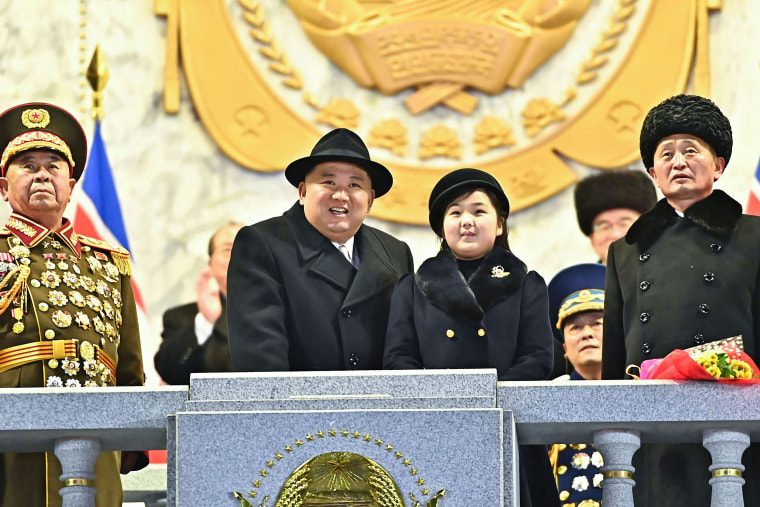

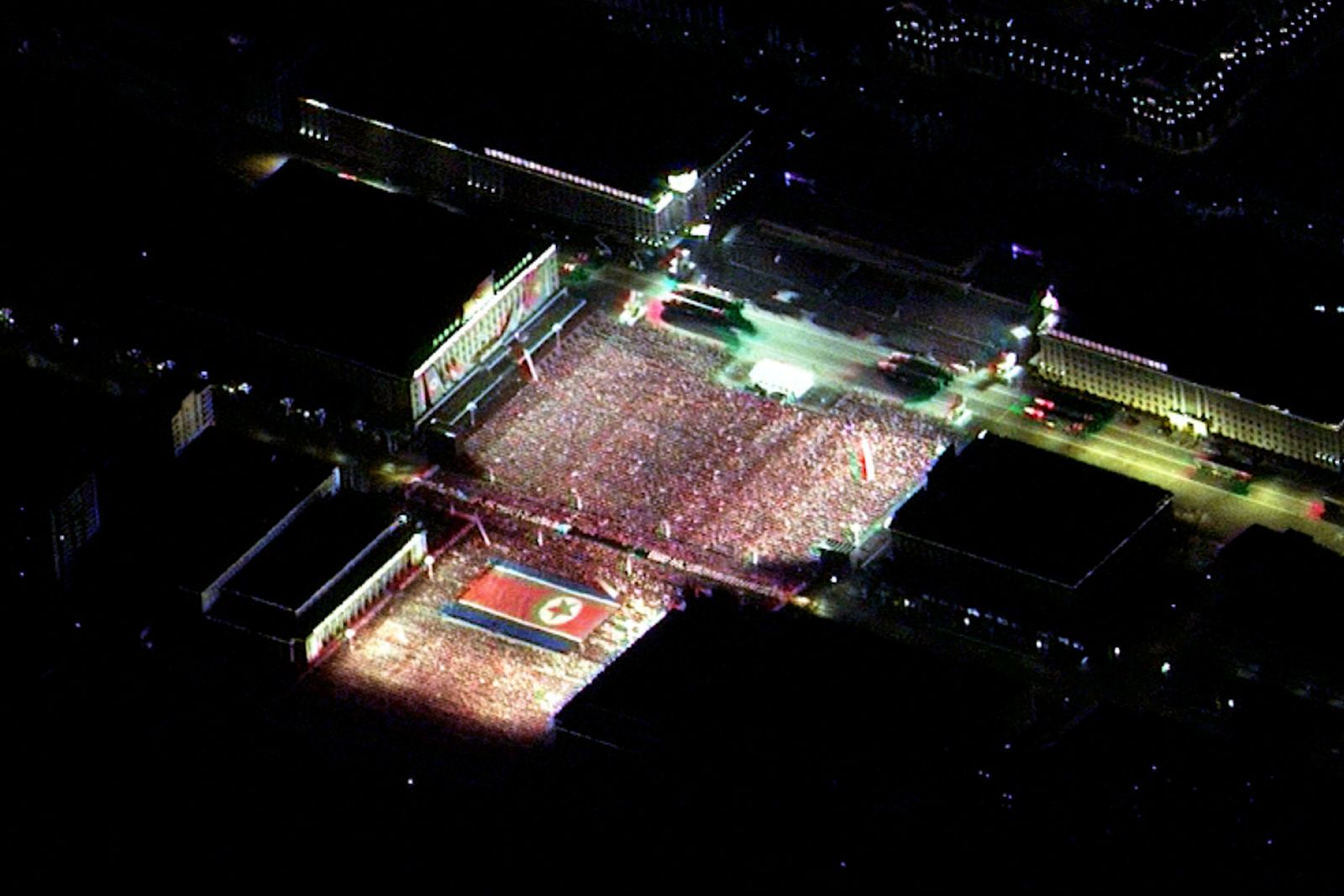
The young girl first drew global attention when she accompanied her father to a missile test event in late 2022. Since then, she has appeared alongside Kim at high-profile military parades, weapons demonstrations, and state ceremonies in Pyongyang.
Analysts note that her frequent presence at strategic weapons showcases—particularly intercontinental ballistic missile (ICBM) events—signals more than a simple family outing. Instead, it appears to be a carefully curated message about continuity and dynastic succession.
According to South Korea’s intelligence assessments, the increased visibility of Kim’s daughter suggests that she is being prepared for a more prominent future role within the regime.
Seoul’s Assessment
Officials in South Korea have publicly stated that, based on their analysis, the teenager is “highly likely” being groomed as a future leader.
A spokesperson from Seoul indicated that the pattern of appearances, combined with state media descriptions emphasizing her “beloved” status and proximity to power, align with how previous North Korean leaders were gradually introduced to the public.
However, South Korean authorities also cautioned that succession planning in North Korea remains opaque and subject to internal political calculations.
A Dynasty of Leadership

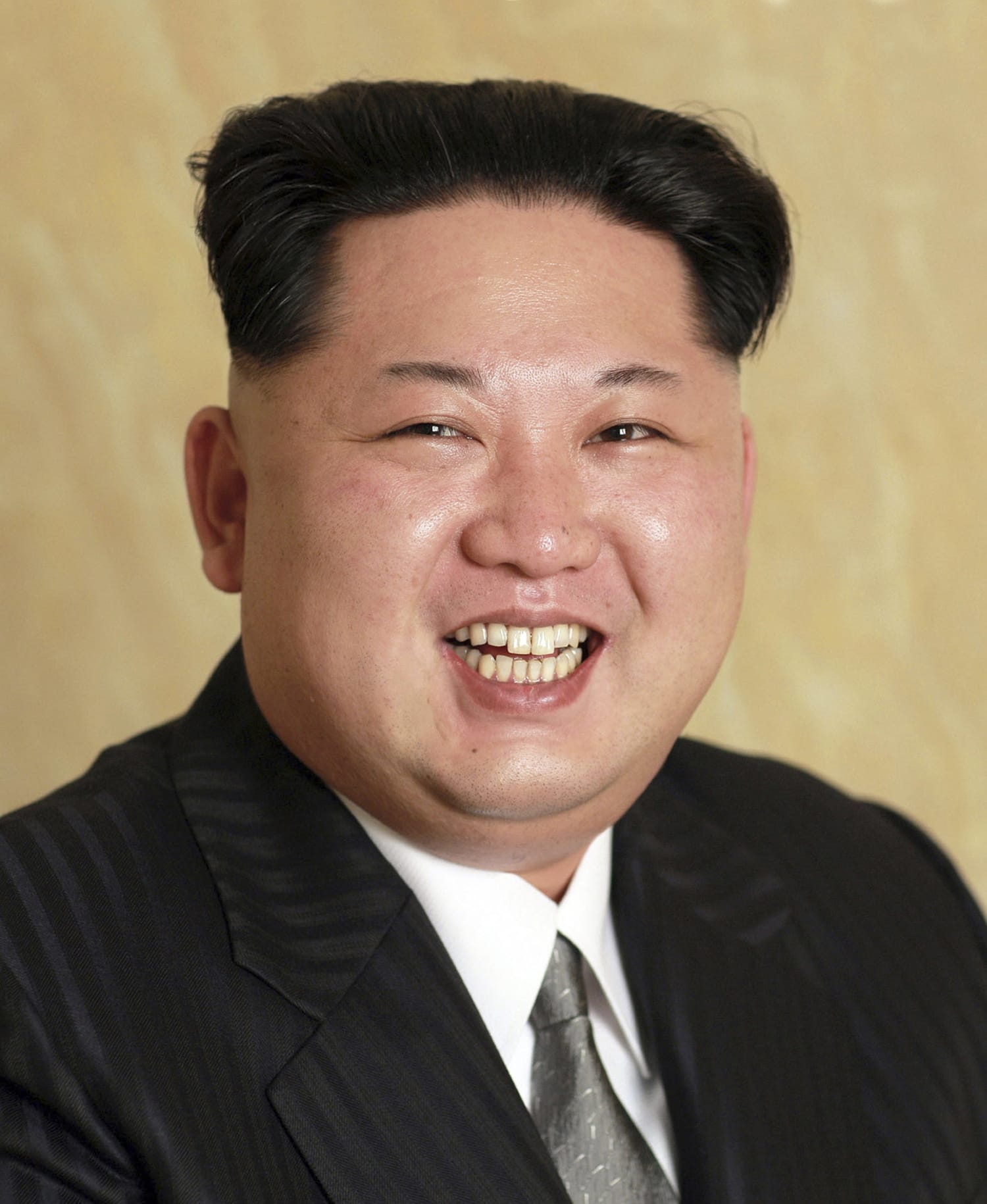
North Korea operates under a dynastic political structure that has persisted for over seven decades. The country was founded by Kim Il Sung in 1948. Leadership later passed to his son, Kim Jong Il, and then to his grandson, Kim Jong Un, in 2011.
Each transition was marked by a period of gradual introduction, during which the successor was elevated within the political and military hierarchy before formally assuming control.
Observers say that if Kim Jong Un’s daughter is indeed being positioned as heir, it would represent the fourth generation of leadership within the same family.
Breaking Gender Expectations?
One notable aspect of the reports is the potential elevation of a female successor in a traditionally male-dominated political system.
North Korea’s political and military leadership has historically been dominated by men, though women have held influential roles within the Workers’ Party and state institutions.
Analysts say the selection of a female heir could signal a pragmatic approach rather than ideological change. The regime’s primary objective remains continuity and stability of the ruling family’s authority.
Still, the optics of a potential female leader in such a rigid system have drawn global attention.
Strategic Messaging
Experts in Korean Peninsula affairs believe the public presentation of Kim’s daughter serves multiple purposes:
-
Internal Stability: Reinforcing the narrative of dynastic continuity to elite power brokers.
-
External Signaling: Demonstrating long-term regime durability to adversaries and allies alike.
-
Legacy Building: Framing Kim Jong Un as a father safeguarding the nation’s future.
The decision to feature the teenager at missile launches—arguably the most symbolically charged events in North Korea’s calendar—underscores the strategic nature of these appearances.
Regional Reactions
In Seoul, the possibility of a designated heir has sparked discussions among policymakers about long-term stability in North Korea.
While some analysts view early succession planning as a stabilizing factor, others caution that it could intensify internal power struggles if rival factions emerge.
Officials in United States and neighboring China have not issued formal statements specifically addressing the heir speculation, though both countries closely monitor developments in Pyongyang.
Intelligence Limitations
Despite South Korea’s assessment, much about North Korea’s internal decision-making remains speculative. The regime tightly controls information, and state media narratives are often crafted for strategic purposes.
It is unclear whether Kim’s daughter has been formally introduced into party structures or granted official titles beyond ceremonial appearances.
Some analysts argue that public exposure alone does not confirm succession plans, noting that political grooming typically involves years of structured advancement within the party and military apparatus.
Historical Parallels
When Kim Jong Un himself was first identified as successor, his public appearances were limited before his official elevation. Over time, he was appointed to senior military and party roles, paving the way for his eventual leadership.
Observers suggest that if Kim’s daughter continues to appear prominently at state functions, especially in contexts beyond military events, it could further substantiate claims of succession grooming.
Domestic Implications
Within North Korea, public presentation of the leader’s family may also serve to humanize Kim Jong Un, projecting an image of stability and paternal responsibility.
State media coverage often emphasizes themes of loyalty, unity, and generational continuity. By associating his daughter with national defense achievements, Kim reinforces the narrative that safeguarding the country’s sovereignty is a family mission.
Such symbolism can strengthen internal cohesion, particularly in a system where personal loyalty to the ruling family remains central.
Global Attention
International media outlets have closely followed each public appearance of Kim and his daughter. Photographs from parades and missile events are analyzed for subtle cues—body language, positioning, attire, and interactions with military officials.
Security experts caution against overinterpretation but acknowledge that North Korea’s leadership is deliberate in crafting its public imagery.
What Comes Next?
Whether Kim Jong Un has definitively chosen his daughter as heir remains uncertain. South Korean officials emphasize that their assessment is based on patterns rather than formal declarations.
Several key indicators may clarify the situation in the future:
-
Assignment of official party titles.
-
Expanded public roles beyond ceremonial events.
-
Explicit references in state media to future leadership.
For now, the signals from Seoul suggest that succession planning is underway, though details remain closely guarded.
A Carefully Managed Narrative
Leadership transitions in North Korea are historically gradual and tightly managed. By introducing his daughter early, Kim Jong Un may be aiming to minimize uncertainty and signal long-term regime continuity.
At the same time, geopolitical dynamics—including sanctions, diplomatic tensions, and military developments—remain central to regional stability.
Observers agree that succession discussions are unlikely to alter North Korea’s strategic posture in the near term. However, they offer a rare glimpse into the internal calculus of one of the world’s most secretive governments.
Conclusion
The suggestion from Seoul that Kim Jong Un has chosen his teenage daughter as heir marks a significant moment in the ongoing narrative of North Korea’s ruling dynasty.
While confirmation from Korean Central News Agency has not materialized, the symbolism surrounding her appearances speaks volumes about continuity and legacy.
As regional observers watch for further developments, one thing remains clear: succession in North Korea is never accidental. It is carefully choreographed, deeply symbolic, and central to the regime’s survival strategy.
For now, the world will continue to scrutinize every public appearance, seeking clues about the future leadership of a country whose political direction carries implications far beyond its borders.

