


Over the past five years, Development Bank Ghana (DBG) Ltd., a long-term lending facilitator, has directed GH¢2.5 billion in long-term financing to businesses through 21 partner financial institutions, easing banks’ customary reluctance to fund long-term initiatives.
Micro, small, and medium-sized businesses (MSMEs), a sector frequently limited by the short-term funding preferences of commercial banks, now have more access to patient capital thanks to the intervention.
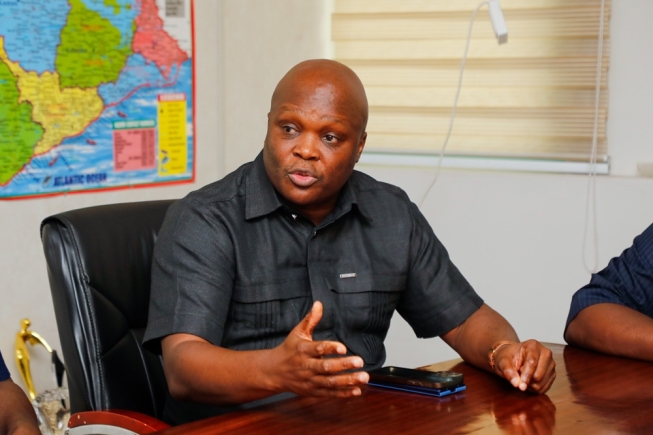
Professor Randolf Nsor-Ambala, the CEO of DBG, told the Daily Graphic last Thursday that the bank’s wholesale financing model had made it possible for companies in a variety of industries, including manufacturing, agribusiness, health care, education, tourism, and information technology, to obtain longer-tenor funding.
In addition to technical support, environmental, sustainability, and governance (ESG) consulting, and the 30 percent
The Development Bank of Ghana (DBG) Ltd, a long–term lending facilitator, has provided GH¢2.5 billion in long–term financing to businesses through 21 participating financial institutions over the past five years. This initiative has helped reduce the reluctance of traditional banks to fund long–term investments.
The program has improved access to patient capital for micro, small, and medium–sized enterprises (MSMEs), which typically face limitations due to the short–term funding focus of commercial banks.
During a visit to the Daily Graphic last Thursday, DBG’s Chief Executive Officer, Professor Randolf Nsor-Ambala, stated that the bank‘s wholesale financing model has enabled businesses in various sectors such as manufacturing, agribusiness, healthcare, education, tourism, and information technology to secure longer–term funding.
He explained that the development bank‘s impact, combined with technical assistance, ESG advisory services, and the 30% counterpart funding by the 21 participating financial institutions (PFIs), was estimated at GH¢5 billion over the last five years.
In collaboration with PFIs that undergo a thorough onboarding process, DBG has also gained the trust and cooperation of international development financial institutions and organizations.
This has led to increased long–term funds being directed to Ghanaian financial institutions for further lending to the business community.
Prof.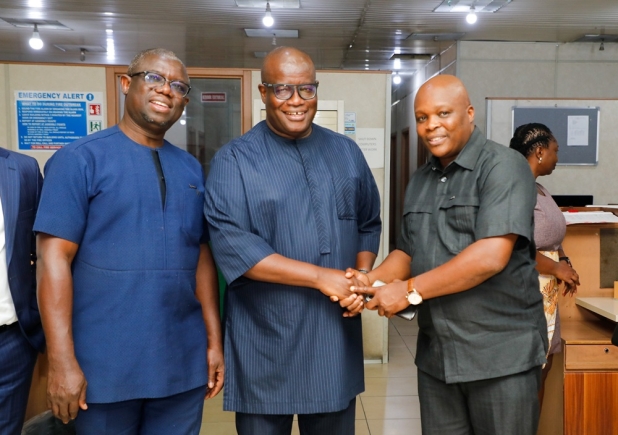 Nsor-Ambala told the Daily Graphic that working with PFIs of various types, including universal and community banks, savings and loans, and microfinance institutions, DBG, through its unique development financing model, has directly channeled long–term capital to businesses of different sizes in manufacturing, agriculture, and agribusiness, as well as high–value service sectors like ICT, education, health, tourism, and transportation.
He emphasized that being licensed by the Bank of Ghana does not automatically grant access to DBG’s facilities.
Instead, the bank has a strong risk evaluation structure that assesses PFIs and continues to monitor them annually to ensure they adhere to agreements.
Prof. Nsor-Ambala highlighted the robust onboarding structure and well–established monitoring system, which allow the bank to maintain its mandate without financial loss.
DBG secures long–term funding at heavily discounted rates from partners such as the World Bank, African Development Bank, the European Investment Bank, and KFW, the German Development Bank. It then provides long- to medium–term financing to PFIs for onward lending to MSMEs and small corporates nationwide.
The financing facilities range from GH¢50,000 to $1 million, with interest rates between 8% and 10%, and are committed for the long term.
Since its launch five years ago, DBG has not declined any funding request due to a lack of availability.
The CEO also mentioned that the bank prioritizes women–led and youth–led businesses.
As of last year, around 65% of the bank‘s portfolio was invested in manufacturing and agribusiness.
Prof. Nsor-Ambala noted that DBG has successfully created an ecosystem that demonstrates the value of long–term capital.
Many international development finance companies operating in Ghana have recognized the potential of long–term project finance when structured properly.
Currently, several international financial lenders that support banks with long–term capital have expressed willingness to allow their funds to be extended to longer tenors, such as seven years, inspired by the DBG model.
He explained that the success of the model lies in building confidence among financial institutions to take on this responsibility independently.
This is essential because private–sector leadership ensures the sustainability of project finance.
Prof. Nsor-Ambala mentioned that in ten years, the objective is for the sectors they are involved with to rely more on private capital, reducing the need for development bank support, allowing it to redirect resources to other areas.
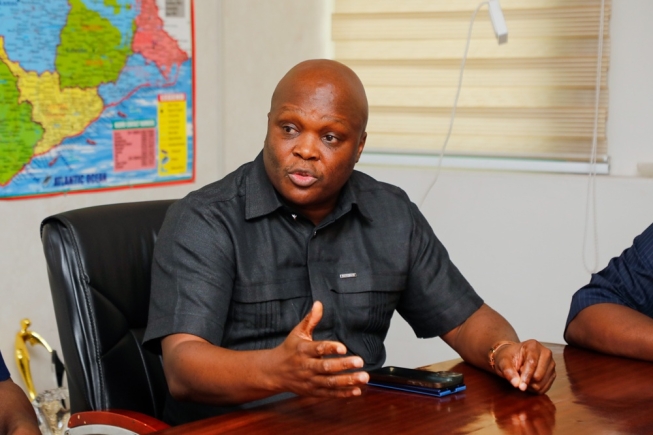
He added that a key success indicator is when financial institutions ask for less funding.
For instance, for a deal valued at GH¢10 million, they are willing to invest about GH¢7 million, indicating successful mobilization of private capital within the financial ecosystem.
Professor Randolf Nsor-Ambala, Chief Executive Officer of DBG, mentioned that the bank‘s role under the GhanaCARES Obaatan Pa programme and the 24-Hour Economic and Accelerated Development Programme includes supporting businesses and bankable projects in government priority areas.
He stated that all obligations placed on DBG were discussed and understood, with the assurance that they could be met.
The development bank‘s involvement in the 24-Hour Economy and other government initiatives is due to its ability to unlock additional funds.
Regarding the 24-Hour Economy, Prof. Nsor-Ambala noted that the government recognized that the goals were larger than its budget, hence the need to involve the private sector.
For example, with the industrialization drive, the government intended to create an environment that encourages private investment rather than building industrial parks directly.
He explained that when businesses require technical assistance or financial support, DBG provides the necessary backing to help the private sector achieve the goals of the 24-Hour Economy.
Prof. Nsor-Ambala stressed that the focus is on funding the private sector to capitalize on the ideals of the program.
He added that currently, the 24-Hour Economy passes pipelines to DBG, and most of them have either been successfully disbursed or are at the final stages of discussion.
The relationship with the secretariat is very close, he noted.
The Development Bank of Ghana Ltd was established to provide wholesale long- to medium–term finance to PFIs for onward lending to MSMEs in specific sectors such as manufacturing.

