


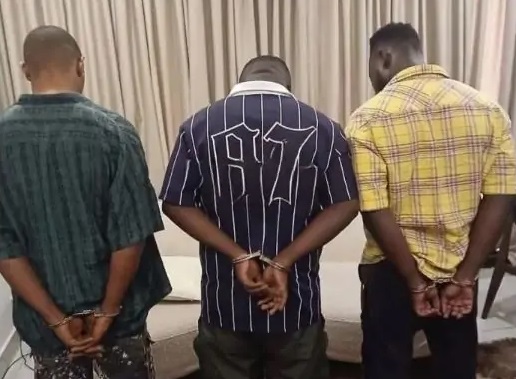
A court has adjourned proceedings in the extradition case involving Abu Trica after the state formally withdrew charges against two accused persons who were standing trial alongside the main respondent. The decision, announced in open court, marked a significant turn in a matter that has drawn public attention due to its legal complexity, international dimensions, and the broader questions it raises about due process and prosecutorial discretion.
At the sitting, the prosecution informed the court that it had reviewed the evidence available against the two accused persons and determined that it could no longer sustain the charges against them. As a result, the state entered a nolle prosequi, effectively discontinuing the case against the pair. The court accepted the application and struck out the charges, thereby discharging the two accused persons from the proceedings.
The development prompted the court to adjourn the substantive extradition hearing involving Abu Trica to a later date, allowing both the prosecution and the defence time to reorganize their respective cases in light of the changed circumstances. The adjournment also provides the court with an opportunity to consider the legal implications of the state’s decision on the overall extradition request.
Abu Trica, the central figure in the case, is the subject of an extradition application brought by the state following a request from a foreign jurisdiction. The requesting country is said to be seeking his return to face charges relating to alleged criminal conduct committed outside the country. While the specific allegations have been outlined in earlier filings, defence lawyers have consistently challenged the request, arguing that it fails to meet the legal thresholds required under extradition laws and applicable international agreements.
Counsel for the state explained to the court that the withdrawal of charges against the two accused persons was not an admission of wrongdoing on the part of the prosecution but rather a reflection of a reassessment of the evidentiary landscape. According to the prosecution, continuing the case against individuals for whom there was insufficient evidence would be inconsistent with the principles of justice and fairness that guide criminal proceedings.
Defence lawyers for the discharged accused persons welcomed the decision, describing it as a vindication of their long-held position that the charges were unfounded. They noted that their clients had endured months of legal uncertainty, reputational damage, and emotional distress as a result of the case. With the charges now dropped, they urged the state to take steps to ensure that the affected individuals are able to rebuild their lives without lingering suspicion.
Attention then shifted back to the extradition proceedings involving Abu Trica. His legal team reiterated their objections to the request, emphasizing that extradition is not a mere administrative exercise but a serious legal process that can have profound consequences for the rights and freedoms of the person concerned. They argued that the court must carefully scrutinize the request to ensure that it complies with domestic law, respects constitutional protections, and aligns with international human rights standards.
Among the issues raised by the defence are concerns about the nature of the alleged offences, the adequacy of the evidence presented by the requesting state, and the conditions under which Abu Trica would be held if extradited. The defence has also questioned whether the offences cited are extraditable offences under local law and whether the request is being pursued for legitimate prosecutorial purposes rather than political or other improper motives.
The prosecution, for its part, maintained that the extradition request is lawful and properly grounded. State attorneys argued that the requesting country has provided sufficient documentation to justify the application and that the court’s role is limited to determining whether the legal requirements for extradition have been met. They stressed that issues relating to guilt or innocence are matters for the courts of the requesting state and not for determination at the extradition stage.
Legal analysts observing the case say the withdrawal of charges against the two accused persons could have both practical and symbolic implications. Practically, it narrows the scope of the proceedings and may streamline the issues before the court. Symbolically, it underscores the discretionary power of the prosecution and the importance of continuous case review to prevent the abuse of the criminal justice process.
The adjournment of the case means that Abu Trica will remain subject to the court’s jurisdiction until the next hearing date. Depending on the terms of his bail or remand, this may involve continued restrictions on his movement. His lawyers have indicated that they may renew applications relating to bail or other interim measures when the case resumes.
Members of the public and civil society groups have expressed mixed reactions to the latest development. Some see the dropping of charges against the two accused persons as evidence that the justice system is capable of correcting itself. Others have called for greater transparency in extradition matters, arguing that such cases often take place against a backdrop of limited public information and can easily give rise to speculation and mistrust.
As the court prepares to reconvene on a future date, all eyes will be on how the extradition proceedings unfold. The case is expected to test the balance between international cooperation in criminal matters and the protection of individual rights under domestic law. For Abu Trica, the outcome will determine whether he remains within the country’s borders or is surrendered to face trial elsewhere.
-
 Until then, the adjournment stands as a reminder that justice is not only about securing convictions or fulfilling international obligations, but also about ensuring fairness, accountability, and respect for the rule of law at every stage of the process.

