


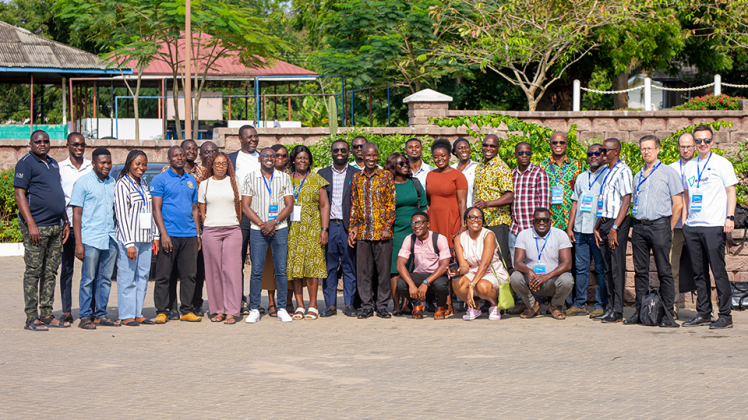
The Debaters and Writers’ Club (DWC) of the University of Education, Winneba (UEW), Ajumako Campus, on Saturday, 26th July 2025, organised a one-day capacity-building workshop under the theme “Becoming Seasoned Writers and Speakers.” The workshop formed part of the Club’s strategic initiatives aimed at equipping its members with advanced communication competencies necessary for academic excellence, leadership, and participation in national and international contests.
Held on campus, the workshop brought together members of the Debaters and Writers’ Club, student leaders, and other interested participants who share a passion for effective communication, public speaking, and creative writing. The event was designed not only to enhance participants’ technical skills but also to build confidence, discipline, and critical thinking—qualities essential for success both within the University and beyond.
In his opening remarks, the President of the Debaters and Writers’ Club highlighted the importance of communication skills in today’s fast-paced and highly competitive world. He noted that the ability to articulate ideas clearly, persuasively, and ethically remains a defining attribute of effective leaders, scholars, and professionals. According to him, the workshop was a deliberate response to the Club’s mission of nurturing well-rounded communicators who can serve as worthy ambassadors of UEW in debates, writing competitions, academic conferences, and public discourse.
The workshop featured three experienced facilitators, each of whom delivered insightful and engaging presentations on key aspects of communication. Through interactive sessions, practical examples, and thought-provoking discussions, the facilitators challenged participants to rethink their approach to writing and speaking while offering practical tools for continuous improvement.
One of the key presentations was delivered by Dr. Naa Korkor L. Watson-Nortey, Head of the Department of Communication Instruction, who spoke on the topic “Developing Communication Skills.” Her presentation provided a strong foundational framework for understanding communication as both a skill and a lifelong learning process.
Dr. Watson-Nortey began by emphasizing that communication goes beyond the mere use of language; it involves the effective transmission of meaning, emotions, and intentions. She explained that effective communication requires clarity of thought, audience awareness, appropriate language choice, and emotional intelligence. According to her, many communication challenges stem not from lack of vocabulary but from poor organization of ideas and limited understanding of context.
She further explained the key components of communication, including verbal, non-verbal, and written communication, stressing that mastery of all three is essential for anyone aspiring to become a seasoned speaker or writer. Using relatable examples from academic and everyday settings, she demonstrated how body language, tone, facial expressions, and posture can either reinforce or contradict spoken words.
In discussing verbal communication, Dr. Watson-Nortey encouraged participants to cultivate clarity, coherence, and confidence in speech. She advised students to think critically before speaking, structure their ideas logically, and avoid excessive fillers that weaken message delivery. She also highlighted the importance of pronunciation, pacing, and intonation, particularly in formal speaking contexts such as debates, presentations, and public lectures.
On written communication, she stressed the need for precision, coherence, and originality. She encouraged aspiring writers to read widely, write consistently, and seek constructive feedback. According to her, good writing is the result of discipline, revision, and an openness to learning. She also cautioned against plagiarism, emphasizing ethical writing practices and intellectual honesty.
A significant portion of her presentation focused on listening skills, which she described as an often-neglected but vital component of effective communication. Dr. Watson-Nortey explained that active listening enhances understanding, promotes respect, and improves responses during discussions and debates. She urged participants to listen not merely to reply, but to understand, analyze, and engage meaningfully with others’ viewpoints.
The session was highly interactive, with participants engaging in short exercises, discussions, and question-and-answer segments. Students shared personal challenges they face in public speaking and writing, ranging from stage fright to difficulty organizing ideas. Dr. Watson-Nortey addressed these concerns with practical advice, encouraging participants to practice regularly, embrace constructive criticism, and view mistakes as opportunities for growth.
The workshop also underscored the relevance of communication skills beyond academic life. Participants were reminded that effective communication is indispensable in professional environments, leadership roles, community engagement, and civic participation. The facilitators collectively emphasized that strong communicators are better positioned to influence change, resolve conflicts, and contribute meaningfully to national development.
At the end of the workshop, participants expressed appreciation for the depth and relevance of the sessions. Many noted that the workshop had reshaped their understanding of communication and inspired them to commit more intentionally to personal development in writing and speaking. Some participants also called for more frequent workshops and practical training sessions to further sharpen their skills.
In his closing remarks, the Vice President of the Debaters and Writers’ Club thanked the facilitators for their invaluable contributions and the participants for their active engagement. He reiterated the Club’s commitment to organizing programs that foster excellence, confidence, and intellectual growth among students of the Ajumako Campus.
The capacity-building workshop on “Becoming Seasoned Writers and Speakers” stands as a testament to the Debaters and Writers’ Club’s dedication to developing articulate, thoughtful, and confident communicators. Through initiatives such as this, the Club continues to play a vital role in shaping students who are not only academically sound but also capable of making meaningful contributions to discourse within and beyond the University of Education, Winneba.

