


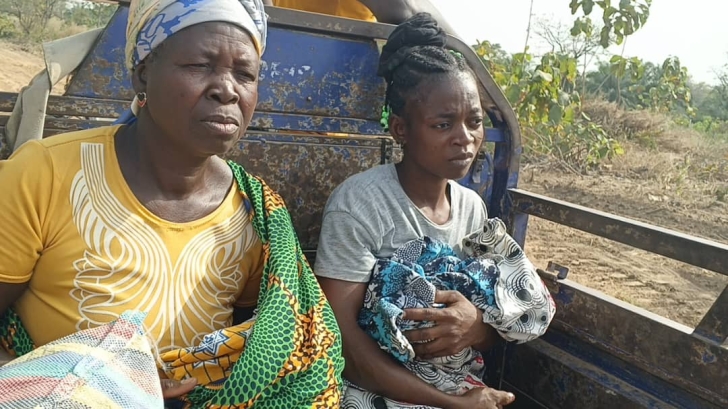
 A road long synonymous with hardship, danger and isolation has unexpectedly become a symbol of hope and renewal at Dobung, a rural farming community in the Kpandai District of the Northern Region. What was once a deadly and impassable stretch has now delivered two new lives, renewing faith among residents that grassroots development can directly save lives.
Joy, shock and gratitude swept through the community when a once-notorious farm road, currently undergoing rehabilitation and gravelling, became the unlikely birthplace of twin baby girls—a moment residents now describe as both miraculous and symbolic.
For years, the rugged, stone-laden and flood-prone road linking Dobung to Kpandai, the district capital, effectively cut the community off from essential services. During the rainy season, the stretch became nearly impassable, isolating residents from farms, schools, markets and, most critically, healthcare facilities. Pregnant women, schoolchildren and farmers bore the brunt of the neglect, often risking their lives to navigate the road.
That reality began to change only days ago when the District Chief Executive (DCE), Haruna Abdul-Karim, deployed heavy machinery under the District Road Improvement Programme (DRIP) to rehabilitate the Dobung road—marking the first major intervention on the stretch in several years.
Barely two days into the works, the impact of the intervention was dramatically felt.
Birth on a Road Once Feared
A 32-year-old expectant mother, Ndoonbi Cynthia, went into labour while being transported to Kpandai Hospital on an “aboboya” tricycle—the only available means of transport in the community. Improved access made the journey possible, but before they could reach the hospital, labour progressed rapidly. Midway through the journey, she delivered twin girls right on the rehabilitating road.
“I suffered throughout my pregnancy using this road to attend antenatal care,” Madam Cynthia recounted, holding back emotion. “Every visit was painful and dangerous. Today, that suffering has ended. My twins have brought relief not only to me but to this entire community.”
Her husband, Nchaabi Ndeela, described the tense and frightening moments leading up to the delivery.
“I was on the farm when I was informed my wife was in labour,” he said. “There was no ambulance or car available. The aboboya was our only option. Because of the poor condition of the road, she could not make it to the hospital and had to deliver on the way. We thank God she delivered safely, without medical assistance.”
Mr. Ndeela described the ongoing road rehabilitation—the first ever in Dobung—as a source of “double blessings,” saying the birth of the twins has given the entire community renewed hope.
Transforming Daily Life
Beyond the dramatic roadside delivery, the rehabilitation works are already beginning to transform daily life in Dobung and neighbouring communities.
Gasere Justice, a Form Two student of Don-Theobold Junior High School in Kpandai, described the intervention as long overdue.
“During the rainy season, we sometimes stay home for weeks because the road is flooded or too muddy,” he said. “Absenteeism has affected our education for years. We are happy the work has started and hope it will be completed before the next rains.”
A young farmer, Medando Bismark, echoed similar sentiments, praising the DCE for listening to the concerns of rural communities.
“If the new DCE has remembered us in his development agenda, then he has brought life back to this community,” he said. “Good roads mean we can transport our produce, access markets and get help when we fall sick.”
DCE Speaks: Development with Personal Commitment
Speaking to Graphic Online, DCE Haruna Abdul-Karim revealed that the rehabilitation of roads at Nkanchina, Adukpechi and Dobung is being personally financed, using DRIP machinery to fast-track improvements while awaiting broader government support.
He explained that Kpandai is predominantly an agricultural district, where poor road networks have long undermined productivity, healthcare delivery and access to education—especially during the rainy season.
“Many of our communities become completely inaccessible when it rains,” he said. “This affects farmers, pregnant women, schoolchildren and emergency cases. Roads are not a luxury here—they are a lifeline.”
Describing the roadside delivery as deeply symbolic, Mr. Abdul-Karim said the incident reflects the urgent impact residents have waited years to experience.
“The birth of these twins on a road that only began rehabilitation yesterday tells a powerful story,” he noted. “It shows how development, even at the grassroots level, can immediately touch lives.”
He praised the District Road Improvement Programme (DRIP) as a transformative initiative for local road development and urged fellow Metropolitan, Municipal and District Chief Executives (MMDCEs) to prioritise its effective use, even where costs are high.
“As a three-term Assemblyman and now DCE, I understand our most pressing needs—roads, water, electricity and healthcare,” he said. “While waiting for government allocations, I took the decision to personally fund these initiatives because our people cannot wait any longer.”
A Road to Hope
For the people of Dobung, the twins born on a once-feared road have become a living reminder that development is not just about infrastructure—it is about dignity, access and survival. As graders continue to reshape the earth beneath their wheels, residents say they are no longer just w

