


Word condom producer has break silence on the notice that condom prices are bu be increased by 20-30 percent due to US -Ukrainian war , due to the war raw material u to produce the products has been increased and is going to affect Globally for both export and imports.
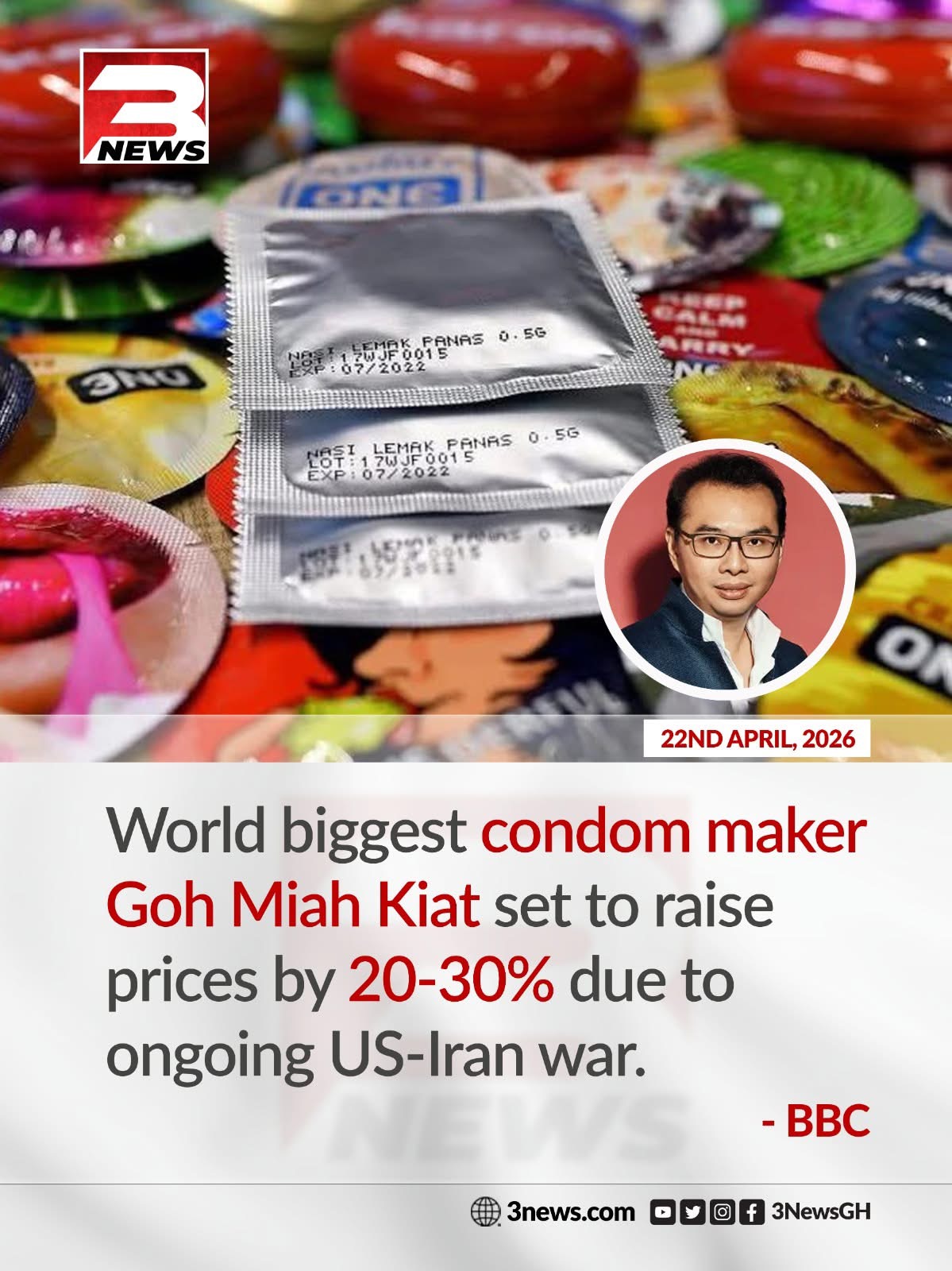
In a development that could have far-reaching implications for public health, consumer spending, and global supply chains, the world’s largest condom manufacturer has announced a potential price increase of 20–30%. The decision comes amid rising geopolitical tensions linked to the ongoing conflict involving the United States and Iran, which continues to disrupt global trade and manufacturing inputs.
At the center of this announcement is Goh Miah Kiat, the chief executive officer of Karex Berhad, the Malaysian-based company widely recognized as the largest condom producer in the world. Karex manufactures approximately one in every five condoms used globally, supplying major international brands and public health organizations.
According to statements attributed to BBC, the looming price increase is being driven by a combination of rising raw material costs, logistical disruptions, and heightened uncertainty in global markets stemming from the ongoing conflict.
A Global Industry Under Pressure
The condom manufacturing industry is more interconnected with global supply chains than many consumers might assume. Latex—the primary raw material used in condom production—is sourced largely from rubber plantations in Southeast Asia. From there, it undergoes processing, manufacturing, packaging, and global distribution.
However, geopolitical instability has introduced new challenges at nearly every stage of this process.
Shipping routes have become less predictable, fuel prices have surged, and insurance premiums for cargo have increased significantly due to perceived risks. These factors collectively contribute to higher operational costs, which manufacturers are now finding difficult to absorb.
Goh Miah Kiat explained that while the company has tried to maintain stable pricing for as long as possible, the current situation is unsustainable.
“We are facing unprecedented cost pressures across the board—from raw materials to logistics. Adjusting prices is not a choice we take lightly, but it has become necessary,” he noted.
The Impact of the US-Iran Conflict
The ongoing tensions between the United States and Iran have had ripple effects across multiple industries. While condoms may seem unrelated to geopolitical conflicts at first glance, the reality is that global trade disruptions affect nearly all manufactured goods.
Oil prices, for example, play a crucial role. Increased tensions in the Middle East often lead to spikes in oil prices, which in turn drive up transportation and production costs worldwide.
Additionally, sanctions, restricted shipping lanes, and military activity can slow down or reroute global trade flows. For a company like Karex, which exports products to over 140 countries, even minor delays can accumulate into significant financial strain.
Public Health Concerns
The potential rise in condom prices has sparked concern among public health experts, particularly in developing countries where affordability is a key factor in access to sexual health products.
Condoms are one of the most effective tools for preventing sexually transmitted infections (STIs), including HIV, as well as unintended pregnancies. Any disruption in access—whether due to price increases or supply shortages—could have serious consequences.
Non-governmental organizations and public health agencies often rely on bulk purchases of condoms for free distribution programs. A 20–30% increase in price could strain already limited budgets, potentially reducing the number of units distributed.
Experts warn that this could lead to:
- Increased rates of HIV and other STIs
- Higher numbers of unplanned pregnancies
- Greater strain on healthcare systems
Economic Ripple Effects
Beyond public health, the price hike is expected to affect consumers directly. While condoms are relatively inexpensive in many markets, a sharp increase could influence purchasing behavior, particularly among low-income populations.
Retailers may also face challenges in managing inventory and pricing strategies. Some may choose to absorb part of the increase to remain competitive, while others may pass the full cost onto consumers.
In addition, smaller brands that rely on third-party manufacturers like Karex could be disproportionately affected. Without the financial resilience of larger corporations, these companies may struggle to maintain profitability.
Industry Response
The announcement has prompted reactions across the global sexual health industry. Competing manufacturers are closely monitoring the situation, with some expected to follow suit if cost pressures persist.
However, not all companies are equally affected. Firms with more localized supply chains or alternative materials may be able to maintain stable pricing, at least in the short term.
Still, industry analysts believe that the overall trend points toward higher prices across the board.
Government and NGO Intervention
In response to the potential crisis, governments and international organizations may step in to mitigate the impact. Possible measures include:
- Subsidizing condom purchases
- Increasing funding for public health programs
- Encouraging local production to reduce dependency on imports
Some countries have already begun exploring these options, recognizing the critical role of condoms in national health strategies.
Consumer Awareness and Behavior
For consumers, the news serves as a reminder of how global events can influence everyday products. While a price increase may seem minor in isolation, its cumulative impact can be significant—especially for those who rely on consistent access.
Public health campaigns may need to adapt by emphasizing the importance of continued condom use despite rising costs. Education and awareness will be key in preventing a decline in usage.
Looking Ahead
The future of condom pricing will largely depend on how the geopolitical situation evolves. If tensions ease and global trade stabilizes, costs may eventually return to normal levels. However, if the conflict persists or escalates, further disruptions could occur.
Goh Miah Kiat remains cautiously optimistic but realistic about the challenges ahead.
“We hope for a resolution that brings stability back to global markets. Until then, we must adapt to the circumstances while continuing to fulfill our responsibility to public health.”
Conclusion
The anticipated price increase by the world’s largest condom manufacturer underscores the interconnected nature of today’s global economy. What begins as a geopolitical conflict can quickly translate into tangible effects on essential goods, including those critical to health and well-being.
As governments, organizations, and consumers navigate this evolving landscape, one thing remains clear: ensuring access to affordable sexual health products must remain a priority.
The coming months will be crucial in determining how the industry responds—and how effectively the global community can mitigate the impact on those who need these products the most.

