


GH₵100-a-Day Struggle: More Than Half of Ghana’s Mobile
 Traders Trapped Below Subsistence Level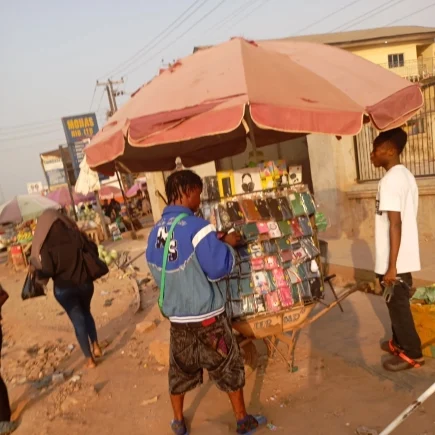
A growing body of data has revealed a stark reality within Ghana’s informal economy: the majority of mobile traders—those who sell goods on the streets, in traffic, or by moving from place to place—are earning less than GH₵100 a day, placing them below what experts describe as a subsistence income level.
According to recent findings by the Ghana Statistical Service (GSS), approximately 57.1 percent of mobile business operators fall into this category. While mobile trading has long been seen as a crucial survival strategy for many urban and peri-urban residents, the data suggests that for most participants, it is a hand-to-mouth existence rather than a pathway to economic mobility.
A Sector Defined by Survival
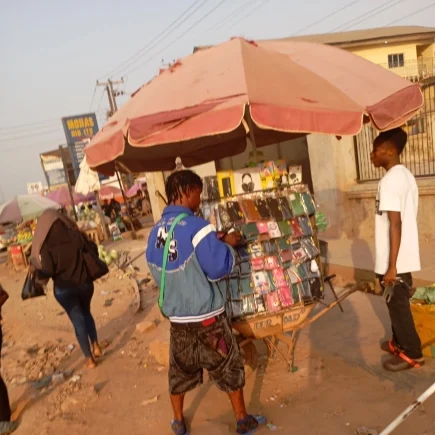
Mobile trading is one of the most visible features of Ghana’s informal economy. From hawkers weaving through traffic in Accra to traders carrying goods on their heads in busy marketplaces, these entrepreneurs form an essential link in the country’s retail distribution chain.
Yet behind this vibrancy lies a difficult economic truth.
Earning less than GH₵100 a day may appear manageable at first glance, but for mobile traders, this figure does not represent profit. It is gross daily income—before deducting the cost of goods, transportation, storage, and other business-related expenses. Once these costs are subtracted, many traders are left with only a fraction of that amount to support themselves and their families.
For someone working six days a week, such earnings translate into roughly GH₵2,000 to GH₵2,400 per month in revenue. However, after expenses, actual take-home income can fall well below Ghana’s basic cost of living, particularly in urban centers where rent, food, and transportation costs continue to rise.
Women and Youth Hit the Hardest
The GSS data also highlights a significant gender and age dimension to the issue. Women make up approximately 77 percent of mobile traders, while young people between the ages of 15 and 34 account for nearly 60 percent of the sector.
This means that the burden of low earnings disproportionately affects two already vulnerable groups: women and the youth.
For many women, mobile trading is not just a business but a necessity. It often serves as the primary source of income for households, especially in single-parent families. With limited access to formal employment opportunities, many women turn to petty trading as a flexible way to earn money while managing domestic responsibilities.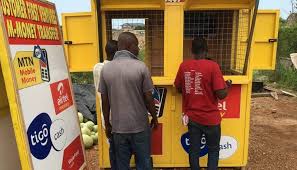
Young people, on the other hand, are increasingly entering the informal sector due to high unemployment rates and limited access to stable jobs. For many, mobile trading is the easiest entry point into economic activity—but it is also one of the hardest sectors in which to grow.
The Informal Economy’s Double-Edged Sword
Ghana’s informal sector has long been both a strength and a challenge. On one hand, it provides employment opportunities for millions of people who might otherwise be jobless. On the other, it often lacks the structure, protections, and support systems needed to ensure sustainable livelihoods.
Mobile trading sits at the heart of this paradox.
On any given day, thousands of traders sell items ranging from bottled water and snacks to clothing, electronics, and household goods. These traders operate without fixed shops, formal registration, or access to social protections such as health insurance or pensions.
While this flexibility allows for easy entry into the market, it also means that traders face constant uncertainty. Their income depends heavily on daily sales, which can fluctuate due to weather conditions, traffic patterns, law enforcement activities, and broader economic trends.
Why Earnings Remain So Low
Several structural factors contribute to the persistently low earnings among mobile traders.
Intense Competition
One of the most significant challenges is market saturation. A large proportion of mobile traders sell similar or identical goods, particularly in the food and small retail categories. This leads to intense competition and, ultimately, reduced profit margins.
In busy urban areas, it is not uncommon to find dozens of traders offering the same products within a small radius. As a result, traders are often forced to lower prices to attract customers, further squeezing their already thin margins.
Limited Access to Capital
Access to finance remains a major barrier. Most mobile traders rely on personal savings or informal loans from family and friends to start and sustain their businesses. Without access to affordable credit, they are unable to purchase goods in bulk, invest in better inventory, or expand their operations.
This lack of capital keeps many traders stuck in a cycle of low investment and low returns.
High Operating Costs
Although mobile trading may appear low-cost, it comes with its own set of expenses. Traders must pay for transportation, especially if they source goods from wholesale markets located far from their selling points. They may also incur informal fees, such as payments to local authorities or security personnel.
Additionally, perishable goods pose a risk. Unsold items can quickly become losses, further reducing income.
Lack of Infrastructure
Operating without a fixed location means that traders often lack access to basic infrastructure such as storage facilities, sanitation, and shelter. This not only affects their productivity but also exposes them to health and safety risks.
During adverse weather conditions, for instance, traders may be unable to work at all, resulting in zero income for the day.
Limited Business Skills and Technology Use
Many mobile traders have limited formal education or business training. As a result, they may lack essential skills such as bookkeeping, pricing strategies, and inventory management.
The adoption of digital tools—such as mobile payment systems, online marketing, and financial apps—remains relatively low, further limiting opportunities for growth and efficiency.
The Human Impact
Behind the statistics are real stories of struggle and resilience.
For many traders, daily income determines whether their families eat, whether children can attend school, and whether basic healthcare needs can be met. A bad day in sales can have immediate and serious consequences.
The pressure to earn enough each day often leads to long working hours. Traders may start as early as dawn and continue late into the evening, navigating traffic, weather, and physical fatigue.
Despite these challenges, many remain in the sector because they have few alternatives. Formal employment opportunities are limited, and starting a more structured business often requires resources that are out of reach.
Urbanization and the Rise of Mobile Trading
The growth of mobile trading is closely linked to rapid urbanization. As cities expand, so does the demand for convenient, on-the-go goods and services. Mobile traders fill this gap by bringing products directly to consumers, often at lower prices than formal retail outlets.
However, urbanization also brings challenges. Increased congestion, stricter enforcement of city regulations, and competition for space can make it more difficult for traders to operate.
In some areas, periodic crackdowns on street trading disrupt livelihoods, forcing traders to relocate or temporarily cease operations.
Policy Gaps and Opportunities
The findings from the GSS underscore the need for targeted policy interventions to support mobile traders and improve their earning potential.
Access to Microfinance
Expanding access to microcredit tailored to the needs of informal traders could help them invest in their businesses. Flexible repayment terms and low-interest rates would be essential to ensure that loans do not become an additional burden.
Skills Development
Training programs focused on basic business skills, financial literacy, and digital tools could significantly enhance productivity and profitability. Equipping traders with these skills would enable them to make better decisions and adapt to changing market conditions.
Infrastructure Development
Providing designated trading spaces with access to storage, sanitation, and shelter could improve working conditions and reduce operational challenges. Such spaces would also help organize the sector and reduce conflicts with urban authorities.
Digital Integration
Promoting the use of mobile money and other digital platforms could streamline transactions and open up new opportunities for growth. Digital tools can also help traders keep records, access credit, and connect with a broader customer base.
Social Protection
Introducing social protection measures, such as health insurance and pension schemes for informal workers, would provide a safety net and reduce vulnerability.
A Broader Economic Reflection
The struggles of mobile traders reflect deeper issues within Ghana’s economy. While economic growth has been recorded in various sectors, the benefits are not evenly distributed.
The persistence of low-income informal work highlights the need for more inclusive growth strategies that create quality jobs and support small-scale entrepreneurs.
It also raises important questions about how economic success is measured. High employment rates may mask the reality that many people are working in low-paying, unstable jobs that do not provide a decent standard of living.
Looking Ahead
Addressing the challenges faced by mobile traders will require a coordinated effort involving government, financial institutions, development partners, and the traders themselves.
There is also a need to shift perceptions of the informal sector. Rather than viewing it solely as a problem to be regulated, it should be recognized as a vital component of the economy that, with the right support, can contribute significantly to growth and development.
Conclusion
The revelation that more than half of Ghana’s mobile traders earn less than GH₵100 a day is a sobering reminder of the realities faced by millions of people in the informal sector.
While mobile trading provides a crucial source of income, it is, for many, a precarious existence marked by uncertainty and limited opportunities for advancement.
As Ghana continues to pursue economic development, ensuring that growth translates into improved livelihoods for all—including those in the informal sector—will be essential.
For now, the daily hustle continues. Across busy streets and crowded marketplaces, mobile traders remain a testament to resilience and determination, even as they navigate the কঠ realities of a GH₵100-a-day struggle.

