


Viral Claim Sparks Debate: Woman Says Pastor’s Prophecy Influenced Her Relationship Decision
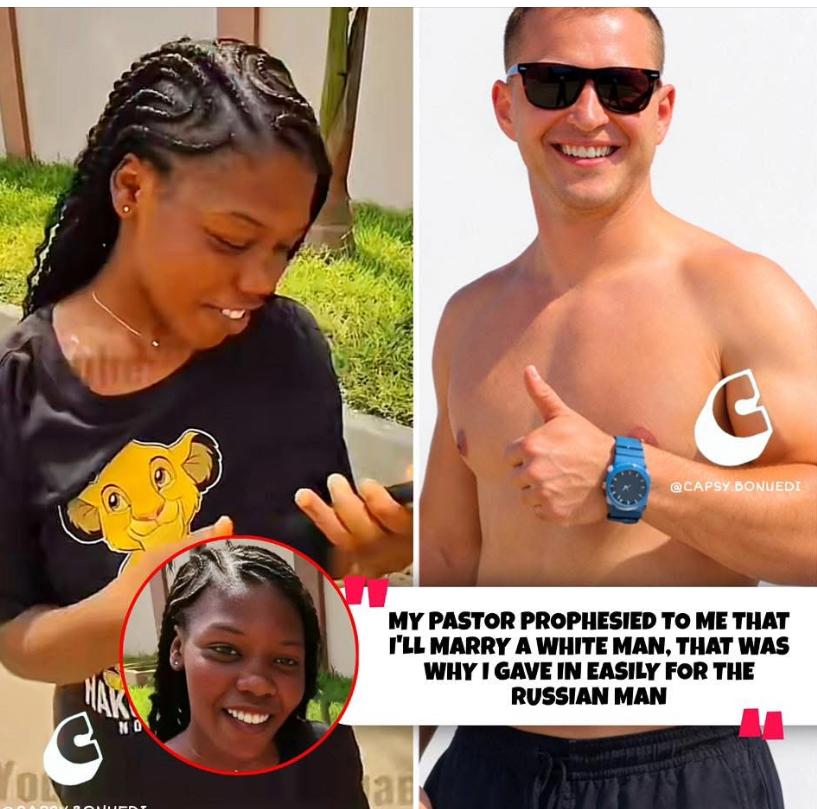
A social media post featuring a Ghanaian woman and a Caucasian man has ignited widespread debate online after a bold caption attributed to the woman claimed: “My pastor prophesied to me that I’ll marry a white man, that was why I gave in easily for the Russian man.”
The image, which has circulated across multiple digital platforms, shows the woman in a casual outdoor setting and a smiling shirtless man wearing sunglasses. The caption has triggered conversations around faith, prophecy, interracial relationships, and personal decision-making.
While the authenticity and context of the statement remain unclear, the viral nature of the post reflects broader societal discussions about religion’s influence on romantic choices and the dynamics of cross-cultural relationships.
The Viral Image and Online Reaction


The image has been widely shared on platforms including Instagram, TikTok, and Facebook, prompting mixed reactions.
Some users interpreted the statement humorously, while others viewed it as an example of how religious prophecy can influence personal decisions. A section of commenters expressed concern about attributing relationship choices solely to spiritual predictions.
Social media trends often amplify emotionally charged statements, and in this case, the viral caption quickly became a conversation starter about faith, autonomy, and cultural expectations.
Faith and Prophecy in Personal Decisions
Religion plays a significant role in many Ghanaian households. Churches, pastors, and spiritual leaders are often consulted for guidance on life decisions ranging from career paths to marriage.
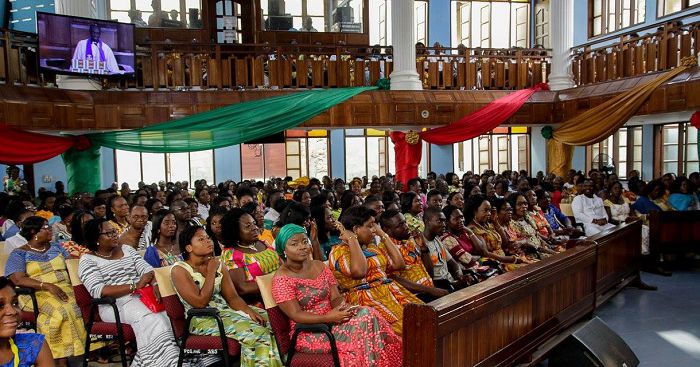


In charismatic Christian communities especially, prophecy is considered a spiritual gift through which leaders may provide direction or insight. For many believers, such declarations carry deep personal meaning.
However, faith leaders and counselors frequently emphasize that prophecy should complement — not replace — personal judgment and informed decision-making.
Relationship experts note that spiritual guidance can shape expectations but should ideally be balanced with compatibility, shared values, and mutual understanding.
Interracial Relationships in Ghana’s Changing Social Landscape



Interracial relationships have become more visible in Ghana over the past decade, influenced by globalization, travel, digital communication, and diaspora connections.
Major urban centers such as Accra and Kumasi host growing expatriate communities, and social media platforms have facilitated cross-border interactions.
While many Ghanaians view intercultural relationships positively, others raise questions about cultural integration, family acceptance, and long-term compatibility.
Experts suggest that successful intercultural marriages often depend on open communication, respect for traditions, and shared expectations rather than external predictions.
The Psychology of Self-Fulfilling Prophecy
The viral statement also raises questions about the psychology behind belief and behavior.
Researchers describe the concept of a “self-fulfilling prophecy,” where expectations influence actions in ways that help bring those expectations to pass. If someone believes a specific outcome is destined, they may consciously or unconsciously make choices aligned with that belief.
In relationship contexts, this can manifest as heightened openness toward certain partners based on preexisting expectations.
However, psychologists caution against oversimplifying complex decisions. Attraction, shared interests, emotional compatibility, and timing all play roles in forming romantic bonds.
Social Media and Sensational Narratives
Digital culture often magnifies short quotes detached from broader context. Without verified interviews or full statements, viral captions can sometimes misrepresent nuance.
Content creators frequently craft eye-catching headlines designed to spark engagement. While this drives online traffic, it can also oversimplify personal stories.
Observers emphasize the importance of critical consumption of viral content and verifying sources before drawing conclusions.
Cultural Expectations and Marriage
Marriage remains a highly valued institution in Ghanaian society. Family input, community opinion, and religious considerations often shape partner selection.


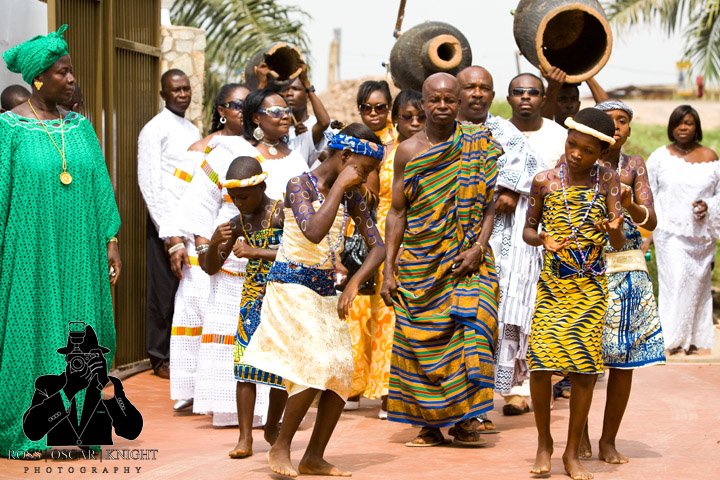
Traditional ceremonies emphasize unity between families, and parental blessing is often considered important. In some cases, cultural or spiritual narratives may influence how individuals interpret romantic opportunities.
However, younger generations increasingly emphasize personal compatibility, emotional well-being, and shared goals.
Sociologists note that Ghana’s evolving urban culture reflects a blend of tradition and modernity, where faith and personal agency coexist in dynamic ways.
Online Debate: Empowerment or Over-Reliance?
Public reactions to the viral claim have generally fallen into two categories:
-
Supportive voices, who argue that faith can provide clarity and confidence in major life decisions.
-
Critical voices, who caution against relying exclusively on prophecy for relationship choices.
Some commentators stress that adults are ultimately responsible for their own decisions, regardless of spiritual input. Others highlight the role of trust and belief systems in shaping individual paths.
Importantly, there is no evidence to suggest wrongdoing or harm associated with the situation depicted in the viral post. The discussion remains largely centered on philosophy and personal values rather than legal or ethical concerns.
Broader Conversations About Faith and Autonomy
The story taps into a broader global conversation about how much influence spiritual leaders should have over personal matters.
Faith communities often encourage believers to seek divine guidance, yet many also teach discernment and personal responsibility.
Marriage counselors in Ghana frequently recommend premarital counseling, financial planning, and compatibility assessments — alongside prayer and spiritual preparation.
Balancing belief with informed decision-making is widely seen as a healthy approach.
Media Literacy in the Age of Virality
The rapid spread of the image demonstrates how quickly narratives can shape public discourse.
Experts recommend:
-
Verifying original sources before sharing.
-
Avoiding assumptions based solely on captions.
-
Recognizing that social media content may prioritize engagement over context.
-
Respecting privacy when personal relationships are involved.
Responsible reporting and thoughtful consumption of digital content help maintain balanced public conversations.
Conclusion: A Conversation Beyond the Caption
The viral claim that a pastor’s prophecy influenced a woman’s openness to a relationship with a Russian man has sparked lively online debate. While the authenticity and broader context remain unclear, the story highlights ongoing discussions about faith, autonomy, cultural expectations, and the evolving nature of relationships in Ghana.
Ultimately, relationship decisions are shaped by a combination of belief systems, personal values, emotional connection, and life circumstances. As Ghana’s social landscape continues to evolve, conversations around these themes are likely to persist.
What remains clear is that viral moments often reflect deeper societal questions — not just about who we choose as partners, but about how we interpret guidance, destiny, and personal agency in a modern world.

