Ghanaian Tomato Traders Caught in Burkina Faso Terrorist Attack: Government Seeks Answers as Security Fears Grow
By [Author Name] – [Date]
Accra / Ouagadougou / Titao – A truckload of Ghanaian tomato traders was caught in a terrorist attack in northern Burkina Faso on Saturday, 14 February 2026, prompting urgent diplomatic engagement between Ghana and Burkinabe authorities and renewed questions over safety for traders who ply the busy agricultural route between the two countries.
The Government of Ghana has confirmed it received “disturbing information” about the incident, which occurred in Titao, a town in northern Burkina Faso, where militant activity and armed attacks have surged in recent years amid the broader Sahel insurgency.
While full details remain scarce, the attack underscores the growing risks faced by Ghanaian entrepreneurs who traverse insecure zones to access markets and is likely to prompt discussions within government and regional security circles about protection, diplomacy, and cross-border commerce.
Traders Caught in Violence: What Happened
Recommended image: A fruit and vegetable truck travelling on a rural West African highway, illustrating the journey of traders.
Ghana’s Ministry of the Interior and National Security issued a brief but urgent press statement on Sunday, 15 February 2026, confirming reports from Burkina Faso that a truck carrying tomato traders from Ghana had been “caught up in a terrorist attack” in the town of Titao on the previous day.
According to the statement signed by Mr. Muntaka Mohammed-Mubarak, Minister for the Interior and National Security, the information received from Burkina Faso was “disturbing,” and the government cannot yet confirm the identity, number, or condition of the Ghanaians on board the vehicle.
The press release did not specify the nature of the attack, the perpetrators, or the scale of casualties, but it confirmed that Ghana’s Embassy in Burkina Faso is “liaising with officials” to visit the site of the attack to gather details and identify any affected Ghanaians.
“The Government of Ghana has received disturbing information from Burkina Faso of a truck carrying tomato traders from Ghana which was caught in a terrorist attack in Titao, Burkina Faso on Saturday, February 14, 2026,” the statement read.
Security Landscape in Northern Burkina Faso
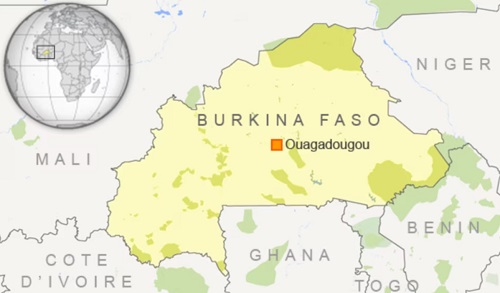
Recommended image: A map highlighting Titao and regions affected by insurgency in Burkina Faso.
The Sahel region — spanning Mali, Niger, and Burkina Faso — has seen a proliferation of militant and extremist activity over the past decade. Armed groups including affiliates of Al-Qaeda and the Islamic State in the Greater Sahara (ISGS) have carried out frequent attacks on military, civilian, and commercial targets, targeting remote towns and destabilising large swathes of countryside.
This complex insurgency has forced internal displacement, disrupted transport and trade routes, and heightened the risk for all travellers on these arteries — including long-distance traders and transporters.
Titao, situated in Burkina Faso’s northern region, has witnessed periodic violence as security forces and local self-defence groups have battled armed militants. Though this particular attack is on a commercial vehicle rather than a military or official target, it reflects the broader insecurity that has come to define the region.
Economic Significance: Ghana-Burkina Faso Tomato Trade
Recommended image: Boxes of tomatoes being loaded or unloaded in a Ghanaian market.
The importation and transport of fresh produce, particularly tomatoes, between Ghana and Burkina Faso is a long-standing economic activity that sustains thousands of traders, particularly women in Ghana’s northern regions. Tomatoes from Burkina Faso frequently supply markets in Accra, Kumasi, and other urban centres where demand for fresh produce remains high.
Traders often make long trips overland, crossing porous borders and rugged terrain to reach wholesale markets. Their livelihoods depend not only on the quality of crops but also on the safety of the routes they traverse. Any major disruption — from weather-related delays to security threats — can result in financial loss or, as in this case, endanger lives.
While there have been historical concerns about robberies, accidents, and armed holdups affecting traders on the Ghana-Burkina border, the latest incident carries the added dimension of terrorist involvement — raising the stakes for policy makers and trader associations.
Government and Diplomatic Response
Recommended image: The Ghana Embassy in Ouagadougou or a Ghanaian diplomatic mission in Burkina Faso.
Ghana’s Government has indicated that the country’s Embassy in Burkina Faso is actively working with local authorities to collect accurate information about the attack, including the identities and welfare of the traders involved.
Officials have stressed the need for caution given the early stage of information gathering and have pledged to update the public as more details become available.
In addition, the Ministry of Foreign Affairs will likely coordinate with Accra’s counterparts in Ouagadougou and security agencies to assess whether Ghanaian nationals require assistance, repatriation, or medical support following the incident.
The government’s measured response aims to balance the urgency of the situation with the need for verified facts — avoiding misinformation while keeping families and the nation informed.
Trader Associations and Community Reactions
Recommended image: Ghanaian tomato traders arranging produce in a market.
Although national trader associations have not yet issued official statements on the latest incident, reactions from across northern Ghana express concern and uncertainty. Many traders depend on cross-border commerce to support families and communities, and sudden insecurity can disrupt not just immediate lives but broader market supply chains.
In past years, there have been calls from Ghanaian traders for stronger police escorts and regional cooperation to protect commerce along vital trade routes to Burkina Faso, particularly during times of heightened criminal activity.
Local community leaders and commercial stakeholders in Ghana’s Upper East and Upper West regions will now be watching closely as reports from Titao develop, mindful that any escalation of violence has direct economic and social consequences.
Impact on Regional Security and Trade
Recommended image: Security forces patrol on Sahel countryside road.
The attack on the tomato traders is emblematic of a wider regional security challenge faced by countries in the Sahel, where extremist groups exploit weak governance and limited security presence to carry out attacks.
Beyond direct human costs, such incidents have adverse effects on cross-border trading activities that connect farmers, transporters, and consumers across West Africa. Markets in Ghana rely heavily on produce from Burkina Faso and neighbouring countries, and any interruption to these supply lines can ripple through food prices, employment, and livelihoods.
In recent years, Ghanaian authorities and trade associations have at times called for enhanced security cooperation with Burkina Faso to protect traders. Examples include proposals to work through organisations such as INTERPOL or regional patrol arrangements to reduce criminal exposure along key stretches of the trade corridor.
With a deteriorating security situation in parts of northern Burkina Faso, discussions about safeguarding commerce and people may now come to the fore in diplomatic and regional forums.
Government Advisories and Public Safety Measures
At home, the government has not yet issued a broad travel advisory specific to this incident. However, the Interior Ministry and security agencies are likely evaluating risks and may update travel recommendations for Ghanaian traders in the coming days.
Citizens heading to high-risk zones are generally advised to register travel plans with relevant authorities, travel in organised convoys, and use formal trade routes whenever possible. When crossing borders, coordination with diplomatic missions and local security forces can provide an additional layer of protection.
Families with relatives involved in the incident have been urged to maintain contact with the Embassy in Burkina Faso and monitor official updates for accurate information.
Historical Context of Risks for Traders
Recommended image: Cargo truck crossing a border checkpoint.
Trade between Ghana and Burkina Faso has long been robust, but it has carried inherent risks. In previous years, Ghanaian traders have reported robberies, armed robber attacks, and sporadic violence along border roads, prompting calls for better protection from security forces.
Moreover, occasional border tensions and political instability in neighbouring states have contributed to a climate where commercial travellers must remain alert to changing conditions.
The evolving Sahel insurgency — involving militant groups often identified with jihadist causes — has created a security environment that goes beyond petty crime to include organised, ideologically driven attacks on civilians and state targets. Safety for traders in transit corridors has thus become an issue of both economic and humanitarian significance.
Conclusion: Uncertainty, Concern, and Vigilance
The terrorist attack that impacted a truck carrying Ghanaian tomato traders in Titao, Burkina Faso is a stark reminder of the everyday dangers faced by cross-border traders within the volatile Sahel region. With details still emerging, the Government of Ghana is working with Burkinabe authorities to establish the facts and ensure that any affected citizens receive assistance.
The incident highlights broader regional security challenges and may prompt renewed efforts toward protective measures for commercial travellers, cooperative security arrangements, and policy engagement to safeguard legitimate trade.
In the meantime, thousands of traders and their families await further information as authorities investigate the full circumstances of the attack and its implications for Ghana’s vibrant cross-border markets