


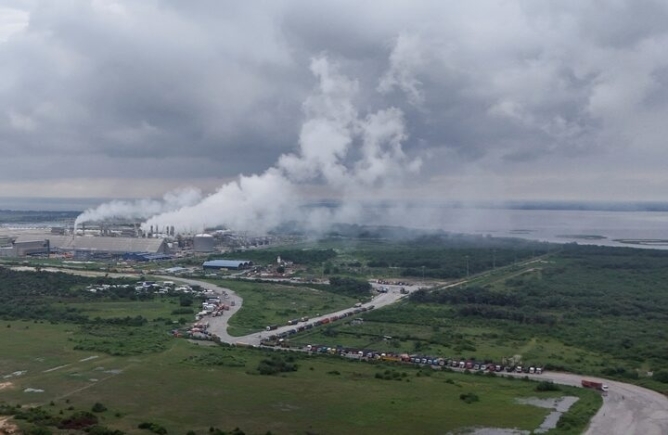
Nigeria’s industrial growth narrative took a significant turn in early February 2026 when the Dangote Group announced that **three of its major subsidiaries — Dangote Petroleum Refinery, Dangote Fertiliser Plant, and Dangote Cement Plc — had bolstered their gas supply contracts with units of the Nigerian National Petroleum Company Ltd (NNPC Ltd). These revised and expanded Gas Sales and Purchase Agreements (GSPAs) aim to secure reliable natural gas supply to support the companies’ ongoing and planned expansion projects. The signing took place during the launch of the Nigeria Gas Master Plan (GMP) 2026 in Abuja.
Natural gas is not just an energy source — it’s a critical industrial input. For the Dangote Group, whose operations span refining, fertiliser, and cement manufacturing at massive scale across Nigeria, securing long-term gas supplies is foundational to realizing its Vision 2030 growth strategy.
Background: Dangote’s Industrial Footprint and Energy Needs
1. Dangote Petroleum Refinery
Dangote’s refinery in Ibeju-Lekki, Lagos is one of Africa’s largest upstream industrial facilities, with a design refining capacity in excess of 600,000 barrels per day — dwarfing Nigeria’s old, troubled state-owned refineries. This refinery has already transformed Nigeria’s fuel market by substantially reducing, and at times eliminating, the need for gasoline and diesel imports. Yet, running such a huge refinery — which processes crude into a range of petroleum products — requires consistent, high-quality energy to power operations and produce cleaner fuels that meet international specifications.
2. Dangote Fertiliser and Dangote Cement
Beyond refining, Dangote’s fertiliser plant is one of the continent’s largest, turning natural gas into ammonia and urea — essential agricultural inputs. Meanwhile, Dangote Cement Plc operates large cement plants that increasingly seek gas-based energy solutions to power production, reduce operating costs, and lower emissions. Cement manufacturing is energy-intensive, and gas can be a cleaner alternative to diesel or other fossil fuel sources.
As these businesses scale up, so do their energy demands — particularly reliable natural gas — making long-term supply agreements critical.
Details of the Expanded Gas Agreements
At the Nigeria Gas Master Plan (GMP) 2026 launch, Dangote Group and NNPC Ltd signified a deepening of gas supply collaborations:
Parties Involved
-
Dangote Petroleum Refinery
-
Dangote Fertiliser Plant
-
Dangote Cement Plc
These three subsidiaries each signed expanded GSPAs with:
-
Nigerian Gas Marketing Limited (NGML)
-
NNPC Gas Infrastructure Company Limited (NGIC)
These are subsidiaries of NNPC Ltd with specific mandates for gas marketing and infrastructure, respectively.
Purpose and Scope
The expanded GSPAs are designed to:
-
Ensure gas supply continuity for plant operations
-
Support capacity expansion plans
-
Facilitate adoption of cleaner energy solutions (e.g., compressed natural gas or CNG for industrial use)
-
Underpin future productivity gains across Dangote’s businesses
The companies did not publicly disclose the exact contracted gas volumes or pricing structures. However, the expansion of these agreements signals confidence in Nigeria’s gas delivery capabilities and long-term collaboration between one of Africa’s biggest industrial groups and the nation’s national energy company.
The Nigeria Gas Master Plan 2026: Setting the Stage
The signing of these gas deals did not happen in isolation. They were a core element of the Nigeria Gas Master Plan 2026, a comprehensive national strategy unveiled to overhaul the gas sector.
Goals of the Gas Master Plan
The plan sets ambitious targets to transform Nigeria’s gas production and utilization:
-
Increase national gas production from around 8 billion cubic feet per day (bcf/d) to:
-
10 bcf/d by 2027
-
12 bcf/d by 2030
-
-
Attract more than $60 billion in investment across the gas value chain, including upstream production, midstream transport infrastructure, and downstream industrial or commercial use
-
Improve supply reliability, infrastructure, and market access
-
Position gas as a key driver of economic growth, industrialization, and energy security in Nigeria
From Policy to Implementation
Speaking at the plan’s launch, Minister of State for Petroleum Resources (Gas) Ekperikpe Ekpo emphasized that Nigeria was moving past policy papers toward concrete execution — a shift that aims to translate the country’s vast gas reserves into real-world industrial value and economic output. Ekpo noted that the biggest challenge isn’t resource availability, but effectively converting it into reliable supply chains and tangible economic benefits.
NNPC Ltd Group CEO Bashir Bayo Ojulari echoed this, underscoring the Gas Master Plan’s focus on optimizing costs, attracting fresh capital, and ensuring gas supply to key industrial users — including Dangote’s major facilities.
Strategic Implications for Dangote’s Expansion
1. Energy Security for Industrial Growth
Natural gas underpins virtually all facets of Dangote’s expansion plans. For the refinery, gas is essential for:
-
Powering plant operations
-
Running installations that refine crude to high-grade fuels
-
Reducing dependency on fuel-oil based power generation
For the fertiliser plant and cement operations, gas ensures efficient, cost-effective operations while facilitating shifts toward cleaner energy use. Securing these supplies helps Dangote maintain competitive output and fosters investor confidence in its expansion trajectory.
2. Cleaner Energy and Environmental Considerations
The expanded gas agreements align with broader global and national movements toward cleaner energy sources. Natural gas burns cleaner than many liquid fuels or coal, contributing to lower emissions in industrial processes. The inclusion of CNG adoption, particularly for cement operations, underscores a move toward lower-pollution fuels in heavy industry.
3. Long-Term Industrial Planning
Locking in long-term gas agreements enables Dangote to plan future expansion without the uncertainty of supply disruptions. It gives the company clarity over a key cost component, helping inform decisions on capital allocation and new projects — from refining upgrades to fertiliser plant expansions and cement capacity increases.
Wider Economic and Energy Sector Impacts
1. Strengthening Nigeria’s Gas Market
The expanded GSPAs between Dangote and NNPC signal deeper industry collaboration, supporting the Gas Master Plan’s broader objectives of making gas a central pillar of Nigeria’s energy mix. If more industrial players follow suit, the market could see stronger demand signals that attract infrastructure investments, stimulate supply chain development, and reduce gas flaring — a longstanding issue in Nigeria’s oil sector.
2. Contribution to Industrialization
Reliable energy — especially gas — fuels industrialization. By anchoring large-scale industrial ventures with dependable gas supplies, Nigeria improves prospects for domestic manufacturing, value addition, job creation, and overall GDP growth. The Dangote Group, as one of Nigeria’s largest industrial conglomerates, is a bellwether for this transformation.
3. Attracting Foreign and Domestic Investment
The Gas Master Plan’s investment goals, combined with major supply agreements like those signed by Dangote, create an attractive narrative for investors. Clarity on gas infrastructure projects, supply guarantees, and industrial demand can reduce risk perceptions and channel capital into Nigeria’s energy and manufacturing sectors.
Conclusion: A Milestone With Broad Implications
The expansion of gas supply deals between Dangote Group subsidiaries and NNPC Ltd’s gas units is more than a contractual update — it’s a strategic bet on Nigeria’s energy future. By securing long-term natural gas supplies, Dangote positions itself to scale its refining, fertiliser, and cement operations, contributing to national economic goals and aligning with the broader Nigeria Gas Master Plan 2026.
These deals mark a pivotal moment in Nigeria’s industrialization roadmap, offering a glimpse into how energy security, infrastructure development, and strategic partnerships can unlock growth — moving beyond policy to real-world execution and measurable economic progres

