

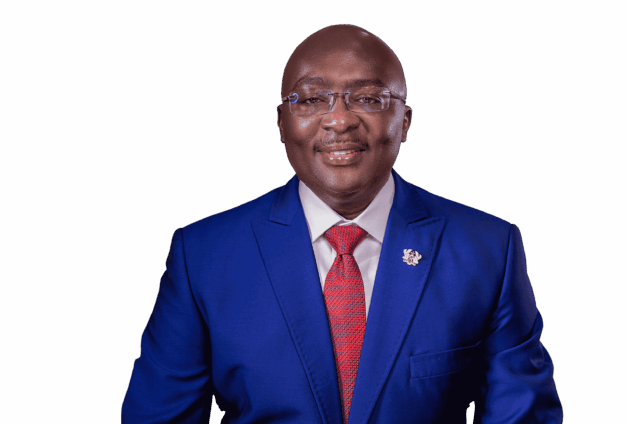
Until recently, I would have said—without hesitation—that Dr Mahamudu Bawumia and the New Patriotic Party (NPP) stood little chance against any National Democratic Congress (NDC) candidate in the 2028 general elections. It felt like a straightforward conclusion.
Today, however, after nearly two decades in journalism and with a front-row view of Ghana’s political ebbs and flows, I am far less inclined to make such a confident prediction—particularly with the elections still three years away.
The surface-level analysis is seductive. Ghanaians, historically, tend to give governments two terms. The NPP administration under President Nana Addo Dankwa Akufo-Addo has, by many objective standards, underperformed. Dr Bawumia served as Vice President throughout that period. On paper, these factors should naturally tilt the political balance in favour of the NDC.
But politics—especially Ghanaian politics—has taught me humility.
Over the past decade and beyond, unforeseen events have repeatedly upended tidy political projections. That reality is why I now approach long-term electoral predictions with caution.
Take 2012, for example. Based on performance indicators and public sentiment at the time, I was convinced the Atta Mills–led NDC government was headed for defeat. The challenges were visible. The criticisms were mounting. Then the unimaginable happened: the sudden death of a sitting President.
That single historic event reshaped the political landscape overnight.
Vice President John Dramani Mahama became the NDC’s flagbearer, sympathy votes came into play, and the entire dynamics of the election changed. Mahama went on to win—but narrowly. Just 50.70 per cent to Nana Akufo-Addo’s 47.74 per cent. That razor-thin margin alone should remind us how fragile political certainty can be.
Since then, Ghana’s Fourth Republic has delivered more surprises.
Who foresaw a hung Parliament that would significantly weaken a sitting government’s authority? Who predicted a scenario where a single opposition party would command nearly one-third of Parliament, reshaping legislative power and negotiations?
Who anticipated Alan Kyerematen’s second exit from the NPP, the formation of a new political movement, and the ripple effects that decision would have on electoral calculations?
Even within the NPP’s own internal elections, the strong performance of Bryan Acheampong—over candidates many had assumed would dominate—caught seasoned observers off guard. Time and again, politics has demonstrated its ability to surprise, often when confidence is at its peak.
Yes, there are numerous arguments advanced today as to why Dr Bawumia cannot become President. But honesty demands that we acknowledge something uncomfortable: similar arguments were once made about Nana Akufo-Addo. History, as we know, took a different path—one that ended with two full presidential terms.
That is why I find it puzzling—and frankly premature—that some voices, particularly within the NDC, are already writing off Dr Bawumia’s prospects.
A second consecutive NDC term in 2028 will not materialise by default. Performance in government will matter—but it will not be the only factor. Unforeseen national events, internal party dynamics, candidate appeal, campaign discipline, and how effectively the opposition reorganises itself will all shape the final outcome.
Equally important is the NDC’s own internal journey. Its flagbearer contest will be just as decisive as its record in government. Party unity, message clarity, and strategic coherence will all influence voter behaviour.
Three years is a very long time in politics. To predict the outcome of the 2028 elections today is, at best, an educated gamble. At worst, it is a farce.
In truth, anybody can win.
Dr Bawumia’s emergence as the NPP’s flagbearer should serve as a wake-up call to the NDC. It raises the stakes considerably and leaves no room for complacency. Momentum must be protected. Governance must deliver tangible results. Political strategy must be precise and adaptive.
Assumptions are dangerous in politics. History shows that elections are rarely won on entitlement; they are won through preparation, adaptability, and the ability to respond to both crises and opportunities.
Politics rewards those who prepare—and punishes those who assume.
As a journalist deeply invested in politics and governance, one lesson stands above all others: in Ghanaian elections, certainty is always the first casualty.
Disclaimer:
The author, Ebenezer Afanyi Dadzie, is an Assistant Editor at Myjoyonline. The views expressed in this article are solely his own and do not necessarily reflect those of the organisation.