


A survivor of child trafficking on Lake Volta has appealed to the Government of Ghana to make sustained funding for child protection systems a national priority, arguing that long-term investment in prevention, rescue operations and survivor rehabilitation is essential to ending child labour exploitation across the country.
Speaking at Ghana’s National Justice Conference 2026 in Accra, Godson Glawu shared his personal journey from being trafficked as a child and forced into hazardous fishing labour on Lake Volta to becoming a trained electrician, entrepreneur and advocate working to prevent child trafficking in vulnerable communities.
Addressing policymakers, development partners, law enforcement agencies, civil society organisations and child protection stakeholders, Glawu emphasized that his transformation was not the result of chance but of coordinated interventions backed by adequate financial resources, institutional commitment and sustained support.
His testimony formed one of the most compelling moments of the conference, held under the theme “Sustainable Funding for Child Protection Against Labour Exploitation,” where participants examined ways to strengthen Ghana’s child protection systems through predictable and long-term financing.
Childhood stolen by trafficking
Recounting his painful experiences, Glawu said he was only seven years old when he was trafficked from his hometown of Keta in the Volta Region to Lake Volta, where he was forced into fishing labour.
Instead of attending school and enjoying a normal childhood, he spent the next ten years engaged in dangerous work that exposed him to physical abuse, emotional trauma and life-threatening conditions.
According to him, one of his primary duties involved diving beneath the waters of Lake Volta to untangle fishing nets that had become trapped underwater.
The work was carried out without any form of protective equipment or safety training, placing his life at constant risk.
He recalled enduring repeated beatings and living under an atmosphere of fear while carrying out strenuous labour that no child should experience.
Beyond the physical hardship, he said the emotional scars were equally devastating.
Among his most painful memories was witnessing the death of one of his close friends during the period of exploitation, an experience that has remained with him years after his rescue.
The traumatic incident, he said, illustrated the deadly consequences of child trafficking and hazardous child labour that continue to affect many vulnerable children working on Lake Volta.
A turning point
Glawu explained that by the age of twelve he had reached what he described as an emotional breaking point.
Although he chose not to provide details of that deeply personal moment during his address, he noted that an encounter with a stranger helped restore his hope for a different future.
He emphasized, however, that hope alone could not have changed his circumstances.
According to him, lasting transformation required well-funded institutions, coordinated interventions and professionals equipped with the resources necessary to identify, rescue and rehabilitate trafficked children.
He said his experience demonstrates that effective child protection depends on more than goodwill.
It requires sustained national investment in systems capable of responding consistently to cases of exploitation.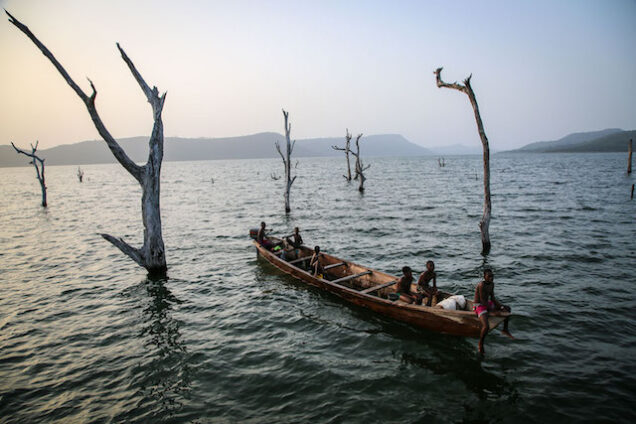
Rescue made possible through coordinated intervention
Glawu recounted that his freedom finally came in 2015 when he was rescued during a police operation supported by International Justice Mission (IJM) Ghana.
He stressed that the operation was not accidental but the result of deliberate investment in law enforcement capacity, logistics, training and collaboration among multiple agencies.
According to him, successful rescue missions require adequately resourced police personnel, transportation, intelligence gathering, community engagement and legal support.
Without these essential investments, many trafficked children would remain beyond the reach of authorities.
His rescue marked the beginning of a long process of healing and recovery rather than the end of his struggles.
Life after rescue
Following his rescue, Glawu entered an aftercare programme designed to help survivors recover physically, emotionally and socially.
He described the rehabilitation process as a critical stage in rebuilding his life after years of exploitation.
The programme provided counselling, emotional support and reintegration services while preparing him for a productive future.
One of the most significant moments in his recovery, he said, was being reunited with his mother after years of separation.
He explained that restoring family relationships formed an important part of his healing journey and helped create the stability needed to begin rebuilding his life.
Beyond family reunification, he also received educational support that enabled him to enrol in a technical training institute.
There, he studied electrical works and acquired vocational skills that would later provide him with sustainable employment and financial independence.
Today, Glawu works as a trained electrician and entrepreneur, demonstrating how effective rehabilitation programmes can enable survivors to become productive members of society.
From survivor to advocate
Rather than allowing his painful experiences to define his future, Glawu has transformed them into a platform for advocacy and community service.
In 2021, he joined the Ghana Survivor Network, an organisation that empowers survivors of human trafficking to participate actively in prevention, awareness and policy advocacy.
He currently serves as a chapter leader in Keta, where he coordinates community outreach activities aimed at preventing child trafficking and protecting vulnerable children.
Working alongside the Ghana Police Service and the Department of Social Welfare, he engages communities through education, awareness campaigns and survivor-led advocacy initiatives.
His work focuses on helping families recognize the warning signs of trafficking while encouraging communities to report suspected cases to the appropriate authorities.
Glawu believes survivors possess unique experiences that enable them to contribute meaningfully to efforts aimed at preventing exploitation.
According to him, those who have lived through trafficking understand both the methods used by traffickers and the challenges survivors face after rescue.
This lived experience, he argued, makes survivor leadership an important component of Ghana’s child protection system.
Call for sustained government investment
Using his personal story as evidence of what effective interventions can achieve, Glawu urged the Government of Ghana to prioritise sustained investment in child protection systems.
Addressing government representatives at the conference, he called for predictable funding rather than one-time interventions.
“We need you to increase investment in child protection systems. Not as a one-time effort, but as a sustained national priority,” he said.
He stressed that protecting vulnerable children requires long-term financial commitments capable of supporting prevention, rescue, rehabilitation and reintegration programmes.
According to him, governments should ensure adequate funding for police units responsible for combating trafficking, social welfare departments, survivor-led organisations and community-based prevention initiatives.
He argued that greater investment in prevention would reduce the number of children requiring rescue in the future.
While emergency responses remain important, he said stronger prevention systems offer a more sustainable solution to child trafficking.
Recognising community leadership
During his address, Glawu also highlighted the importance of individual leadership in strengthening child protection systems.
He commended Pastor Busenu Deku of Keta for supporting the work of the Ghana Survivor Network.
According to Glawu, Pastor Deku has opened his church to survivor leaders, providing a safe meeting space where advocacy activities can be organised.
He also revealed that the pastor personally funded radio airtime for anti-trafficking awareness campaigns aimed at educating communities about the dangers of child trafficking.
Glawu described these contributions as powerful examples of how individuals, faith-based organisations and local communities can complement government efforts.
He said effective child protection requires collaboration among government institutions, civil society organisations, religious leaders, traditional authorities and community members.
National Justice Conference focuses on sustainable financing
Glawu’s testimony formed part of broader discussions at the National Justice Conference 2026, which brought together policymakers, law enforcement agencies, development partners, non-governmental organisations and child rights advocates.
Held under the theme “Sustainable Funding for Child Protection Against Labour Exploitation,” the conference focused on strengthening Ghana’s capacity to combat child trafficking through reliable financial investment.
Participants examined challenges facing child protection institutions, including inadequate funding, limited logistics, staffing constraints and insufficient survivor support services.
The conference also explored strategies for improving coordination among institutions responsible for preventing trafficking and protecting vulnerable children.
Stakeholders agreed that legislation alone cannot eliminate trafficking without adequate financial resources to support implementation.
Translating legal commitments into action
A key objective of the conference was encouraging government and development partners to move beyond policy commitments by ensuring consistent financing for child protection programmes.
Among the issues discussed was the implementation of Ghana’s Human Trafficking Fund, established to support victims of trafficking and strengthen anti-trafficking initiatives.
Participants argued that existing legal frameworks provide an important foundation but require sufficient budgetary allocations to achieve meaningful impact.
They called for improved financing mechanisms capable of sustaining prevention campaigns, rescue operations, investigations, prosecutions and survivor rehabilitation.
Representatives from International Justice Mission (IJM) Ghana joined other stakeholders in advocating stronger partnerships between government institutions and civil society organisations.
Such collaboration, participants noted, is essential for building resilient child protection systems capable of responding effectively to trafficking.
Child trafficking remains a national concern
Child trafficking continues to pose significant challenges in parts of Ghana despite years of interventions by government agencies and non-governmental organisations.
Lake Volta has long been identified as one of the areas where trafficked children are subjected to hazardous fishing activities under exploitative conditions.
Many victims are deprived of education, healthcare and family support while performing dangerous work that threatens both their physical safety and emotional well-being.
Experts at the conference stressed that poverty, limited educational opportunities and inadequate public awareness continue to expose children to trafficking risks.
Addressing these underlying causes, they argued, requires sustained investment in social protection programmes alongside law enforcement interventions.
Survivors at the centre of policy
One of the recurring themes throughout the conference was the importance of placing survivors at the centre of policymaking.
Participants acknowledged that survivors possess valuable insights capable of strengthening prevention strategies and improving support services.
Glawu’s own journey—from trafficked child to skilled professional and advocate—was cited as evidence of what can be achieved when survivors receive comprehensive support.
His story illustrated how investment in rescue operations, rehabilitation, education and vocational training can transform lives while creating future leaders committed to protecting others.
A message of hope and responsibility
Concluding his address, Glawu urged policymakers not to view child protection as a temporary development project but as a permanent national responsibility.
He reminded participants that behind every statistic is a child whose future depends on the decisions made by governments, institutions and communities.
He called on all stakeholders to ensure that future generations of children are protected from exploitation through stronger systems, better funding and continued collaboration.
His appeal resonated with conference participants, reinforcing the central message that sustainable financing remains indispensable to Ghana’s efforts to eliminate child trafficking and labour exploitation.
As discussions at the National Justice Conference concluded, stakeholders reaffirmed their commitment to strengthening child protection systems and translating policy commitments into practical action.
For Glawu, the conference represented more than an opportunity to recount his painful past. It was a platform to demonstrate that with sustained investment, effective institutions and collective responsibility, children rescued from exploitation can rebuild their lives, contribute meaningfully to society and become powerful advocates for lasting change.
His journey from the shores of Lake Volta to the national stage stands as both a reminder of the devastating impact of child trafficking and a testament to the life-changing power of coordinated, adequately funded child protection systems.

