


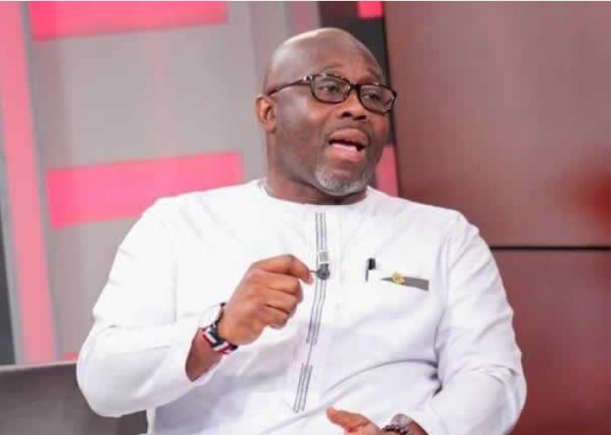
Former Member of Parliament for Awutu Senya West, Nenyi George Andah, has called on members of the New Patriotic Party (NPP) to rise above internal factional divisions and redirect their focus toward leadership quality, strategic preparedness, and national responsibility as January 31 draws near.
Speaking against the backdrop of heightened internal discussions within the party, Mr. Andah emphasised that the significance of January 31 should not be reduced to the reinforcement of party camps or loyalty blocs. Instead, he said, the date ought to serve as a moment of deep, sober reflection on the type of leadership the party intends to present to Ghanaians and the readiness of the NPP to govern responsibly in the national interest.
According to Mr. Andah, Ghana’s political landscape is at a critical juncture, and the decisions taken by major political parties—particularly the NPP—will have long-lasting implications for the country’s democratic stability, economic recovery, and social cohesion. He warned that excessive focus on internal factionalism risks distracting the party from its broader obligation to offer credible leadership and clear policy direction to the nation.
As a communications professional with years of experience in public discourse, Mr. Andah noted that political messaging and internal conduct are closely watched by the electorate. He explained that when party members publicly align themselves strictly with internal factions, it sends a signal of disunity and self-interest, which can erode public confidence and weaken the party’s appeal to undecided voters.
“January 31 should not be about deepening internal divisions,” he stressed. “It should be about asking difficult questions—about leadership, competence, integrity, and preparedness to lead Ghana at a time when the country needs clear direction and responsible governance.”
Mr. Andah urged party faithful to remember the founding values and traditions of the NPP, which emphasise democracy, freedom, development, and national progress. He argued that these ideals should remain central to internal deliberations, especially during periods when leadership choices and strategic decisions are being considered.
He further cautioned that internal competition, while a natural feature of democratic political parties, must be guided by mutual respect, discipline, and a shared commitment to the party’s overarching vision. According to him, when competition degenerates into entrenched camps and personality-driven politics, it undermines cohesion and distracts from policy substance.
The former legislator also highlighted the importance of preparedness, noting that leadership is not merely about popularity or internal influence but about readiness to govern effectively. He encouraged party members to assess leadership options based on experience, vision, capacity to unify, and ability to respond to the complex challenges facing Ghana, including economic pressures, youth unemployment, and public trust in institutions.
Mr. Andah stressed that the Ghanaian electorate is increasingly discerning and less tolerant of internal political theatrics. He observed that citizens are more concerned with practical solutions, credible leadership, and a clear roadmap for national development than with internal party rivalries.
In his view, January 31 presents an opportunity for the NPP to demonstrate political maturity by elevating conversations around governance, policy innovation, and national responsibility. He said the party must show that it is capable of self-reflection and renewal, particularly at a time when public expectations of political leadership are high.
Drawing on his background in communications, Mr. Andah advised party leaders and supporters to be mindful of their public utterances and conduct. He warned that careless statements, divisive rhetoric, and public displays of internal discord could be amplified by the media and social platforms, potentially damaging the party’s image and credibility.
He also appealed to the youth within the party, urging them to resist being drawn into factional battles that could limit their growth and contribution. Instead, he encouraged young party members to focus on ideas, policy engagement, and constructive participation that strengthens the party’s intellectual and organisational capacity.
Mr. Andah underscored the importance of unity, not as a slogan but as a strategic necessity. He explained that unity does not mean the absence of debate or differing opinions, but rather the ability to manage diversity of thought within a framework of shared goals and respect.
As Ghana continues to navigate economic recovery and social challenges, Mr. Andah said political parties must demonstrate seriousness and readiness to govern. He argued that the NPP’s internal processes and posture in the coming weeks would be closely scrutinised by the public and could influence perceptions of the party’s ability to provide stable and effective leadership.
In conclusion, Mr. Andah reiterated his call for NPP members to use January 31 as a moment of reflection rather than factional entrenchment. He urged the party to rise above internal alignments and recommit to leadership excellence, preparedness, and service to the nation.
According to him, the true test of leadership lies not in internal dominance but in the ability to inspire confidence, unify diverse interests, and offer Ghana a compelling vision for the future.

