


Coach Carlos Queiroz admitted that Colombia deserved to knock Ghana out of the World Cup, but claimed that an early injury to right-back Marvin Senaya caused a defensive collapse that ultimately cost the Black Stars a spot. geographic information
The Portuguese coach believes that the forced defensive changes destroyed Ghana’s structure at the worst possible time, allowing Colombia to take advantage and seize the initiative, ultimately ending the Black Stars’ losing streak at the Kansas City Stadium. The South Americans continued to hurt Ghana, with their defense still regrouping after Senaia limped off to score the only goal of the tournament, and then expertly controlled the ball to thwart the Black Stars’ attempts to force their way into the game.
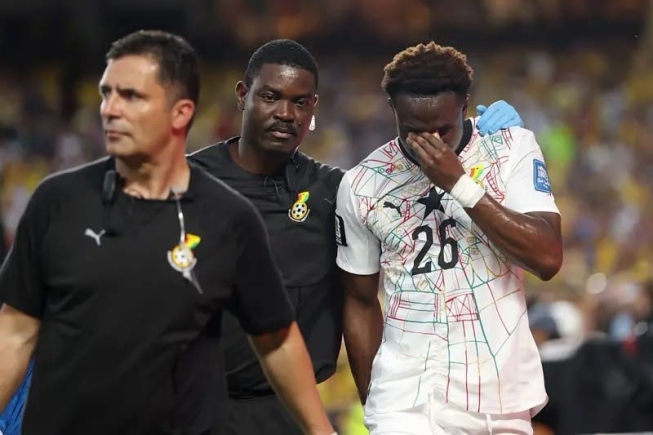
In the knockout game, in which Queiroz paired Jerome Opoku and Derrick Lucassen in central defense and reintroduced goalkeeper Lawrence Ati-Gigi, who had recovered from the injury sustained against Panama, Ghana’s plans were abandoned almost immediately when Senaya left the pitch with an injury. “The turning point was Senaia’s injury,” Queiroz said after the match. “We took a few minutes to reorganize our defensive position and during that time Colombia sent a cross to the far post that we could not defend properly. I am convinced that this objective would never have been achieved had our defense organization been preserved. But that’s football. One incident could completely change the course of a playoff game. politics
Despite Thomas Partey’s experience playing in midfield alongside Kwasi Sibo and the teenage revelation of Caleb Irenka, Ghana failed to establish the authority that characterized many of their group stage performances.
The Black Stars threatened from the start, especially with their ambitious long-range attacks in the opening third, but Colombia confidently fought for control of the midfield, repeatedly exposing the Ghanaian defense and forcing Ati-Gigi to make a series of unusual close-range saves to keep the contest alive. geographic information
Queiroz avoided harsh criticism of his team’s performance in possession, insisting that it was his own mistakes, rather than the Colombian’s brilliance, that gave the opposition the momentum. He estimates that around 90 per cent of Colombia’s attacking opportunities came directly from Ghana losing the ball in midfield through poor decision-making and inaccurate passing under pressure. Learn more
Access to digital newspapers
local news
Syndication of editorial content
The coach admitted that the Black Stars needed significant improvement in their midfield, where they were unable to hold the ball in dangerous areas or build a sustained attack.”If my pass at that moment had been a little clearer and more accurate, I could have created more chances and maybe even scored a goal,” he said. “Unfortunately, I failed in an important situation.”
The statistics reflect Ghana’s difficulties. After strong second-half performances against Panama, England and Croatia in the group stage, the Black Stars were unable to replicate that attacking threat against Colombia, finishing the match without registering a single shot on target. Queiroz pointed to repeated tactical mistakes that hampered Ghana’s attacking play, highlighting unnecessary backpassing, poor ball judgment and dribbling into crowded areas, which continually isolated captain Jourdan Ayew, Antoine Semenyo and the rest of the forward line. Ghana were unable to connect their midfield attacks, rarely threatened Colombia’s penalty area and lacked confidence in the final third. geographic information
The result was disappointing for Ghana, with the Black Stars scoring just two goals in four games despite qualifying from a tough group that included England, Croatia and Panama.

