


President John Dramani Mahama emphasized the importance of prioritizing Ghana’s interests over political, ethnic, and religious affiliations to ensure the sustainability of the economic recovery. He highlighted the need for integrity, discipline, and national unity among citizens to maintain the progress achieved through disciplined economic management, prudent fiscal reforms, responsible leadership, and the sacrifices of Ghanaians. The President delivered these remarks during the National Day of Prayer and Thanksgiving at Jubilee House on July 1, 2026, urging all Ghanaians to unite under the common goal of advancing the nation.
President Mahama stressed that while the country had seen improvements in its economic situation, challenges such as youth unemployment and limited access to credit for businesses persisted. He called for responsible behavior from all citizens to safeguard the progress made, advising young people to reject shortcuts to success and uphold integrity. The President also reminded public servants that public trust hinged on their actions and behavior.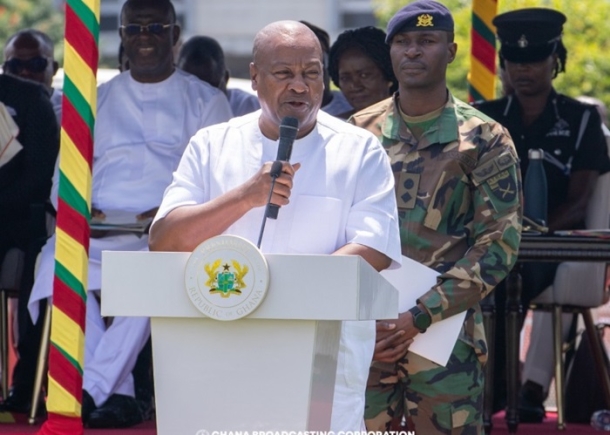
In his address, President Mahama underscored the importance of combining faith with hard work for meaningful transformation, citing examples from biblical figures Nehemiah and Joseph. He cautioned against relying solely on prayer without corresponding responsible actions and emphasized the role of discipline in fostering prosperity. Despite recent tragedies like floods, the President encouraged Ghanaians to remain grateful and reject negative attitudes in favor of unity, dialogue, service, and hope.
The President urged citizens to shape Ghana’s future through positive actions in their daily lives, stressing that individual contributions in homes, schools, workplaces, markets, and farms were crucial for national development. The National Day of Prayer and Thanksgiving, themed “Resetting Our Values to Build the Ghana We Want,” featured a sermon by Apostle Eric Nyamekye and was attended by various dignitaries including Vice President Professor Naana Jane Opoku-Agyemang, First Lady Lordina Mahama, and members of the Judiciary, Parliament, security serv
Delivering a keynote address during the National Day of Prayer and Thanksgiving held at Jubilee House on July 1, 2026, the President emphasized that the progress recorded in Ghana’s economic recovery must not be taken for granted but safeguarded through integrity, discipline, responsible leadership, and collective national commitment.
Addressing religious leaders, public officials, members of state institutions, and citizens gathered for the occasion, President Mahama stressed that national transformation requires more than policy reforms and economic planning—it also demands a renewed national mindset rooted in accountability, service, and unity.
The event formed part of Ghana’s annual National Day of Prayer and Thanksgiving observance, established to encourage reflection, gratitude, and spiritual renewal among citizens. The 2026 celebration was held under the theme “Resetting Our Values to Build the Ghana We Want.”
According to the President, while recent economic indicators have shown signs of improvement, Ghana’s journey toward lasting prosperity remains incomplete and requires continued commitment from all sectors of society.
He noted that economic recovery cannot succeed if national progress becomes overshadowed by divisions based on politics, ethnicity, religion, or personal interests.
President Mahama explained that every citizen has a role to play in preserving the gains achieved through disciplined economic management, prudent fiscal reforms, responsible governance, and the sacrifices made by ordinary Ghanaians.
He urged citizens to adopt a stronger sense of national responsibility and place the future of the country above individual or partisan interests.
The President stated that the work of rebuilding a nation extends beyond government institutions and requires participation from homes, schools, workplaces, markets, businesses, and communities.
According to him, sustainable national development depends on daily actions and personal choices made by individuals across every level of society.
Speaking on economic matters, President Mahama acknowledged that improvements had been recorded but emphasized that significant challenges still remain.
Among the concerns highlighted were youth unemployment, limited access to credit for businesses, and the need to create more opportunities for economic participation.
He observed that despite signs of recovery, many young people continue to face difficulties securing employment while entrepreneurs and small business operators struggle to access the financial support needed to expand and contribute fully to economic growth.
The President stressed that these realities should serve as motivation for stronger reforms and more responsible national conduct rather than discouragement.
He emphasized that maintaining progress would require consistency, discipline, and patience.
Addressing young people directly, President Mahama delivered a message centered on values and character.
He encouraged Ghanaian youth to reject shortcuts to success and instead embrace integrity, perseverance, hard work, and ethical conduct.
According to the President, lasting success cannot be built on dishonesty or quick gains but must be grounded in discipline and commitment.
He challenged young people to become active contributors to national transformation by investing in education, innovation, productivity, and responsible citizenship.
The President further warned that societal attitudes that reward shortcuts or celebrate unethical success undermine national progress and weaken public confidence.
He urged the younger generation to pursue opportunities that create lasting impact rather than immediate rewards.
In another important section of his address, President Mahama turned attention to public service and governance.
He reminded public servants that public confidence in institutions is directly connected to the actions and conduct of those entrusted with leadership responsibilities.
According to him, citizens judge institutions not merely by policies but by the integrity and professionalism demonstrated by officials.
He therefore called on workers across public institutions to remain accountable and committed to service delivery.
The President noted that restoring trust in governance requires consistent examples of honesty, discipline, and transparency.
He explained that institutions become stronger when leaders prioritize public service over personal gain.
A major focus of the President’s message centered on the relationship between faith and action.
While acknowledging Ghana’s strong religious identity, he cautioned citizens against believing that prayer alone can transform society without responsible effort and practical action.
President Mahama stated that prayer should inspire commitment, discipline, and service rather than replace them.
To support this message, he referenced biblical examples including Nehemiah and Joseph, describing them as individuals whose faith was accompanied by action, planning, responsibility, and determination.
He explained that meaningful transformation occurs when spiritual conviction is combined with practical effort.
According to him, nations prosper not simply because citizens pray but because they translate values into everyday conduct.
The President encouraged religious communities to continue promoting values that strengthen society, including honesty, compassion, responsibility, peace, and respect for others.
He emphasized that places of worship must continue contributing positively to national conversations and community development.
The President also reflected on recent challenges experienced by the country, including tragic events and social difficulties that have affected communities.
Despite these challenges, he encouraged Ghanaians to maintain gratitude and hope.
He noted that periods of hardship should not lead to division, bitterness, or hopelessness but should strengthen collective resolve and encourage greater national solidarity.
President Mahama urged citizens to reject negativity and instead promote dialogue, cooperation, understanding, and service.
According to him, nations achieve meaningful progress when citizens focus on solutions and work together toward shared goals.
He encouraged communities to strengthen relationships across differences and remain committed to peaceful coexistence.
The President described unity as one of Ghana’s greatest national strengths and called on citizens to preserve that identity.
He emphasized that Ghana’s diversity should remain a source of strength rather than division.
The National Day of Prayer and Thanksgiving brought together leaders from multiple sectors including government officials, religious leaders, members of Parliament, representatives of the Judiciary, security services, and members of the diplomatic community.
The event also featured a sermon delivered by Apostle Eric Nyamekye, who encouraged reflection on national values and collective responsibility in building a stronger society.
Among dignitaries in attendance were senior government officials and representatives from state institutions who joined citizens in observing the national occasion.
The gathering reflected the broader objective of strengthening national unity through reflection and shared responsibility.
President Mahama used the occasion to remind citizens that transformation does not begin only with governments or institutions but also with individuals.
He stated that every act of honesty, responsibility, kindness, and discipline contributes to building the future Ghana citizens desire.
According to him, people shape the nation each day through decisions made in homes, schools, offices, farms, markets, and communities.
He encouraged citizens to remain hopeful and continue believing in the country’s potential.
The President stated that national renewal requires collective ownership and sustained effort.
He emphasized that citizens should measure success not only by economic indicators but also by improvements in values, accountability, and social responsibility.
As Ghana continues efforts toward economic recovery and national development, President Mahama’s message at Jubilee House served as a call for renewed civic responsibility and national reflection.
His address highlighted the idea that economic recovery must be supported by ethical leadership, disciplined citizenship, and social unity.
The National Day of Prayer and Thanksgiving therefore became more than a ceremonial event.
It became an opportunity to reaffirm the values needed to strengthen the nation’s future.
Through his message, President Mahama challenged citizens to combine faith with action, preserve unity over division, and contribute meaningfully to national development.
His concluding message encouraged all Ghanaians to move forward together with a shared commitment to service, responsibility, integrity, and hope.
He reiterated that the Ghana people aspire to build will not emerge solely from government policies or national plans but through everyday actions taken by citizens who choose unity over division and discipline over complacency.
The President concluded by urging Ghanaians to continue working together to protect the nation’s progress and create a stronger future for generations to come.

