


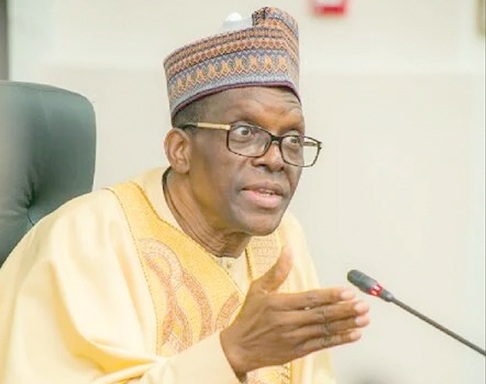
Alban Bagbin Pleads for Permanent Parliament House to Safeguard Ghana’s Legislative Future
The Speaker of Parliament, Alban Bagbin, has renewed calls for the construction of a permanent Parliament House for Ghana, describing it as a matter of national urgency rather than political preference.
Speaking during a parliamentary engagement in Accra, the Speaker emphasized that Ghana’s legislature deserves a purpose-built, modern facility that reflects the country’s democratic maturity and growing legislative responsibilities.
According to him, the absence of a permanent Parliament complex limits operational efficiency and does not adequately project the stature of Ghana’s democratic institution on the global stage.
A Long-Standing Concern
Ghana’s Parliament currently operates from facilities originally constructed for a different purpose during the colonial era. Over the years, modifications have been made to accommodate the expanding needs of lawmakers, staff, media personnel, and visitors.
However, Speaker Bagbin argued that these adjustments fall short of meeting modern parliamentary standards.
“Our democracy has evolved significantly,” he stated. “It is only fitting that our legislative infrastructure evolves with it.”
He stressed that a permanent Parliament House would symbolize stability, institutional independence, and national pride.
Operational and Security Challenges
The Speaker outlined several operational challenges faced under the current arrangement, including:
-
Limited office space for Members of Parliament (MPs)
-
Inadequate committee rooms
-
Insufficient research and documentation facilities
-
Security and access constraints
-
Congested public galleries
He noted that Parliament’s expanding oversight, law-making, and representation duties require advanced technological and structural support systems.
Modern parliaments worldwide are equipped with digital voting systems, media centers, research libraries, and secure meeting chambers. According to the Speaker, Ghana’s legislature should not lag behind.
Strengthening Democratic Institutions
Speaker Bagbin argued that constructing a permanent Parliament complex would strengthen Ghana’s democratic architecture.
A dedicated facility, he said, would:
-
Enhance legislative efficiency
-
Improve transparency
-
Support parliamentary diplomacy
-
Provide better working conditions for MPs and staff
He emphasized that the project should not be politicized but viewed as a long-term investment in governance.
“Institutions outlive individuals,” he remarked. “What we build today will serve generations to come.”
Historical Context
The call for a permanent Parliament House is not new. Previous discussions about constructing a modern parliamentary complex have surfaced over the years, but economic constraints and public debate have slowed progress.
Some past proposals sparked public controversy over cost concerns, especially during periods of fiscal challenges.
However, the Speaker insists that careful planning, transparency, and phased implementation could address financial apprehensions.
Public Reaction and Economic Debate
The renewed call has generated mixed reactions among citizens and policy analysts.
Supporters argue that:
-
A modern Parliament House would project Ghana’s democratic maturity.
-
It would boost national prestige.
-
It would improve legislative effectiveness.
Critics, however, question whether such a project should take priority amid competing needs such as healthcare, education, and infrastructure development.
Economic analysts suggest that the viability of the project would depend on transparent procurement processes, cost control measures, and long-term fiscal planning.

