


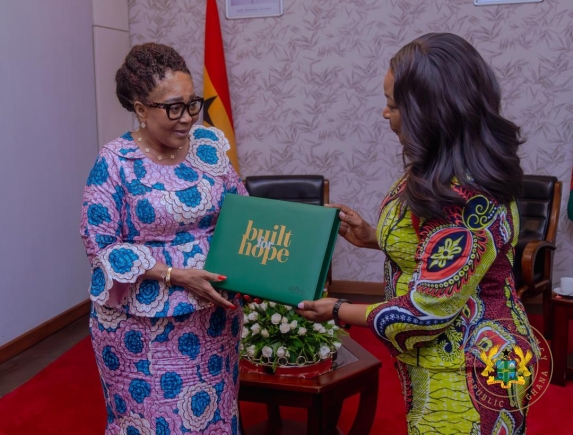
A Symbolic Encounter of Sisterhood, Solidarity, and Shared Purpose
First Lady of Ghana, Mrs Lordina Dramani Mahama, on Thursday held a high-level meeting with Mrs Mutinta Hichilema, First Lady of the Republic of Zambia, in Lusaka, in a moment that underscored the growing role of First Ladies as agents of soft diplomacy, social transformation, and cross-border cooperation in Africa.
The meeting, characterised by warmth, mutual respect, and a shared commitment to social impact, went beyond ceremonial courtesy. It reflected a broader vision of women-led collaboration, where First Ladies leverage their influence to advance community development, social inclusion, and regional solidarity.
Mrs Mahama is in Zambia accompanying President John Dramani Mahama, who is undertaking a three-day state visit aimed at strengthening bilateral relations between Ghana and Zambia across political, economic, and cultural spheres.
The Context: A State Visit Anchored in People-Centered Diplomacy
State visits often focus on high-level political engagements, trade agreements, and strategic partnerships. However, the meeting between the two First Ladies highlighted a complementary dimension of diplomacy — one rooted in human development, compassion, and shared lived experiences.
While President Mahama engaged with his Zambian counterpart on matters of governance, trade, and regional cooperation, Mrs Lordina Mahama’s engagement with Mrs Mutinta Hichilema reflected the softer yet equally powerful side of international relations: the diplomacy of care.
This parallel engagement reaffirmed the growing recognition that sustainable development requires not only policy alignment but also social empathy and inclusive leadership, particularly in areas affecting women, children, and vulnerable communities.
A Meeting of Purpose: Conversations That Matter
During their meeting, Mrs Mahama and Mrs Hichilema held extensive and meaningful discussions centered on their respective social intervention programmes and advocacy initiatives.
The two First Ladies exchanged insights on:
-
Their ongoing social development projects
-
Approaches to women’s empowerment and gender equality
-
Programmes targeting maternal and child welfare
-
Youth development and skills training
-
Community-based health and education initiatives
-
Strategies for mobilising public-private partnerships
-
Measuring social impact and sustainability
The discussions were frank, solution-oriented, and grounded in practical experience, reflecting both women’s deep involvement in grassroots work rather than symbolic patronage.
Shared Experiences, Shared Challenges
Both Ghana and Zambia face similar social development challenges, including poverty alleviation, access to quality healthcare, youth unemployment, and rural community development. These shared realities provided a natural foundation for collaboration.
Mrs Mahama shared experiences from initiatives she has championed over the years, including advocacy for women’s economic empowerment, maternal health, education for underserved communities, and support for persons with disabilities.
Mrs Hichilema, in turn, outlined key programmes under her advocacy portfolio, focusing on women’s entrepreneurship, child welfare, nutrition, and social inclusion.
The exchange allowed both leaders to compare strategies, identify common obstacles, and explore ways to adapt successful models across borders.
Exploring Ghana–Zambia Partnerships Beyond Governments
One of the most significant outcomes of the meeting was the exploration of potential partnerships between Ghanaian and Zambian institutions, civil society organisations, and development-focused foundations linked to the offices of the First Ladies.
Rather than limiting cooperation to governmental frameworks, the discussions emphasised:
-
Collaboration between non-governmental organisations
-
Knowledge exchange between community-based groups
-
Joint advocacy campaigns on health, education, and gender equity
-
Opportunities for cross-border mentorship programmes for women and youth
-
Leveraging regional platforms such as SADC and ECOWAS linkages
This approach reflects a modern understanding of diplomacy — one that sees civil society and community actors as essential partners in national development.
Reaffirming Commitment to Community Impact
At the heart of the meeting was a shared commitment to impact-driven initiatives that deliver tangible benefits to communities.
Both First Ladies reaffirmed their dedication to ensuring that their advocacy efforts translate into real improvements in the lives of ordinary citizens, particularly those often left behind by mainstream development.
They emphasised that social initiatives must be:
-
Inclusive, reaching rural and marginalised populations
-
Sustainable, with long-term benefits
-
Measurable, with clear outcomes and accountability
-
Community-owned, empowering beneficiaries rather than creating dependency
This shared philosophy reinforced the possibility of future joint projects that align with these principles.
First Ladies as Agents of Soft Power
The meeting between Mrs Mahama and Mrs Hichilema exemplifies the evolving role of First Ladies in African governance.
Traditionally viewed as ceremonial figures, First Ladies across the continent have increasingly emerged as advocates, mobilisers, and influencers, shaping public discourse and policy priorities through their platforms.
By engaging in cross-border dialogue, they contribute to:
-
Strengthening people-to-people relations
-
Promoting shared African values
-
Elevating social issues on diplomatic agendas
-
Encouraging regional solidarity among women leaders
The Lusaka meeting thus represents more than a bilateral courtesy; it is part of a broader continental trend where women in leadership are redefining diplomacy through empathy and collaboration.
The Significance of Sisterhood in Leadership
Observers noted that the meeting symbolised a strong sense of sisterhood, reflecting how women leaders often approach diplomacy differently — prioritising dialogue, mutual understanding, and collective progress.
This sense of solidarity was evident in the tone of the discussions, the openness with which challenges were shared, and the mutual respect shown by both First Ladies.
Such interactions help break down barriers, foster trust, and create space for innovative solutions to shared social challenges.
Ghana–Zambia Relations: A Broader Framework
The engagement between the First Ladies also fits within the broader framework of Ghana–Zambia relations, which have historically been marked by mutual respect, shared Pan-African ideals, and cooperation in regional and international fora.
Both countries have played important roles in Africa’s political history and continue to contribute to continental peace, democracy, and development.
The state visit by President Mahama aims to deepen these ties through renewed engagement in trade, education, technology, and cultural exchange — with the First Ladies’ meeting adding a vital human and social dimension to the diplomatic agenda.
The Way Forward: From Dialogue to Action
As the meeting concluded, both First Ladies expressed optimism about the future of their collaboration.
While no formal agreements were announced, the discussions laid the groundwork for:
-
Continued engagement between their offices
-
Exchange visits between programme teams
-
Joint participation in regional development forums
-
Knowledge-sharing initiatives focused on women and youth
The emphasis was clear: dialogue must lead to action, and goodwill must be translated into meaningful outcomes.
Conclusion: Diplomacy with a Human Face
The meeting between Mrs Lordina Dramani Mahama and Mrs Mutinta Hichilema stands as a powerful reminder that diplomacy is not only conducted in boardrooms and conference halls but also through shared stories, empathy, and collective vision.
As Ghana and Zambia strengthen their bilateral ties, the collaboration between their First Ladies highlights the importance of people-centered leadership in shaping Africa’s future.
In a world increasingly defined by complex challenges, such moments of connection and cooperation offer hope that progress can be driven not only by power and policy, but also by compassion, partnership, and shared purpose.

