


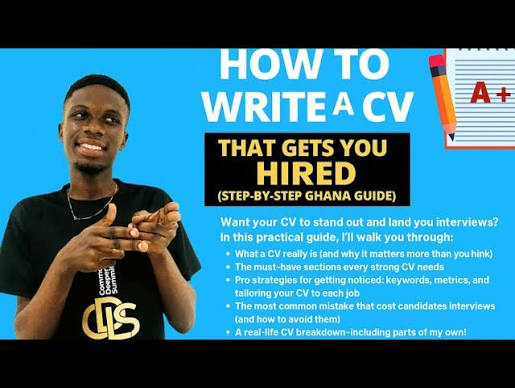
In today’s competitive job market, a well-written Curriculum Vitae (CV) can make the difference between securing an interview and having an application overlooked. As employers receive hundreds of applications for a single vacancy, job seekers in Ghana are increasingly recognizing the importance of presenting their qualifications, skills, and experience in a professional and organized manner.
Whether applying for a graduate trainee position, government employment, an internship, or a senior management role, a strong CV serves as a personal marketing document. It provides employers with a snapshot of an applicant’s education, work history, achievements, and professional potential.
Career experts say that while qualifications remain important, employers also pay close attention to how candidates present themselves through their CVs. A document that is clear, concise, and tailored to the job often creates a stronger first impression than one filled with unnecessary details or formatting errors.
This guide explains everything job seekers in Ghana need to know about writing a professional CV that stands out in today’s employment market.
Understanding the Purpose of a CV
A Curriculum Vitae, commonly known as a CV, is a document that summarizes a person’s academic background, work experience, professional skills, certifications, and achievements.
Its primary purpose is to convince an employer that the applicant possesses the qualifications and experience required for a specific role.
A CV is not intended to tell the complete story of a person’s life. Instead, it should highlight the most relevant information that demonstrates suitability for the position being applied for.
In Ghana, employers in both the public and private sectors often request a CV alongside an application letter and copies of academic certificates during recruitment.
Why a Professional CV Matters
Recruiters often spend only a short time reviewing each CV before deciding whether a candidate should proceed to the next stage of the recruitment process.
A professional CV helps applicants to:
- Create a positive first impression
- Demonstrate professionalism
- Highlight relevant qualifications
- Showcase work experience
- Present key skills clearly
- Increase interview opportunities
An organized CV also reflects attention to detail, an important quality that many employers value.
Start with Personal Information
The first section of a CV should contain basic personal information.
Include:
- Full name
- Mobile phone number
- Professional email address
- Residential location (town or city)
- LinkedIn profile (if available)
Applicants should avoid using unprofessional email addresses that contain nicknames or informal expressions.
For example, an email such as kwame.boakye@email.com appears more professional than one using unrelated words or numbers.
It is also unnecessary to include personal details such as religion, marital status, tribe, political affiliation, or national identification numbers unless specifically requested by the employer.
Write a Strong Professional Profile
Immediately after personal information, applicants should include a brief professional summary.
This section should be between three and five sentences.
A strong profile summarizes:
- Years of experience
- Professional strengths
- Key achievements
- Career objectives
For graduates with limited work experience, the summary may focus on academic achievements, internships, leadership roles, and transferable skills.
The profile should encourage recruiters to continue reading the rest of the CV.
Present Your Educational Background
Education is one of the most important sections of a CV, particularly for graduates and early-career professionals.
List qualifications in reverse chronological order, beginning with the most recent.
Include:
- Institution name
- Qualification obtained
- Programme studied
- Graduation year
Applicants should ensure that all educational information is accurate and consistent with supporting certificates.
There is generally no need to include basic education details if higher qualifications are already listed, unless specifically requested.
Highlight Relevant Work Experience
The work experience section should also follow reverse chronological order.
Each position should include:
- Job title
- Employer
- Location
- Employment dates
- Key responsibilities
- Major achievements
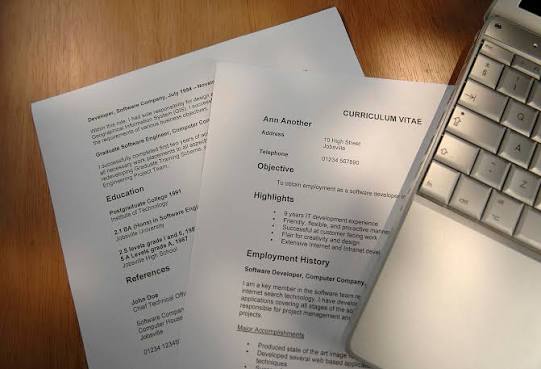
Rather than simply listing duties, applicants should emphasize measurable accomplishments wherever possible.
For example:
Instead of writing:
“Responsible for customer service.”
A stronger statement would be:
“Handled customer inquiries and contributed to improved client satisfaction through timely issue resolution.”
Employers appreciate candidates who demonstrate the impact of their work.
Include Internship Experience
Many graduates in Ghana have limited full-time work experience.
Internships, industrial attachments, and national service placements remain valuable additions to a CV.
Applicants should describe:
- Responsibilities performed
- Skills developed
- Projects completed
- Achievements made
These experiences demonstrate practical exposure and workplace readiness.
Showcase Professional Skills
Skills help employers understand what applicants can contribute beyond academic qualifications.
Common professional skills include:
- Communication
- Teamwork
- Leadership
- Problem-solving
- Time management
- Critical thinking
- Customer service
- Project management
Technical skills may include:
- Microsoft Office Suite
- Data analysis
- Graphic design
- Programming
- Accounting software
- Digital marketing
- Video editing
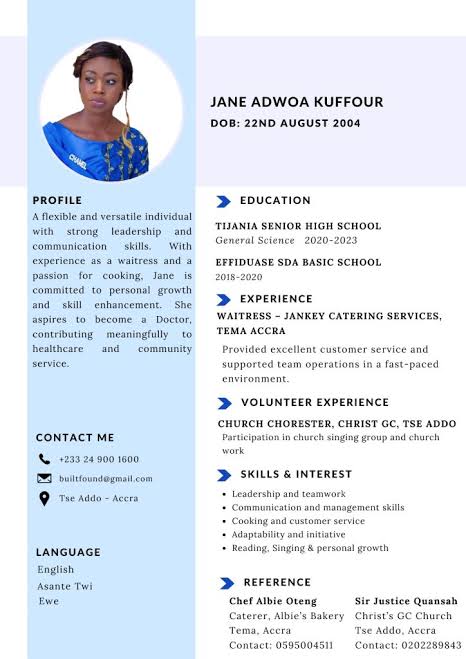 Applicants should include only skills they genuinely possess and can demonstrate during interviews.
Mention Professional Certifications
Professional certifications strengthen a CV and demonstrate commitment to continuous learning.
Examples include certifications in:
- Project management
- Human resource management
- Information technology
- Accounting
- Health and safety
- Digital marketing
- Data analytics
- Cybersecurity
Listing relevant certifications can distinguish applicants from competitors with similar academic qualifications.
Add Leadership Experience
Leadership experience is increasingly valued by employers.
Applicants should mention leadership roles such as:
- Student representative
- Club president
- Team leader
- Project coordinator
- Volunteer organizer
Leadership positions demonstrate initiative, responsibility, and organizational ability.
Even leadership roles performed during university can strengthen a graduate’s CV.
Volunteer Experience Matters
Volunteer work is often overlooked by applicants despite providing valuable evidence of responsibility and community engagement.
Volunteer experience may include:
- Charity organizations
- Community development
- Youth groups
- Religious organizations
- Educational programmes
- Environmental initiatives
Employers frequently appreciate candidates who demonstrate commitment to social responsibility.
Include Achievements
Achievements help distinguish applicants from others.
Examples include:
- Academic awards
- Employee recognition
- Scholarships
- Competition victories
- Research publications
- Conference presentations
Applicants should focus on accomplishments relevant to their career goals.
Use a Professional Layout
Presentation significantly influences readability.
A professional CV should have:
- Clear headings
- Consistent fonts
- Adequate spacing
- Simple formatting
- Logical organization
Fancy graphics, excessive colours, decorative fonts, and unnecessary images should generally be avoided unless applying for creative roles.
Most employers prefer clean and professional documents.
Keep the CV Concise
One common mistake among applicants is creating unnecessarily long CVs.
Graduates and early-career professionals should generally aim for one or two pages.
Experienced professionals may require additional pages depending on their career history.
Every section should provide value.
Irrelevant information should be removed.
Tailor the CV for Each Job
A generic CV rarely performs as well as one customized for a specific vacancy.
Applicants should carefully read job descriptions and identify:
- Required qualifications
- Essential skills
- Preferred experience
The CV should then emphasize the applicant’s most relevant strengths.
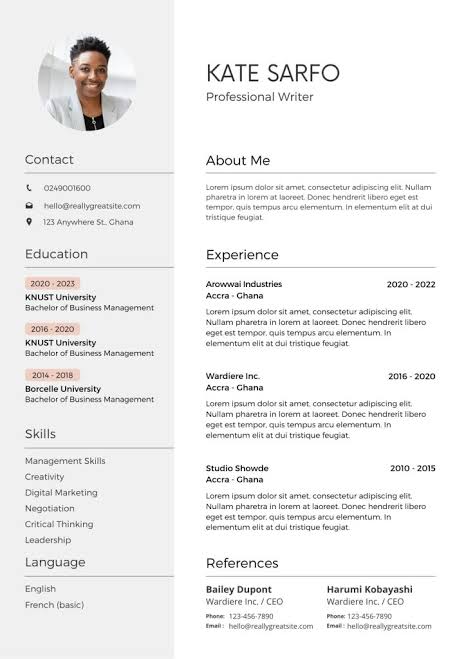 Tailoring demonstrates genuine interest in the position.
Common Mistakes to Avoid
Many otherwise qualified candidates reduce their chances through avoidable errors.
Common mistakes include:
- Spelling mistakes
- Grammar errors
- Incorrect contact details
- Poor formatting
- False information
- Missing dates
- Inconsistent fonts
- Long paragraphs
- Unprofessional email addresses
Applicants should proofread their CV several times before submission.
Having another person review the document can also help identify mistakes.
Should You Include a Photograph?
In Ghana, some employers request passport photographs, while others do not.
Unless specifically required in the job advertisement, applicants generally do not need to include a photograph.
The focus should remain on qualifications and professional experience.
References
Most employers request references.
Applicants may either include two or three referees or simply state:
“References available upon request.”
Suitable referees include:
- Lecturers
- Supervisors
- Managers
- Professional mentors
Family members and close friends should generally not be listed as professional referees.
Applicants should seek permission before including someone’s contact details.
 Saving and Sending Your CV
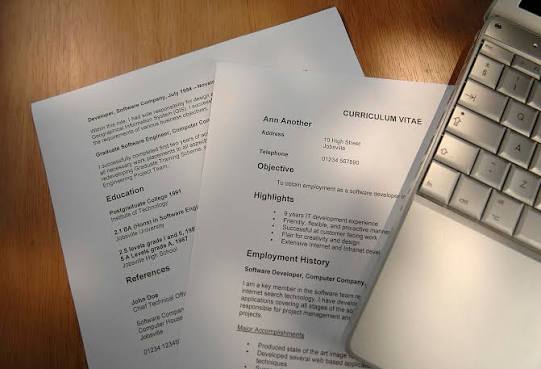
Before submitting a CV:
- Save it as a PDF.
- Use a professional file name.
Examples include:
- Kwame_Asante_CV.pdf
- Ama_Owusu_Curriculum_Vitae.pdf
Avoid file names such as:
- MyCVFinalNew2.pdf
- LatestCVUpdated.pdf
A professional file name reflects attention to detail.
The Role of Digital Skills
As workplaces become increasingly digital, employers value applicants who possess modern technological skills.
Knowledge of:
- Microsoft Excel
- PowerPoint
- Word
- Cloud collaboration tools
- Social media management
- Artificial intelligence tools
- Data visualization
can strengthen a candidate’s profile.
Continuous learning remains important in today’s labour market.
Preparing for the Interview
A strong CV often leads to an interview rather than immediate employment.
Applicants should therefore be prepared to discuss everything included in their CV.
Employers may ask questions about:
- Previous responsibilities
- Skills listed
- Academic projects
- Leadership experience
- Career goals
Providing honest and confident responses reinforces credibility.
Continuous Improvement
A CV should not remain unchanged throughout a person’s career.
Applicants should regularly update it whenever they:
- Complete new qualifications
- Gain additional experience
- Earn certifications
- Receive promotions
- Acquire new skills
Keeping the document current ensures readiness whenever new opportunities arise.
Conclusion
Writing a professional CV in Ghana requires more than listing qualifications and employment history. It involves presenting information in a clear, organized, and persuasive manner that highlights an applicant’s value to potential employers. A well-crafted CV demonstrates professionalism, attention to detail, and an understanding of the expectations of today’s recruitment process.
By focusing on relevant experience, showcasing measurable achievements, maintaining a clean layout, and tailoring the document for each application, job seekers can significantly improve their chances of securing interviews. While competition for employment remains high across many sectors, a strong CV remains one of the most effective tools for opening doors to new career opportunities.
For graduates entering the workforce, experienced professionals seeking career advancement, and individuals changing industries, investing time in developing a professional CV is an essential step toward long-term career success.

