


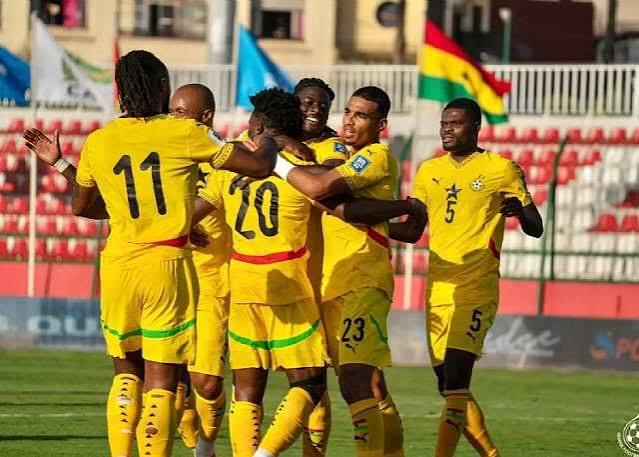
Ghana has always been one of Africa’s great football nations. From the achievements of the Black Stars to the historic success of the Black Satellites and Black Starlets, the country has repeatedly demonstrated its ability to produce technically gifted, ambitious and competitive footballers.
But Ghana football is entering another important era.
A new generation of young players is beginning to take greater responsibility at club and international level. Some are developing in Ghana’s domestic system, others are emerging through European academies, while a growing number of players with Ghanaian heritage are being identified abroad.
The importance of this generation became particularly clear during Ghana’s 2026 FIFA World Cup campaign, when several young players were given opportunities on football’s biggest stage. Caleb Yirenkyi, for example, made his World Cup debut against Panama and played a role in Ghana’s 1–0 victory. The midfielder also started against England alongside Thomas Partey and Kwasi Sibo.
These developments suggest that Ghana’s football future will not depend only on established stars. Increasingly, the country is building a pipeline of younger players capable of competing at the highest level.
A New Generation Is Emerging
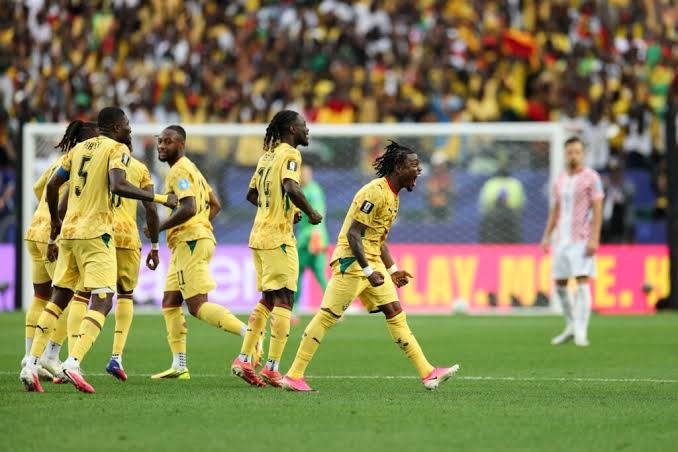
The development of young footballers is not simply about finding the next Black Stars superstar.
It is about creating a reliable system that can continuously produce players for the national teams, domestic clubs and international football.
Ghana’s Football Association has been increasing its focus on talent identification. In 2026, the GFA continued a nationwide talent-identification programme designed to discover promising young footballers and provide pathways into elite development programmes.
The latest phase of the programme included assessments in the Eastern and Volta Regions, with talented boys and girls competing for opportunities at Elite Academy Schools in Bolgatanga, Prempeh College and Achimota School. The initiative is designed to combine football development with education.
That approach is important because a young player’s development should not depend entirely on whether he or she becomes a professional footballer.
Education, discipline, character and life skills can help young athletes build a more secure future while they pursue their sporting ambitions.
Caleb Yirenkyi: A Symbol of the New Generation
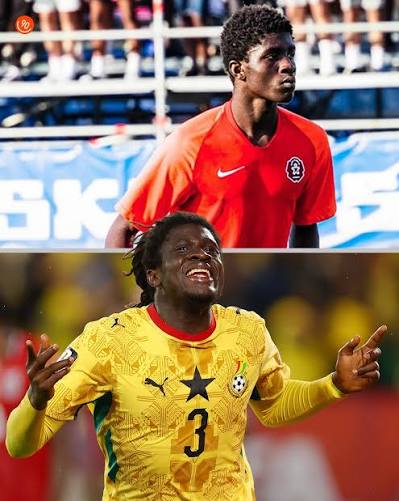
One of the clearest examples of Ghana’s emerging football generation is Caleb Yirenkyi.
The midfielder developed through Ghana’s Right to Dream pathway before moving to FC Nordsjælland in Denmark. His performances eventually earned him recognition with the Black Stars.
The GFA rewarded his strong performances by including him in Ghana’s squad for the 2026 FIFA World Cup.
His World Cup debut provided one of the tournament’s early Ghanaian success stories.
Against Panama, Yirenkyi started in midfield and helped Ghana control important phases of the match. In the 95th minute, he initiated the attack that eventually produced Antoine Semenyo’s winning goal.
The significance went beyond one match.
A young Ghanaian midfielder was being trusted with a starting role at a World Cup and competing alongside experienced international players.
That is exactly the type of transition Ghana needs if it wants to build a strong team for the future.
Aziz Issah and Ghana’s European Pathway
Another exciting name in Ghana’s young football generation is Abdul Aziz Issah.
Issah emerged through Dreams FC and attracted international attention because of his technical ability and attacking creativity. His performances helped him earn a move into Barcelona’s development structure.
In July 2026, Barcelona confirmed that the Ghanaian forward had returned to Barça Atlètic on a permanent deal, signing until June 2028 with an option for an additional year. Barcelona reported that he had made 20 appearances for the reserve team during the previous season, scoring four goals and providing one assist.
Issah’s development demonstrates the value of Ghanaian clubs and academies as launching points for international careers.
A player does not necessarily have to move to Europe as a child to develop into an international prospect. With appropriate coaching, competitive matches and exposure, Ghanaian football can prepare players for major European environments.
Dreams FC’s development of Issah is therefore part of a bigger story: Ghanaian clubs can play an important role in producing players who eventually compete internationally.
David Oduro and the Rise of Ghanaian Full-Backs
David Oduro represents another pathway through which Ghanaian talent can reach elite football.
The left-back came through Accra Lions, a club known for emphasizing player development, before earning a move into Barcelona’s system.
His progression attracted attention because modern football increasingly values technically capable full-backs who can defend, attack, carry the ball and contribute to building play.
For Ghana, producing players in these positions is particularly important.
The modern full-back is no longer simply a defender. Full-backs are expected to provide width, support midfielders, create chances and sometimes move into central areas during possession.
Developing players with these characteristics can help Ghana compete against teams that use highly sophisticated tactical systems.
Christopher Bonsu Baah: Power and Potential
Christopher Bonsu Baah is another young Ghanaian player whose development reflects the changing profile of Ghana’s football talent.
The forward was included in Ghana’s 2026 World Cup squad and was among the players listed by the GFA as World Cup debutants.
His presence is significant because Ghana needs attacking players who can combine physical strength with speed, creativity and directness.
The modern international game is becoming increasingly athletic. Young Ghanaian forwards who can operate at high intensity and attack space can become valuable assets for the Black Stars.
The challenge will be ensuring that potential becomes consistent performance.
Jonas Adjetey and the Future of Ghana’s Defence
Ghana’s next generation is not limited to attackers and midfielders.
Jonas Adjetey was also named among the country’s World Cup debutants in 2026.
Young defenders need a particularly strong developmental environment because experience is essential at the back.
A defender must understand positioning, communication, anticipation, physical duels and decision-making under pressure.
The earlier young defenders are exposed to high-level competition, the faster they can learn how to manage these situations.
For Ghana, developing a stable group of young defenders could be just as important as producing another superstar attacker.
Marvin Senaya and the Importance of Versatility
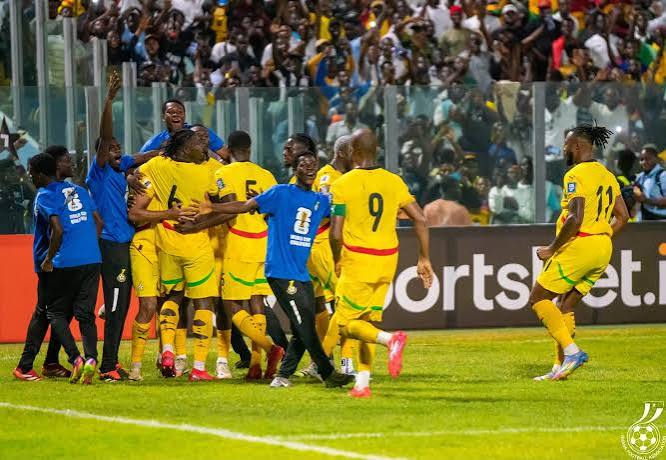
Marvin Senaya also made his World Cup debut in 2026 and started Ghana’s opening Group L match against Panama.
His emergence reflects another important trend in modern football: versatility.
Young players increasingly need to be capable of performing in different tactical roles.
A footballer who can play more than one position gives coaches greater flexibility and can increase his chances of earning opportunities at club and international level.
For Ghana, developing versatile players could become an important competitive advantage.
The Diaspora Talent Pool
Ghana’s talent pool extends far beyond its borders.
Thousands of young people of Ghanaian heritage grow up in football environments across Europe, North America and other parts of the world.
Many are trained in professional academy systems from an early age.
Recognizing this opportunity, the Ghana Football Association organized its first UK talent-identification programme in 2026.
The exercise brought together around 40 Ghanaian-heritage players aged between U15 and U20 who were developing in Category One academies in England. Players connected to academies including Chelsea, Arsenal, Manchester City and Everton were assessed by technical personnel.
This could become an important part of Ghana’s long-term strategy.
Rather than waiting until a player becomes a professional star before establishing contact, the GFA can build relationships with promising young footballers earlier in their development.
That allows Ghana to understand the player’s development, establish connections with families and clubs, and potentially integrate eligible players into youth national teams.
Why Youth Development Matters
The development of young players matters for several reasons.
It creates continuity
A national team cannot rebuild every four years.
Successful football nations develop players continuously so that older players can eventually be replaced without creating a crisis.
It reduces dependence on individual stars
If a national team depends heavily on a handful of players, injuries, suspensions or loss of form can create serious problems.
A strong youth pipeline provides alternatives.
It creates economic opportunities
Successful footballers can generate value for clubs, academies, agents, communities and the wider economy.
Transfers can also provide important revenue for clubs that develop players effectively.
It strengthens the domestic game
When young players receive quality coaching and competitive opportunities at home, local football becomes more attractive.
That can improve the standard of the league and increase the value of Ghanaian clubs.
Ghana’s Grassroots System Is Critical
Elite players rarely appear from nowhere.
Behind most successful footballers is a network of coaches, academies, schools, community clubs, scouts, families and local competitions.
That is why Ghana’s grassroots football system needs continued investment.
The GFA’s talent-identification activities demonstrate the scale of the challenge. In May 2026, national youth-team officials travelled to Tolon in the Northern Region to scout emerging players during a community football competition.
This matters because talent exists throughout Ghana.
A gifted player from Accra should have an opportunity to be discovered, but so should a talented teenager from Tamale, Ho, Kumasi, Bolgatanga, Wa, Cape Coast or a smaller community.
Football development should therefore be geographically inclusive.
The Importance of Education
One of the most encouraging elements of Ghana’s newer talent-development approach is the emphasis on combining football with education.
The GFA’s Elite Academy Schools initiative explicitly promotes academic development alongside football.
This is essential.
Only a small percentage of young footballers who enter academies eventually become professional players.
For every highly successful footballer, many others will eventually pursue different careers.
A good development system therefore prepares young people for both possibilities.
Education can also make athletes better professionals. Communication, financial literacy, discipline, languages, technology and critical thinking can all become valuable during an international football career.
The Role of Coaches
Young talent needs more than opportunity.
It needs quality coaching.
A talented teenager can easily stagnate if training is poorly structured or if coaches focus exclusively on winning youth matches rather than developing players.
Good youth coaches should teach:
- Technical ability
- Decision-making
- Tactical awareness
- Physical preparation
- Communication
- Discipline
- Mental resilience
- Professional habits
Young players should also be allowed to make mistakes.
Development requires experimentation.
A teenager who is afraid to lose the ball may become less creative. A young midfielder who is never encouraged to take responsibility may become overly cautious.
The best development environments create players who understand the game rather than simply players who can follow instructions.
Technology Is Changing Scouting
Football scouting is becoming increasingly data-driven.
Video analysis, performance statistics, GPS tracking and other technologies can help clubs understand player development.
However, technology should support—not replace—human scouting.
Statistics can identify interesting patterns, but scouts and coaches still need to understand personality, decision-making, adaptability and development potential.
For Ghana, affordable technology could become particularly useful.
Young players in local competitions could be filmed and analyzed more systematically, creating greater visibility for talent that might otherwise remain unknown.
The Biggest Challenge: Turning Potential Into Consistency
Ghana has never lacked football talent.
The bigger challenge has often been converting talent into sustained professional success.
A young player may be physically gifted but still need several years to develop tactical understanding, professionalism and consistency.
This is why patience matters.
Not every teenager needs to be immediately promoted to the Black Stars.
Some need regular club football. Others need better coaching. Some need physical development. Others need time to mature mentally.
The goal should be long-term development rather than short-term hype.
What Ghana Football Needs to Do Next
If Ghana wants its young generation to transform the national game, several priorities should remain central.
Invest in pitches and facilities
Quality football requires quality training environments.
Young players cannot consistently develop sophisticated technical skills if they train on poor surfaces or lack appropriate equipment.
Strengthen youth competitions
Young players need regular competitive football.
Well-organized youth leagues can provide the match experience necessary for development.
Improve coaching education
Better players require better coaches.
Investment in coach education should therefore be treated as an investment in players.
Build stronger links with schools
Schools can become important talent-development centres while ensuring that footballers remain connected to education.
Strengthen international scouting
The GFA’s UK talent programme shows what can happen when Ghana actively searches for diaspora talent.
Similar programmes could eventually cover other countries with significant Ghanaian communities.
Protect young players
Young footballers can be vulnerable to exploitation.
Parents and players should be educated about contracts, agents, transfers, finances and safeguarding.
The Black Stars of Tomorrow
The future of Ghana football will probably not be defined by one player.
It will be defined by the depth of the generation coming through.
Caleb Yirenkyi’s World Cup breakthrough demonstrates that young Ghanaian players can be trusted on the biggest stage. Aziz Issah’s continued development in Barcelona’s system demonstrates the international potential of Ghanaian academy products. David Oduro’s progression highlights the value of Ghana’s domestic development pathways, while the GFA’s growing scouting efforts demonstrate the importance of finding talent both at home and abroad.
At the same time, players such as Jonas Adjetey, Marvin Senaya and Christopher Bonsu Baah represent the broader group of young footballers who could contribute to Ghana’s next chapter.
The 2026 World Cup has therefore provided more than a tournament experience. It has offered a glimpse of what Ghana’s next generation might look like.
Conclusion
Ghana remains a football country with enormous potential.
The next stage of its development will depend on whether that potential is organized, supported and protected.
Young players need quality academies, experienced coaches, competitive matches, modern facilities, education and opportunities to test themselves internationally.
The good news is that some of these foundations are already being strengthened.
From nationwide talent identification to diaspora scouting and youth national-team screening, Ghana is widening the search for its next generation of footballers. The GFA’s U20 programme, for example, has used multiple screening exercises to identify players for the Black Satellites, while selected prospects have been brought together for further assessment and preparation.
The task now is to maintain that momentum.
Ghana does not need to wait for another generation of superstars to appear. The talent is already emerging.
What matters is what happens next.
If Ghana can provide its young footballers with the right environment, the country could build a deeper, younger and more competitive national team capable of challenging Africa’s best for years to come.
The future of Ghana football is young—and the next generation is already making its mark.

