


The Ghana Boundary Commission has commenced a comprehensive field inspection along the Ghana–Côte d’Ivoire border as part of renewed efforts to strengthen territorial integrity, reinforce boundary demarcation, and foster peaceful relations between the two neighbouring countries. The exercise underscores Ghana’s commitment to safeguarding its sovereignty while promoting cooperation and stability along its western frontier.


The inspection forms a key component of the Ghana–Côte d’Ivoire Boundary Reaffirmation Exercise, a bilateral initiative aimed at restoring, reconstructing, and validating international boundary markers between the two countries. The first phase of the reaffirmation programme is scheduled to conclude on March 31, 2026.
The primary objective of the field inspection is to evaluate progress made so far in constructing international boundary pillars and to review designated sites where additional pillars are expected to be erected. In addition, the exercise seeks to engage local communities and traditional authorities along the frontier to build understanding and support for the project. By involving stakeholders at the grassroots level, the Commission hopes to ensure long-term cooperation and reduce potential misunderstandings regarding boundary demarcation.
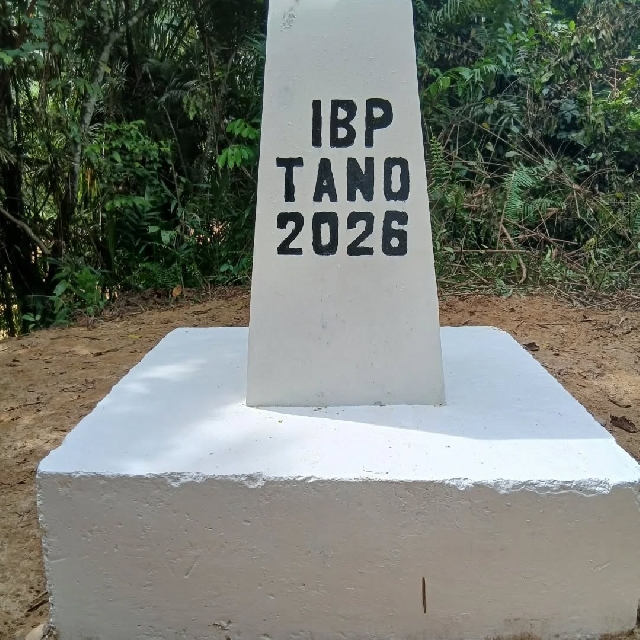
Out of the 37 pillars planned for construction under this phase, 14 have already been completed, demonstrating steady progress since work officially began in January 2026. The total number of pillars earmarked for this stage includes 12 main pillars, 22 intermediate pillars, two border crossing pillars, and one terminus pillar. So far, four of the main pillars and 10 intermediate pillars have been successfully constructed.
Among the significant landmarks inspected during the visit were the historic Tano Pillar and the Farafarako International Boundary Pillar. These structures serve not only as physical demarcations but also as symbols of the longstanding agreement between Ghana and Côte d’Ivoire concerning their shared boundary.
Speaking during the inspection tour, the Commissioner General of the Ghana Boundary Commission, Major General Anthony Ntem, highlighted the constitutional mandate of the Commission. He explained that the institution is legally responsible for managing and protecting Ghana’s international boundaries—whether on land, at sea, or in the air. According to him, this responsibility requires regular monitoring, maintenance, and, where necessary, reaffirmation of boundary markers.
Major General Ntem noted that many of the boundary pillars erected during the colonial era have either become obscured by dense vegetation or have been damaged and, in some cases, destroyed due to human activities. Over time, natural factors such as erosion, flooding, and forest growth have further compromised the visibility and integrity of these markers. He stressed that without proper maintenance and reaffirmation, such deterioration could lead to disputes, confusion among border communities, or even diplomatic tensions.
He further indicated that similar boundary reaffirmation exercises are being undertaken across West Africa, often in collaboration with neighbouring states. These coordinated efforts reflect a broader regional recognition of the importance of clearly defined and mutually respected borders in maintaining peace and stability.
The Commissioner General recalled that the pillar construction phase of the joint reaffirmation exercise officially began in July 2025. The commencement was marked by a stone-laying ceremony at New Town in the Jomoro Municipality, where the Terminus Pillar—designated as Boundary Pillar 55—is situated. This ceremonial event symbolised the shared commitment of Ghana and Côte d’Ivoire to complete the reaffirmation exercise in a spirit of cooperation.
Following the stone-laying ceremony, a joint staking-out exercise was conducted between November and December 2025. During this stage, technical teams from both countries identified and marked precise locations for the installation of the boundary pillars. This preparatory work ensured that construction activities would align accurately with agreed coordinates and historical boundary documentation.
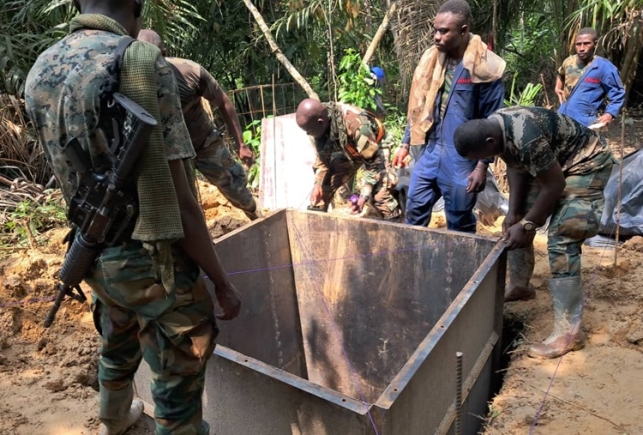
Actual construction of the pillars commenced in January 2026. The project is being executed by the 48 Engineer Regiment of the Ghana Armed Forces, which has been contracted to carry out the physical works. The involvement of military engineers reflects the technical complexity and logistical demands of the project, as many of the sites are located in remote and difficult terrain.
A detailed briefing was provided during the inspection by Lieutenant Clifford Abrokwah, the Officer in Charge from the 48 Engineers. He outlined the composition of the 37 pillars planned for stage one, reiterating that the structures include main pillars, intermediate pillars, border crossing pillars, and a terminus pillar. He confirmed that construction is progressing steadily along various sections of the boundary.
Lieutenant Abrokwah acknowledged that the work is physically demanding, given the challenging landscape, dense vegetation, and occasional inaccessibility of certain sites. However, he indicated that the working party has been reinforced with additional personnel to accelerate progress and ensure that the project meets its March 31 deadline. This reinforcement is intended to maintain momentum and avoid delays.
He also highlighted the support provided by the Forestry Commission, particularly in facilitating access through forest reserves and assisting with land clearance where necessary. Such inter-agency collaboration has been instrumental in overcoming logistical obstacles and maintaining a steady pace of work.
Beyond the technical aspects of pillar construction, the inspection tour also included a courtesy call at the Ghana Revenue Authority (GRA) checkpoint at the Elubo border. During this visit, members of the Commission engaged with the Sector Commander, DCOI Joshua Krakue. The commander assured the Commission of the GRA’s continued cooperation and support in safeguarding Ghana’s territorial boundaries.
The stop at the Elubo border underscored the interconnected roles played by various state institutions in border management. While the Ghana Boundary Commission focuses on demarcation and boundary integrity, agencies such as the Ghana Revenue Authority are responsible for customs enforcement and revenue collection at official crossing points. Together, these institutions contribute to maintaining order and security along Ghana’s international frontiers.
The Ghana–Côte d’Ivoire Boundary Reaffirmation Exercise represents a proactive approach to border governance. Rather than waiting for disputes to arise, the two countries have chosen to collaborate in reviewing and reinforcing their shared boundary. This approach helps prevent potential conflicts over land ownership, resource allocation, or jurisdiction.
For border communities, clearly marked and mutually recognised boundaries provide clarity regarding administrative authority and access to public services. The reaffirmation exercise therefore has implications not only for national sovereignty but also for local development and community relations.
By stepping up inspections and accelerating construction of boundary pillars, the Ghana Boundary Commission is demonstrating its commitment to upholding Ghana’s territorial integrity. The exercise reflects an understanding that well-maintained boundaries are foundational to national security, economic regulation, and peaceful coexistence with neighbouring states.
As the March 31, 2026, deadline approaches, the Commission and its partners remain focused on completing the first phase of the project. The progress recorded thus far—14 out of 37 pillars completed—signals steady advancement, even as work continues across challenging terrain.
In essence, the boundary inspection and reaffirmation initiative represents both a technical undertaking and a diplomatic effort. Through coordinated action, stakeholder engagement, and institutional collaboration, Ghana and Côte d’Ivoire are reinforcing the physical and symbolic markers of their shared frontier, thereby strengthening regional stability and mutual respect.

